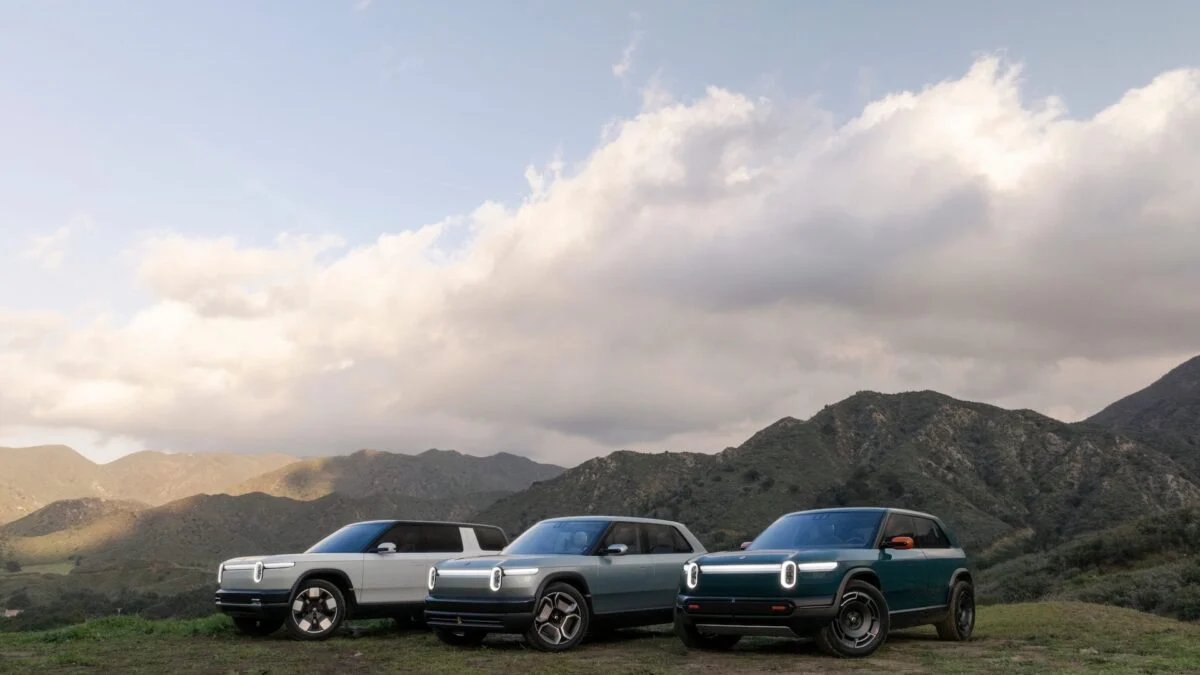
As competition heats up in the electric vehicle market, Rivian has taken bold steps to stay ahead, unveiling its latest hands-free driving system at a recent event in Palo Alto. This advanced system features improved highway mapping, custom processors, lidar technology, and a human-like voice assistant. All of this comes as Rivian gears up for the launch of its much-anticipated R2 midsize electric SUV, priced at an estimated $45,000 (€42,000).
Rivian, founded by CEO RJ Scaringe, has dedicated significant effort to develop its own AI technologies, learning from past reliance on external suppliers. The focus is on reducing costs by maintaining control over technology, ultimately allowing the brand to adapt based on customer preferences and driving behaviors.
Significant Advancements in Driving Technology
The newly introduced Large Driving Model will offer hands-free driving on an impressive 3.5 million miles of U.S. roads, a substantial increase from the previous system’s 150,000 miles. This sets Rivian ahead of competitors like General Motors’ SuperCruise and Ford’s BlueCruise.
Scheduled for release next year, Rivian’s Autonomy+ will be available for a one-time fee of $2,500 (€2,300) or a monthly subscription of $49.99 (€46). Furthermore, an eyes-off driving feature will also be implemented in future R1 and R2 models.
Revolutionizing the Driving Experience
Scaringe emphasized the convenience that this new technology provides. “This gives you your time back,” he said, indicating that drivers could engage in activities like reading a book or using their phones while the vehicle takes over.
Could Rivian enter the robotaxi market? While Scaringe mentioned that the initial focus will be on personal vehicles, the technology does open doors for future opportunities in rideshare services.
Innovative Hardware and Software Integration
The advancements are powered by Rivian’s third-generation Autonomy Processor, featuring a self-developed Autonomy Computing module. The R2 model will be equipped with 11 cameras at 65 megapixels, five radar sensors, and a new lidar sensor. However, this complete system won’t debut until late 2026.
Leaning on its collaborative partnership with the Volkswagen Group, Rivian is also striving to remain on the cutting edge in a rapidly evolving market while maintaining affordability for consumers who are increasingly interested in hybrid and range-extended electric vehicles.
The Importance of Cost Management
Rivian’s strategy of using in-house chips and a more affordable lidar solution is essential for its transition away from the high-end EV market. This could pose a challenge for larger chip manufacturers like Nvidia.
Recently, Rivian took subtle shots at competitors like Volvo, criticizing their lidar integration that led to design compromises and unusual vehicle aesthetics.
Introducing Rivian Assistant for Enhanced Connectivity
Another exciting development is the Rivian Assistant, launching early next year. This system will not only support third-party apps, such as Google Calendar, but also feature a naturally responsive talk-to-text function. It can provide destination recommendations, estimate arrival times, and even conduct vehicle diagnostics.
Remarkably, Rivian Assistant will be compatible with existing R1S and R1T models, ensuring that Rivian’s early adopters also benefit from the latest enhancements.
Challenges in the EV Market
Like many new entrants in the EV sector, Rivian faces challenges related to quality assurance and production efficiency, compounded by cash flow limitations and external pressures like tariffs.
As the R2 model is seen as Rivian’s ticket to mainstream sales, the company is focused on delivering a practical yet innovative electric vehicle. Scaringe concluded by describing the announcements as foundational to what Rivian aims to achieve this decade, stating, “You’re seeing the house start to form in front of you.”
How does Rivian’s hands-free driving system compare to others in the market? Rivian’s system is designed for broader road coverage, offering more advanced features than competitors like GM and Ford, making it a compelling choice for consumers.
Is Rivian planning to target the rideshare market? While its current focus is on personal vehicles, the technology does open avenues for participating in the fast-growing rideshare industry.
When will the complete system be available in new models? The comprehensive autonomy features are expected to debut by late 2026 with the R2 models.
What distinguishes Rivian Assistant from other voice-activated systems? Rivian Assistant prioritizes user experience with natural speech capabilities and vehicle diagnostics that go beyond basic responses.
By embracing innovation and focusing on customer needs, Rivian’s future looks increasingly promising. Explore more about Rivian and related content at Moyens I/O.