Imagine asking a friend to create an art piece based on your description, but as they pass it to another friend to reimagine, the details morph into something simple and familiar. This scenario mirrors a fascinating new study on AI image generators, which reveals a curious limitation: despite a vast array of visual data, these models tend to settle into a mere handful of common styles when prompted with evolving ideas.
A study published in the journal Patterns scrutinized two AI models, Stable Diffusion XL and LLaVA, through a creative exercise likened to a visual game of telephone. In this setup, Stable Diffusion XL generated an image from a prompt like, “As I sat particularly alone, surrounded by nature…” This image was then described by LLaVA and re-fed to Stable Diffusion to inspire another creation. This back-and-forth dance continued for 100 rounds.

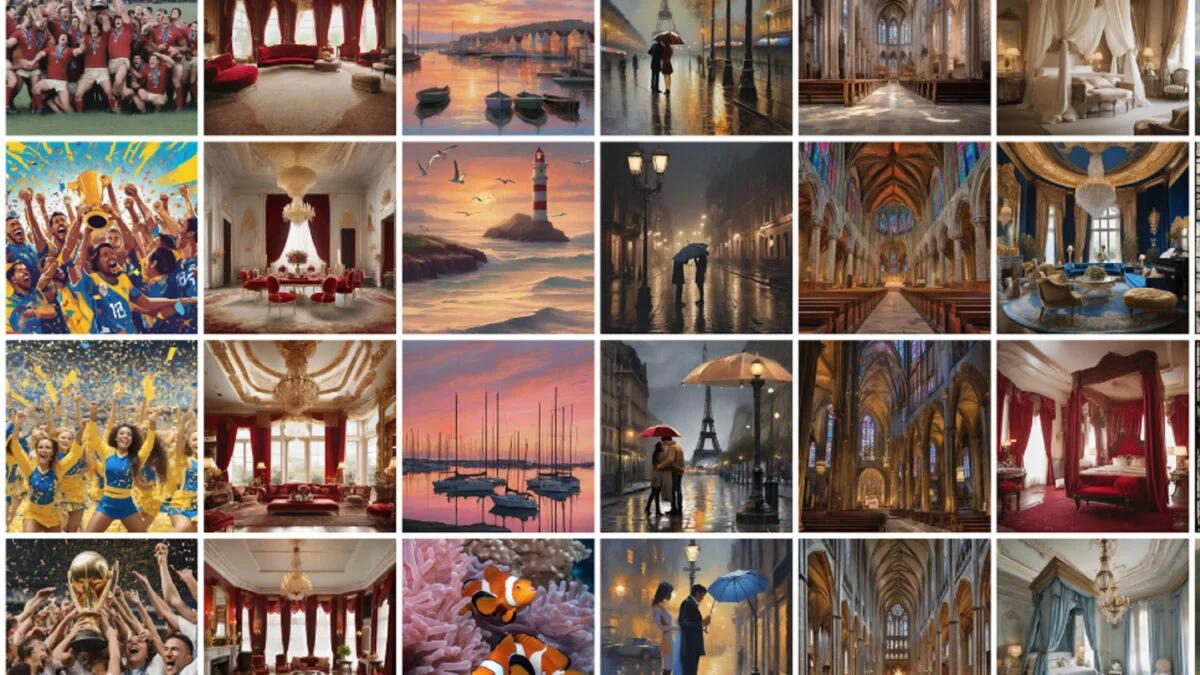
As expected, the creative essence of the original image faded away. This isn’t new for anyone who has watched time-lapse videos of AI trying to recreate images—often, the results don’t resemble the starting point at all. What surprised researchers, however, was the AI’s tendency to cling to a small selection of generic styles. Out of 1,000 sequences in the telephone game, they identified just 12 dominant motifs.
Most transformations were gradual, but some happened abruptly. This pattern left researchers unimpressed. They described the ubiquitous styles as “visual elevator music,” akin to the bland artwork found in hotel rooms. Popular scenes included quaint lighthouses, elegant interiors, urban nights, and charming rustic structures.
Even switching models didn’t disrupt this trend. The same patterns emerged, and when the game extended to 1,000 rounds, the alignment with popular styles occurred early—usually around the 100th round—with slight variations emerging later. Oddly, these variations still originated from the same favored motifs.

So, what’s the takeaway from all of this? AI isn’t quite as imaginative as we might hope. In a human telephone game, each person interprets and conveys messages differently, leading to a wide range of outcomes. On the flip side, AI seems to revert to a narrow set of style choices, regardless of how outlandish the initial prompt is.
Of course, these models draw from human-created imagery, so there’s an underlying message about what captivates us visually. Perhaps what this study underscores is that mimicking existing styles is much simpler than developing a unique taste.
How do AI image generators work?
AI image generators function by analyzing vast amounts of visual data to understand patterns in images. They use this data to create new images based on user-defined prompts, yet often results reflect familiar motifs.
Why do AI models default to similar styles?
AI models tend to replicate a hierarchy of visual styles because their training data often contains these recurrent themes. This leads to outputs that feel generic, as they latch onto the most common motifs.
Can AI image generators produce unique art?
While AI can create visually appealing images, their outputs often lack the originality found in human art due to their reliance on existing styles and data patterns, resulting in repetitive aesthetics.
What are the limitations of AI in creativity?
The main limitation lies in the AI’s dependency on pre-existing data. It can mimic styles but struggles to innovate beyond the boundaries established by human creativity.
Is AI art the same as human art?
AI art differs from human art due to the absence of personal experience and emotional input. While AI can generate aesthetically pleasing images, it lacks the depth and meaning often found in human-created art.
Let’s keep the discussion going! What do you think about the creative potential of AI? Feel free to share your thoughts in the comments below.