The AI revolution is happening globally, not just in Silicon Valley. Companies around the world are making waves with innovative AI models and research breakthroughs. In this article, we highlight the eight best AI companies from the US, China, Europe, and beyond. These organizations are at the forefront of advancing general intelligence, developing world models, and creating AI systems for medical discoveries. Let’s take a closer look at these industry leaders.
1. Google DeepMind
Google DeepMind stands out as a premier AI company deeply involved in the development of large language models (LLMs) as well as general intelligence and AI systems for medical applications. Founded in the UK in 2010 by Demis Hassabis, Shane Legg, and Mustafa Suleyman, it became a part of Google in 2014, later merging with Google Brain in 2023.
With the release of its latest model, Gemini 3 Pro, Google DeepMind is leading the AI space. The company has also made significant strides in health technology, earning accolades for AI projects like AlphaGo and AlphaFold. Notably, Demis Hassabis and John Jumper received a Nobel Prize for their work in protein structure prediction via AlphaFold2.
Backed by Google’s extensive resources, DeepMind is well-positioned to push toward achieving artificial general intelligence (AGI) in the near future.
2. Anthropic
Hailing from the US, Anthropic is recognized as one of the leading AI firms globally. Founded by ex-OpenAI staff focused on AI safety, it is spearheaded by co-founder Dario Amodei. Anthropic’s Claude AI model — a strong alternative to ChatGPT — has garnered attention for its exceptional coding capabilities.
The Claude Opus 4.5 AI model and Claude Code are crucial tools for programmers, with many considering Claude Code to be a step towards AGI in coding tasks. The company’s strong emphasis on AI alignment and safety makes it a trusted choice for enterprise clients, who appreciate the reliability of its models.
3. OpenAI
OpenAI ranks just behind Google DeepMind and Anthropic as a major player in the AI landscape. While it kickstarted the current AI trend with ChatGPT, its focus has shifted significantly toward product development and market capture, often overshadowing its initial priorities of AI safety and research.
Led by Sam Altman, OpenAI is actively betting on new AI products and tools to grab market share. Despite the successful launches of GPT-4 and later models, OpenAI’s research focus seems to be fading.
4. DeepSeek
DeepSeek, a rising star from China, caught the world’s attention with its DeepSeek-R1 model launched in early 2025. The company has shown that it’s possible to train advanced reasoning models affordably, bringing competition to established global players.
Following its free release of DeepSeek R1, OpenAI had to adjust its strategy and make its own models available for free. The latest DeepSeek V3.2-Speciale is making waves, attaining gold-level results in several major competitions.

Owned by the High-Flyer hedge fund, DeepSeek is steered by Liang Wenfeng and stands apart by open-sourcing its training methods, something not common among its American competitors. With DeepSeek and Alibaba leading the open-source scene, they’re setting a high bar for AI development.
5. Alibaba
Alibaba is another notable powerhouse from China, recognized as a leader in the open-source AI arena, surpassing Meta and Mistral. The latest Qwen 3 series of AI models showcases versatility with offerings tailored for various tasks.
The Qwen models are not just for language tasks; they cater to specialized sectors like math and programming. The Qwen 3-Max model notably supports cognitive processes. Additionally, like Google’s Nano Banana, Qwen enables image editing through AI, keeping Alibaba in the spotlight.
6. Mistral
Mistral is a French AI firm that aims to challenge the American and Chinese tech giants. Established by ex-Meta and DeepMind researchers in 2023 and driven by Arthur Mensch, Mistral AI specializes in multilingual capabilities, outperforming many American models.
Following the trend set by DeepSeek and Alibaba, Mistral has embraced open weights, with many early model releases receiving positive feedback. Their recent models, including Mistral Large 3 and Devstral 2, continue to showcase impressive capabilities.
7. Moonshot AI
Moonshot AI is another innovative player from China known for its Kimi series of models. Supported by Alibaba, Moonshot has made headlines with its Kimi K2 Thinking model, which competes closely with both OpenAI’s GPT-5 and Anthropic’s Claude Sonnet 4.5.
With its impressive Kimi models, which are open-source and cost-effective, Moonshot AI is gaining rapid traction in the AI race. Its Muon optimizer significantly enhances training efficiency, setting new standards in performance.
8. xAI
Elon Musk’s xAI is rapidly emerging as a significant contender in the AI sector. It has developed Colossus, the largest AI supercomputer globally, featuring 200,000 Nvidia GPUs housed in one location. This infrastructure bolsters xAI’s capability to produce large AI models swiftly.
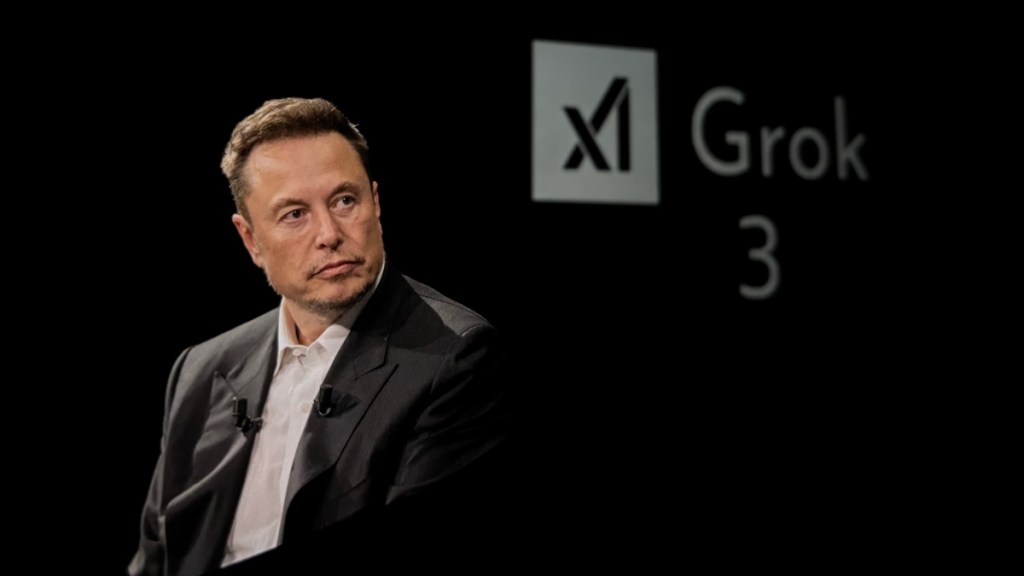
xAI has launched Grok, an AI chatbot, with Grok 4 being its latest version, alongside capabilities for video and image AI generation. However, it hasn’t been without controversy, as Grok has faced backlash over generating hate speech and misinformation.
These eight companies are shaping the future of AI across diverse domains. While Meta may be a big name, its recent LLaMA models have not delivered on expectations. Similarly, Microsoft’s internal lab has yet to compete effectively. Other noteworthy AI players include Ilya Sutskever’s SSI, Japan’s Sakana AI, Canada’s Cohere, and China’s ByteDance and Z.ai. These companies are worth keeping an eye on as the landscape continues to evolve.
What are the top AI companies to watch in 2025?
The top AI companies to watch in 2025 include Google DeepMind, Anthropic, OpenAI, DeepSeek, Alibaba, Mistral, Moonshot AI, and xAI. These firms are at the forefront of technology and innovation in the AI space.
How do AI companies influence our daily lives?
AI companies shape our daily lives through advancements that enhance productivity, improve healthcare, revolutionize customer service, and enable personalized experiences. Their technologies often become integral to the software we use.
What makes a company a leader in AI?
Leaders in AI are characterized by their ability to innovate, a commitment to ethical practices, cutting-edge technology, and successful implementations of AI in various sectors. Their contributions to research and development also play a significant role.
How does open-source impact AI development?
Open-source projects accelerate AI development by allowing collaboration, transparency, and shared learning among researchers and developers. This fosters innovation and helps democratize AI technology.
What challenges do AI companies face today?
AI companies face challenges such as data bias, ethical concerns, regulatory scrutiny, and competition. Addressing these issues is essential for fostering public trust and ensuring sustainable growth.