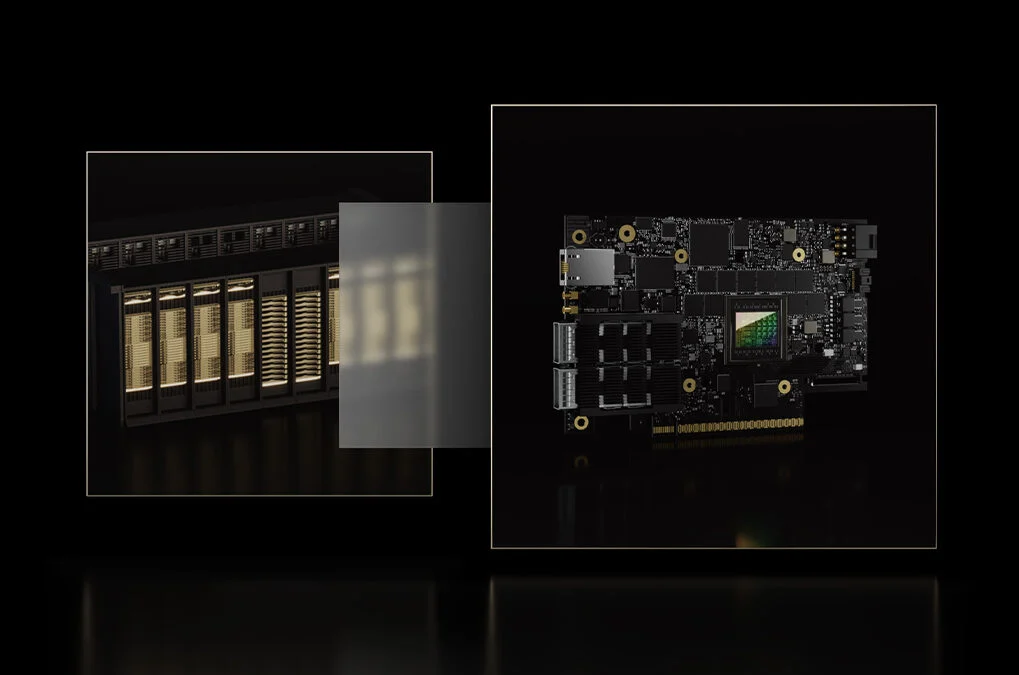
The buzz around AI is palpable, especially with the rising demand for memory making headlines everywhere you look. At CES 2026 in Las Vegas, Nvidia was in the spotlight, showcasing their latest innovations that aim to tackle this issue head-on.
This week, Nvidia launched the Rubin platform—a suite of six chips designed to function as a powerful AI supercomputer. Company officials assert that this new architecture outshines the previous Blackwell models in both efficiency and performance, particularly in compute and memory bandwidth.
“Rubin arrives at exactly the right moment, as AI computing demand for both training and inference is going through the roof,” noted Nvidia CEO Jensen Huang in a press release.
Nvidia’s partners will start rolling out Rubin-based products in the latter half of 2026. Expect to see big names like AWS, Google, Meta, and Microsoft jumping on board, highlighting the platform’s wide-ranging implications.
“The efficiency gains in the NVIDIA Rubin platform represent infrastructure progress that leads to longer memory, improved reasoning, and more reliable outputs,” emphasized Anthropic CEO Dario Amodei.
Why Is Memory Supply Critical for AI Growth?
Memory chips have become as hard to find as a needle in a haystack, all thanks to soaring demand from data centers. A recent report from Tom’s Hardware reveals that these projects are consuming nearly 40% of the global DRAM chip production. This scarcity is pushing consumer electronics prices up, and rumors say GPU prices might soon follow suit. South Korean news outlet Newsis hinted that AMD might raise GPU prices soon, with Nvidia planning a similar move next month.
Can Nvidia’s Rubin Solve the Chip Bottleneck?
To mitigate this bottleneck, Nvidia recently made its largest acquisition ever by purchasing Groq, a chipmaker specializing in inference technologies. With Rubin’s promise of efficient high-inference performance and reduced model training costs, the company hopes to alleviate some industry worries. Executives mentioned that Rubin can cut inference token costs by up to ten times and reduce GPU usage for training models by four times.
A New Era of AI Storage: Inference Context Memory Platform
Nvidia didn’t stop with just hardware; they also introduced a new AI-native storage solution called Inference Context Memory Storage Platform. With the rise of Agentic AI, which requires systems to recall past interactions, the need for effective memory management during inference has never been greater.
This new platform provides an added memory tier to store contextual data, significantly boosting a GPU’s memory capacity.
What is the significance of context management in AI?
The focus has shifted from merely computing tasks to managing contextual information efficiently. Nvidia’s senior director, Dion Harris, mentioned, “To scale, storage can no longer be an afterthought.” The Inference Context Memory Storage Platform is engineered to meet this new demand.
Will memory efficiency address current constraints in AI?
As the tech landscape evolves, it’s uncertain if these new memory technologies can effectively resolve the bottlenecks created by rampant chip demand. However, even if this issue is managed, other challenges, such as the stress on power grids due to booming data centers, will remain on the radar.
In the fast-paced world of AI, Nvidia’s Rubin platform seems poised to change the game. The efficiency it promises may help balance supply constraints while paving the way for future innovations. What are your thoughts on how memory will affect AI’s next leap? Feel free to share your insights in the comments below!