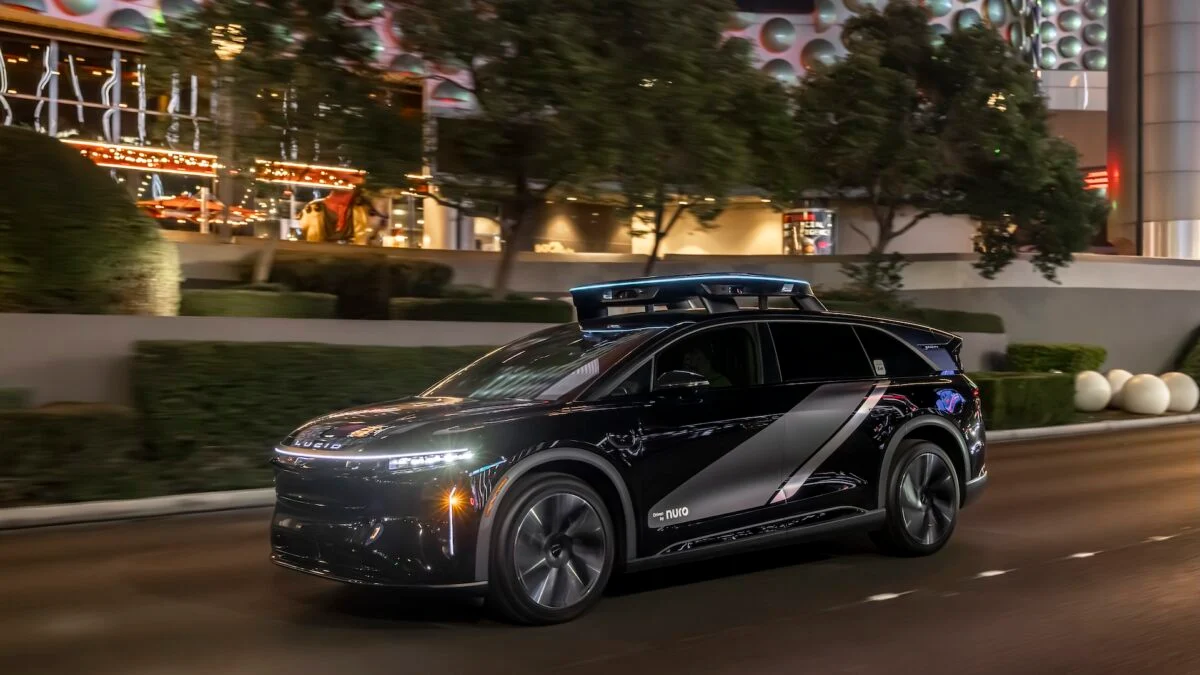
Uber is making headlines at CES, reaffirming its commitment to the dream of self-driving cars. In Las Vegas, the ride-hailing giant unveiled plans for a new prototype: a driverless robotaxi developed in collaboration with Lucid, an electric vehicle manufacturer, and Nuro, a leader in autonomous technology.
While not boasting the futuristic charm of Tesla’s Cybercab or Amazon’s steering-wheel-free Zoox, this unnamed offering from Uber is based on Lucid’s elegant Gravity EV. It’s expected to roll out in the San Francisco Bay Area shortly, joining the ranks of Waymo and Zoox robotaxis already operating there. The companies announced that testing commenced late last year, with Nuro having secured driverless testing permits from the California DMV. Notably, Nuro’s autonomous vehicles have recently made their debut on the streets of San Francisco.
The ultimate goal for Uber, Lucid, and Nuro is ambitious: they plan to expand their Level 4 robotaxi prototype to every city where Uber operates, assuming everything goes according to plan.
This announcement offers a sneak peek at what the upcoming prototype could resemble. At first glance, it’s a modern take on the Gravity that incorporates Nuro’s expertise in last-mile delivery and Nvidia’s Drive Hyperion platform for real-time AI processing.
Inside the vehicle, the experience melds the best of all three companies involved. It features seating for up to six adults and a spacious hatchback trunk for luggage. Unique touches like touchscreens allow riders to customize their experience—controlling climate, heated seats, and even their playlist. Safety is paramount, with a dedicated button for autonomous vehicle support and an emergency stop setting.
Passengers will also be treated to a real-time view of the road from the robotaxi’s perspective, similar to what Waymo offers, displaying pedestrians, traffic signals, and other vehicles as they navigate the streets.
The sensory technology is where the magic happens. The prototype is outfitted with high-resolution cameras, solid-state LiDAR sensors, and radar, elegantly integrated into the Gravity’s design. There’s also a unique roof rack that houses a sensor unit, which lights up in various colors, shows passenger initials, and offers status updates.
However, details on how customers will be able to hail the robotaxi or access it once production starts were left under wraps. It’s likely these features will be incorporated into the existing Uber app.
Production of the robotaxi prototype is slated for Lucid’s Arizona facility later this year, pending successful passing of testing benchmarks for autonomous validation.
With this announcement, Uber has officially moved on from its previous, troubled attempts at independently tackling autonomous driving.
If you’re curious to see the self-driving Gravity taxi up close, it’s on display at Nvidia’s showcase at the Fontainebleau Hotel in Las Vegas until Thursday.
What is Uber’s latest self-driving project?
Uber is collaborating with Lucid and Nuro to develop a driverless robotaxi, aimed to hit the roads of San Francisco soon. This model is based on Lucid’s Gravity EV and will utilize advanced autonomous technologies.
Where will the Uber robotaxi first operate?
The pilot location for Uber’s new robotaxi will be the San Francisco Bay Area, where it will join established robotaxis from Waymo and Zoox.
What features will the robotaxi include for passengers?
The robotaxi will offer seating for up to six, customizable ride experiences through touchscreens, and a real-time display of the vehicle’s surroundings for passenger safety.
When is the robotaxi expected to be in production?
The production of the robotaxi prototype is anticipated to begin later this year at Lucid’s factory in Arizona, following successful testing.
How will customers hail the robotaxi?
While specific details are not yet available, it is expected that customers will be able to hail these robotaxis via the existing Uber app, similar to how users currently access ride services.
Have you been following the latest in autonomous vehicle tech? Feel free to share your thoughts or questions in the comments below!