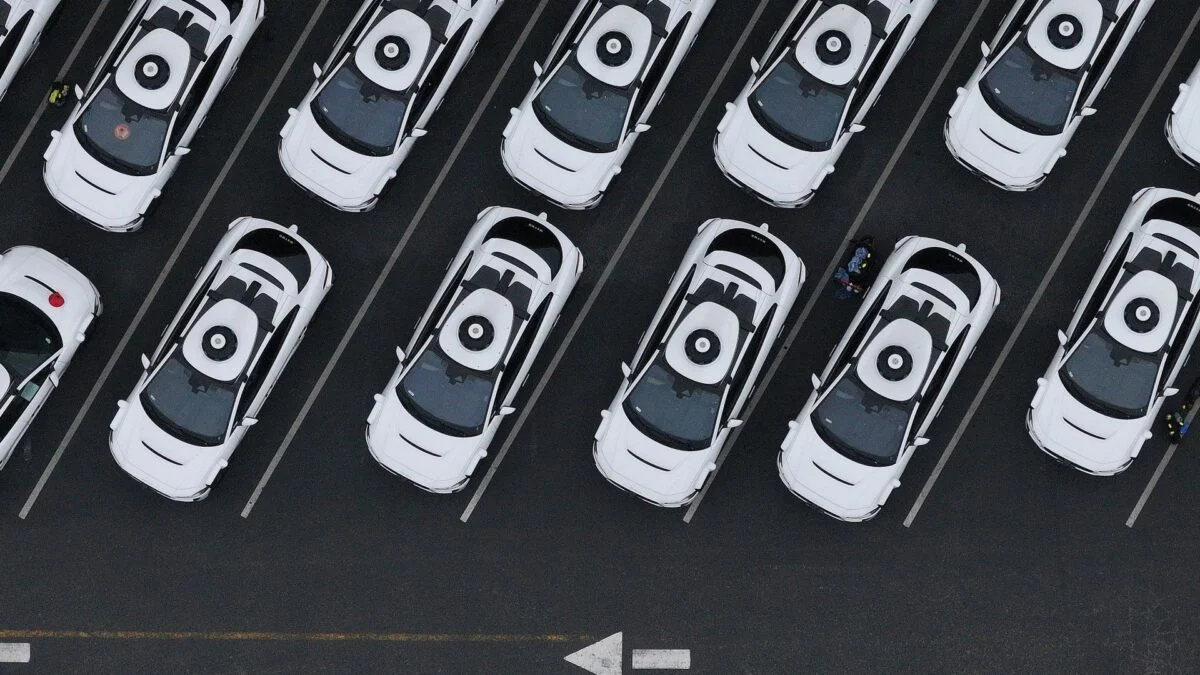
Imagine hopping into a car with no driver, kicking back, and letting the vehicle whisk you away. It sounds fantastic, but what if I told you that the idea of robotaxis being safer than human drivers isn’t as clear-cut as we might think? While companies like Waymo and Tesla have been pushing the idea of autonomous vehicles as the safer alternative, the hard evidence suggests we might need to pump the brakes on this notion.
As an expert in the evolving landscape of technology and transportation, I’ve explored how these innovations impact our lives. Let’s take a closer look at whether robotaxis are really safer than the average human behind the wheel.
1. The Data Dilemma: How Safe Are They Really?
Waymo touts some eye-catching statistics, claiming an impressive 84% reduction in crashes that result in airbag deployment and a 73% decrease in crash-related injuries during its initial 22 million miles. However, much of this data comes straight from Waymo, raising questions about its impartiality. When the source of data is potentially biased, it’s hard to take such claims at face value.
2. Ideal Conditions vs. Real-World Challenges
Waymo’s driving occurs under perfectly controlled conditions that most of us human drivers aren’t always blessed with. For a long time, their vehicles mainly drove in city settings, only getting approved for highway use in late 2025. Statistically, about 25% of human driving occurs on highways. These routes present unique challenges, often resulting in more severe accidents. It makes one wonder how well robotaxis would fare on these busier roads.
3. The Teleoperation Factor: Who’s Really in Control?
Another area of concern is how often a human teleoperator has to take over an autonomous vehicle. Companies like Waymo and Tesla have backup drivers ready to intervene in emergencies. However, we have little insight into how often this actually happens. According to California’s Department of Motor Vehicles, Waymo experienced one disengagement every 9,793 miles—other providers may have even more frequent human interventions.
4. Shocking Findings on Accident Rates
Research from the Smart and Safe Transportation Lab reveals that while Advanced Driving Systems generally lead to fewer accidents, they tend to stumble in specific conditions. For instance, their accident rate during dawn and dusk is a staggering 5.25 times higher compared to human drivers. It shows that while technology can excel in many areas, it has its weaknesses, too.
5. Human Errors vs. Robot Errors: A Different Kind of Risk
It’s crucial to recognize that autonomous vehicles are designed to avoid common human errors like distracted driving. Yet, they can be prone to bizarre mistakes that humans typically wouldn’t make, such as driving into ponds or through active fire scenes. There’s also the psychological aspect: riders might feel a false sense of security, leading them to engage in risky behaviors, including skipping seat belts, as studies suggest these passengers are less inclined to buckle up when in a taxi.
Are robotaxis really safer than traditional taxis?
While some statistics may suggest a decrease in certain types of accidents, the limitations in their dataset and real-world conditions paint a murky picture. Robotaxis may have fewer accidents in controlled environments, but their performance in unpredictable scenarios still needs thorough evaluation.
How often do autonomous vehicles need human intervention?
The frequency of human intervention varies across different manufacturers, but reports indicate that it’s not uncommon for teleoperators to step in more often than expected, raising concerns about their reliability.
What are the main causes of accidents for autonomous vehicles?
Accidents involving autonomous vehicles can stem from conditions they struggle with, such as poor visibility or unusual driving scenarios. These weaknesses need further investigation to ensure safety on diverse road types.
Can we trust the data provided by autonomous vehicle companies?
While companies like Waymo present compelling data, there’s skepticism around its objectivity. Independent validation is necessary for any conclusions about safety to hold weight.
Are robotaxis a feasible solution for urban transportation?
While robotaxis may offer a convenient alternative, the current data suggests we need more clarity and safety assurances before fully embracing this mode of transport. Urban areas will continue to evolve, and the role of technology in shaping how we travel is worth keeping an eye on.
As exciting as the promise of robotaxis is, it’s clear we need to take a closer look at the realities behind them. While the goal is to have safer roads and fewer accidents, the technology isn’t quite there yet. So, what do you think? Would you hop into a robotaxi today, or are you still a bit skeptical? Share your thoughts in the comments below!