Update: 3:15 p.m. ET: Video recorded by the ICE agent, Jonathan Ross, who killed Renee Good was leaked to a right-wing news site after this article was published. You can read more about that here. Our original story appears below, unchanged from Friday morning.
Imagine you’re pulled over, and instead of a standard police bodycam, the officer is holding up their personal phone, recording everything. Or perhaps they’re wearing smart glasses. It feels different, doesn’t it? This shift raises questions about transparency and accountability.
I’ve spent years analyzing tech trends and their impact on society. Let’s explore why federal agents might be using personal devices like GoPros, smart glasses, and phones, instead of (or in addition to) standard bodycams.
1. Why are federal agents using phones to record?
In a recent incident in Minneapolis, ICE agent Jonathan Ross, who shot and killed Renee Good, appeared to be recording with his phone right before the shooting. The reasons aren’t completely clear, but this event highlights the increasing use of personal devices by law enforcement.
Think about it: a phone in someone’s face feels much more intrusive than a standard bodycam. It’s a stark reminder that you’re being recorded, potentially creating a more confrontational atmosphere.
Ross was seen holding his phone as he walked around Good’s vehicle just before the incident. Some might see this as a way to document events, while others worry about the implications of using personal devices in such situations.

2. What’s the deal with Border Patrol using GoPros?
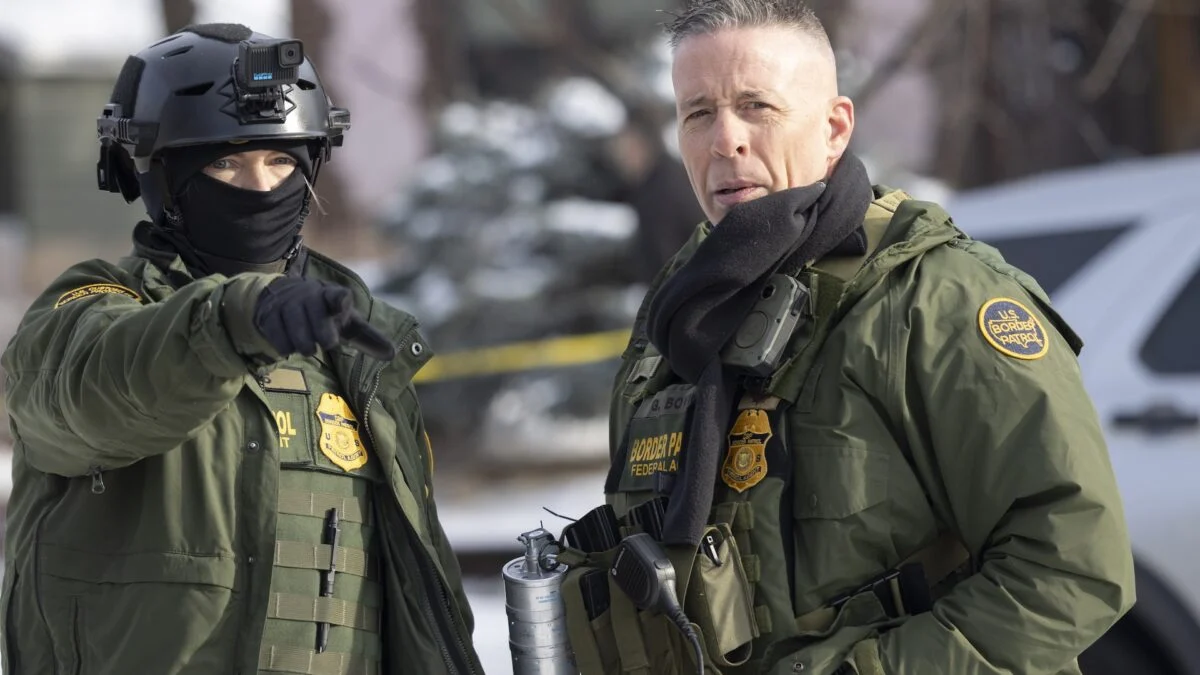
Not long after the killing of Renee Good, an Uber driver in Minnesota recorded an encounter with Border Patrol agents. The video showed agents questioning him about his citizenship. The driver also pointed out that one of the agents was wearing a GoPro strapped to her head.
The driver wondered if the GoPro gave the agent more control over the footage, especially compared to standard bodycams where footage is usually uploaded to a central server. This raises a valid point: who controls the recording, and what happens to it?
The Uber driver even asked, “What happened to the police body cameras? It’s so that you can delete the video and make your own stuff, you know that right?”
Another angle of the same encounter showed the agents questioning the driver’s accent, raising concerns about potential harassment. It’s against the law for immigration agents to harass people just because of their accent.
3. Who gets to control the video footage from these devices?
Jake Laperruque, Deputy Director of the Center for Democracy and Technology’s Security and Surveillance Project, highlighted a report from The Daily Northwestern about federal agents using Meta’s Ray-Ban smart glasses to monitor protesters. This raises significant questions about oversight and accountability.
Laperruque said that while the Department of Homeland Security (DHS) has policies for body cameras, these are essential to protect sensitive recordings and ensure accountability. The problem? Personal devices often bypass these protections.
What are the risks of agents using their own recording devices?
If officers use their own devices, they could selectively use footage, store sensitive information improperly, or even delete footage showing misconduct. This undermines the purpose of body camera programs, which are designed to provide transparency and track potential abuses.
Laperruque emphasizes that DHS doesn’t allow personal body cameras, and their unauthorized use creates serious risks.
4. How do smart glasses play a role in police activity?
404 Media reported that a Customs and Border Patrol agent used Meta smart glasses during an immigration raid in Los Angeles. Whether this was within established protocols is unclear, and that’s part of the issue.
Ideally, DHS would clarify its official policies on recording the public. Unfortunately, there’s a history of misleading information from the agency, making it difficult to know what’s really happening.

5. How does recording the public impact civil liberties?
Jay Stanley, a Senior Policy Analyst at the ACLU, notes that policies on recording the public vary across local police departments. Some departments have policies against recording people at protests, recognizing the chilling effect it can have on free speech.
Stanley said that the government shouldn’t generally record members of the public, as it can discourage people from exercising their First Amendment rights.
Why hasn’t bodycam tech fulfilled its original purpose?
Stanley points out that bodycam tech’s potential to check police overreach hasn’t been fully realized. If officers are using their own devices, there’s no public oversight on how the video is stored, shared, or retained.
Should the video taken by the ICE agent in Minnesota be released?
Absolutely. Stanley argues that it’s highly irregular for officers to compile their own databases of law enforcement video. He sees it as part of a lawless approach to anti-immigration efforts.
6. How do inconsistent recording policies affect public trust?
Inconsistent policies erode public trust. When some agents use official bodycams with clear protocols, and others use personal devices with unknown storage and usage rules, it creates confusion and suspicion.
This lack of uniformity makes it difficult for the public to hold law enforcement accountable. Clear, consistent policies are essential for maintaining transparency.
What steps can be taken to ensure greater transparency in law enforcement recording practices?
Several steps could improve transparency. This includes mandating the use of official bodycams, establishing clear protocols for data storage and access, and prohibiting the use of personal recording devices during official duties. Public access to footage is also crucial for accountability.
How can citizens voice their concerns about these practices?
Citizens can voice their concerns by contacting their elected officials, participating in public forums, and supporting organizations that advocate for police accountability. Filing complaints with relevant agencies is another important step.
The use of personal recording devices by federal agents introduces a maze of legal and ethical questions. As technology evolves, it’s crucial to have open discussions about privacy, accountability, and the role of surveillance in a democratic society. What do you think can be done to ensure more transparency and protect civil liberties?