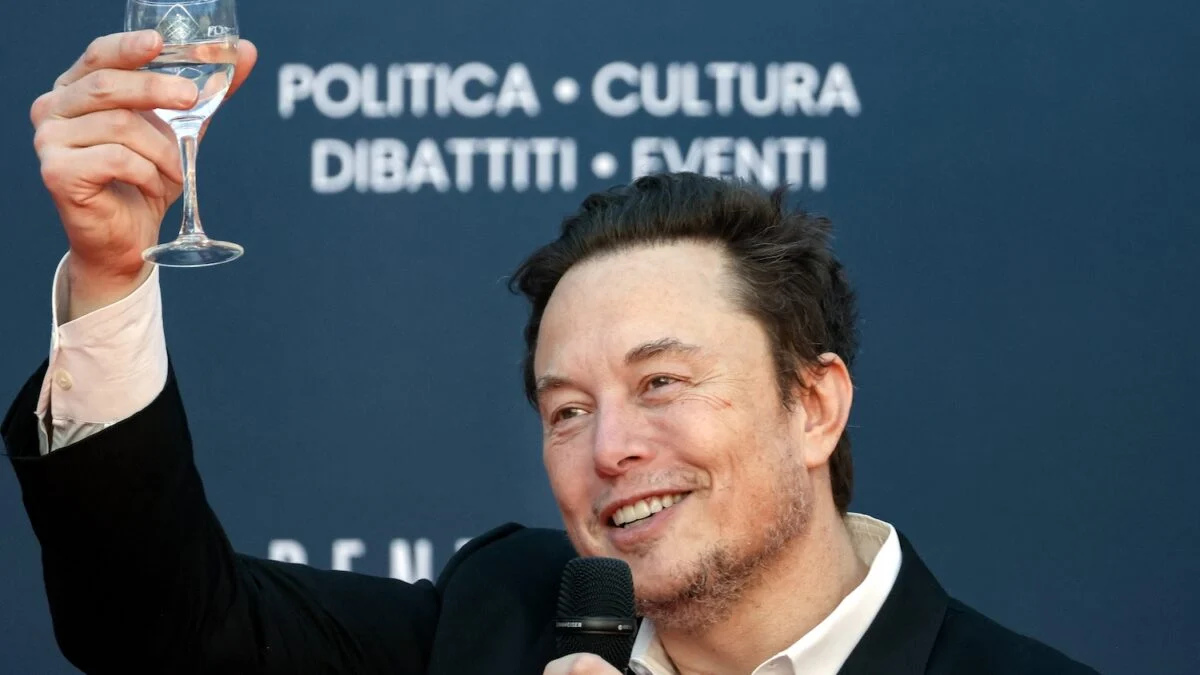
Imagine working your entire life, pinching pennies, and diligently saving for retirement. Then, someone incredibly wealthy tells you it’s all pointless. That’s what happened recently when Elon Musk suggested people shouldn’t bother saving for retirement. It’s a bold claim, especially coming from someone currently in court fighting for a $139 billion (approximately EUR 128.8 billion) compensation package, despite his already massive fortune.
As an SEO content strategist, I’ve spent years analyzing trends and advising people on how to improve their online presence, and I’ve learned that financial advice should be approached with healthy skepticism. So, let’s unpack what Musk said and why it might not be the best advice for everyone.
1. What is Elon Musk’s reasoning behind not saving for retirement?
Musk believes that artificial intelligence (AI) will advance so rapidly that it will drastically reduce the cost of everything, making money almost irrelevant. He envisions a future with “universal high income,” where everyone has their needs met regardless of employment. Peter Diamandis, who was on the podcast with Musk, echoed this sentiment, suggesting AI will “demonetize everything” as the cost of labor and intelligence plummets.
2. Will AI really make saving for retirement obsolete?
Diamandis acknowledged that for corporations to profit in this AI-driven future, people still need money to buy things. The question then becomes: how will people get money if AI takes over most jobs? Musk’s initial response avoided the topic of government intervention or wealth redistribution, instead doubling down on his claim that saving for retirement is pointless. It’s a vision where services are readily available – housing, healthcare, entertainment – all supported by AI. Sounds utopian, but it depends on a lot of moving parts.
3. When will artificial general intelligence (AGI) arrive?
Musk claims we’re already in the “singularity” – the point where AI surpasses human intelligence – and that AGI will arrive as early as 2026. He even predicts that by 2030, AI will exceed the combined intelligence of all humans. But predictions about AGI have been made before. I remember back in 2023, experts were saying AGI was just around the corner, and yet here we are. Musk himself has a history of shifting timelines, previously suggesting AGI would be here in 2025 and even calling for pauses in AI development due to potential risks.
4. Should you ditch your retirement savings strategy?
Here’s the catch: saving money for the future has very few downsides. If Musk is right, your savings might become less critical, but you’ll still have access to those funds. If he’s wrong, you’ll be grateful for the financial cushion. Relying entirely on Musk’s vision requires a significant leap of faith. Remember, this is the same person who criticized Social Security, a program vital for keeping many seniors out of poverty, calling it a Ponzi scheme.
5. What are the risks of trusting tech billionaires for financial advice?
Musk’s ideal future seems to involve him remaining the world’s richest man, with no need for social safety nets or wealth redistribution. He might support some form of basic income to ensure people can still buy his products, but it’s a system that primarily benefits him. It’s worth being skeptical when the world’s richest man tells you not to worry about saving, especially when he’s simultaneously battling for a massive payout.
What is a reasonable alternative to Musk’s radical vision?
Rather than betting everything on a distant and uncertain future, a balanced approach to financial planning is crucial. Diversifying investments, understanding risk tolerance, and consulting with a qualified financial advisor are all steps that empower individuals to secure their financial well-being. A sound financial plan should not rely on hypothetical scenarios where AI solves all economic problems.
What role does government play in financial security?
Social Security, while not a perfect system, provides a vital safety net for millions of retirees. Other government programs, such as Medicare and Medicaid, offer essential healthcare support. These programs play a crucial role in ensuring a basic standard of living for vulnerable populations. It’s important to consider the potential consequences of dismantling or defunding these systems, especially when relying on unproven technological advancements.
What if AI does create a jobless future?
Universal Basic Income (UBI) is one potential solution being explored to address the potential job displacement caused by AI. Under a UBI system, all citizens would receive a regular, unconditional income to cover basic living expenses. While the concept has gained traction, it also raises questions about funding, implementation, and potential impacts on work incentives. It’s a complex issue with no easy answers.
What other skills will be important in an AI-driven world?
Even if AI automates many routine tasks, human skills like critical thinking, creativity, emotional intelligence, and complex problem-solving will remain highly valuable. Focus on developing these skills to stay competitive in the workforce, regardless of how AI evolves. Lifelong learning and adaptability will be essential for navigating the changing job market.
What are some realistic ways to prepare for retirement?
Start by creating a budget to understand your income and expenses. Then, set realistic savings goals based on your desired retirement lifestyle. Explore different investment options, such as stocks, bonds, and real estate, to diversify your portfolio. Take advantage of employer-sponsored retirement plans, like 401(k)s, and consider opening an Individual Retirement Account (IRA) for additional savings. Review your financial plan regularly and make adjustments as needed.
Musk’s vision of an AI-dominated future is certainly intriguing, but it’s not a guarantee. Saving for retirement isn’t just about accumulating wealth; it’s about creating security and peace of mind. Why gamble your future on a promise when you can take control and build a solid foundation today?
What are your thoughts on Musk’s comments – do you think saving for retirement is becoming obsolete, or is it still a smart move? Share your opinion in the comments below!