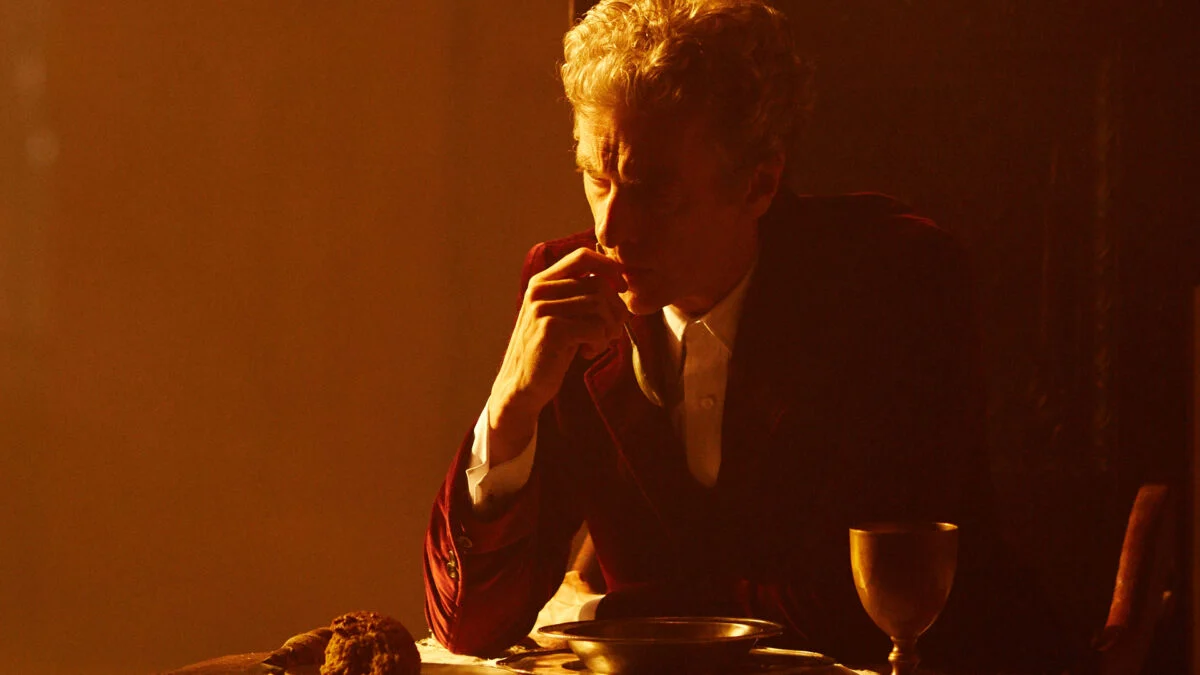
The auditorium lights dimmed, a hush fell, and Peter Capaldi stepped up to the microphone. Not to play the Doctor, but to dissect the show’s recent missteps with the precision of a Time Lord examining a paradox. His words, measured and thoughtful, cut through the noise—a surgeon’s scalpel exposing a critical ailment.
Recently, Capaldi, the Twelfth Doctor, shared his perspective with the Mirror, offering a diplomatic yet pointed explanation: Doctor Who, he suggests, may have lost its way by prioritizing brand status over its cultural significance. The pursuit of the former, in his view, has diminished the latter’s appeal.
“The show became very, very big. And it was never like that when I loved it. So it became a different thing. I think the responsibilities of playing the part became more,” Capaldi said. “There were more of them, there were more things that you had to do rather than just, I mean, I think in the old days, you know, if you were John Pertwee or Tom Baker or something like that, you probably, you know, you spend most of your year making it and then a bit of your year promoting it. But it wasn’t this in-your-face kind of thing that suddenly was really important to the BBC, or suddenly really important to a brand that had to be maintained.”
I remember when Capaldi’s casting was announced—a televised event, not a press release. That moment signaled a shift. As the franchise grew, it overshadowed what made Doctor Who a beloved British institution.
“It was just a show that some kids really loved and other kids didn’t care about, but wanted to watch football or you grew out of, you know,” Capaldi continued. “It became this sort of very important thing. I think less in a cultural way and more in an economic way. I think the show is a little bit of a victim of its success. You know, the show that I loved was a tiny thing, a little small thing that survived. It just survived, but nobody knew that it was warming its way into the culture in such a deep way. And I think that’s what I have an affinity with.”
Capaldi’s argument gains weight when considering the BBC’s fractured partnership with Disney. The Mouse House poured money into two seasons (and one unaired spinoff), aiming to build a “Whoniverse.” Yet, this ambition set the stage for a potential disaster, which many believe unfolded in 2025.
It’s not about budget—a little “cheapness” can be part of the charm—but about who controls the narrative. Doctor Who thrives when it’s free from corporate mandates, when its heart is focused on the story itself. As the BBC plans beyond 2026, perhaps it will steer clear of another Disney-like deal.
Want more io9 news? Check out when to expect the latest Marvel, Star Wars, and Star Trek releases, what’s next for the DC Universe on film and TV, and everything you need to know about the future of Doctor Who.
The Paradox of Popularity
Think of your favorite local band that signs a major record deal. Suddenly, their sound changes, becomes more polished, more “marketable.” Doctor Who faces a similar risk: success can dilute its unique essence.
Capaldi highlights that the show’s increased prominence within the BBC transformed his role. The focus shifted from acting to brand management. The weight of expectation grew, stifling the creative spark that once fueled the TARDIS.
Is Doctor Who too Woke?
The debate rages online: has Doctor Who’s embrace of contemporary social issues alienated long-time viewers? Some argue that the show’s primary mission should be entertainment, not social commentary. Others believe that science fiction has always been a vehicle for exploring societal issues, citing examples from Star Trek and The Twilight Zone. Whether or not the series has become overtly political is, of course, open to interpretation.
The Price of a “Whoniverse”
Remember the hype surrounding the Marvel Cinematic Universe (MCU)? Disney aimed to replicate that success with Doctor Who, envisioning a vast interconnected web of shows, movies, and merchandise. But chasing that “Whoniverse” ideal may have blinded them to the core appeal of the original series.
The failed Disney partnership serves as a cautionary tale. The influx of cash came with strings attached, potentially influencing creative decisions and placing undue pressure on ratings. The pursuit of a franchise empire may have jeopardized the very thing that made Doctor Who special.
Why did Disney abandon Doctor Who?
The exact reasons for Disney’s departure remain shrouded in secrecy. Insiders whisper about creative differences, unmet viewership targets, and a clash of corporate cultures. Whatever the truth, the split suggests that Doctor Who’s unique DNA proved incompatible with Disney’s franchise-building formula.
A Return to Simplicity?
Imagine stripping away the layers of corporate expectation and budgetary excess. What remains? A quirky British sci-fi show about a time-traveling alien who champions the underdog. That, according to Capaldi, is the essence of Doctor Who, and what gave the series its staying power.
Capaldi longs for a return to those humbler roots, when Doctor Who was a “tiny thing” that “warmed its way into the culture.” He suggests that the show’s future depends on shedding its self-importance and rediscovering its original charm.
How can Doctor Who recapture its former glory?
Perhaps the answer lies in embracing smaller, more intimate stories. Focus on compelling characters, thought-provoking themes, and imaginative world-building, rather than chasing blockbuster spectacle. Maybe, just maybe, the show can reignite the spark that captivated generations.
The series now faces a critical juncture: Can Doctor Who step back from the precipice of franchise obsession and reclaim its identity as a cultural touchstone, or is it destined to become another casualty of corporate ambition?