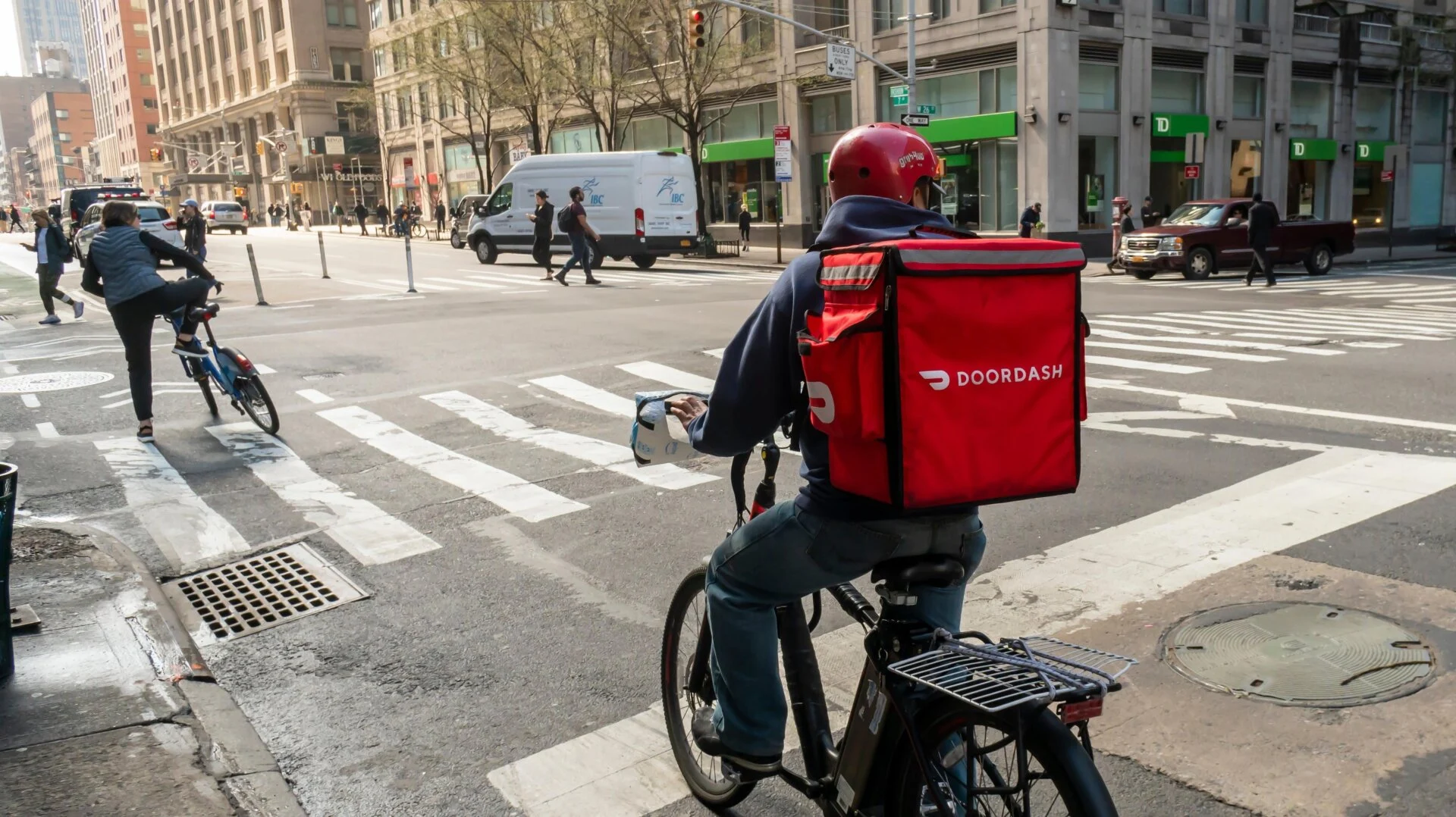
The rain was coming down in sheets that night, and every ping on Miguel’s phone meant another trek into the storm. But tonight, something felt different; the tips that usually padded his earnings were mysteriously absent. Had the algorithm turned against him, or was something else at play?
The Missing Millions: A Tip Jar Dries Up
There’s a quiet anger brewing among New York City’s delivery workers. A recent report from the New York City Department of Consumer and Worker Protection (DCWP) alleges that DoorDash and Uber Eats have implemented app design changes that have significantly reduced tips for delivery workers since the city began enforcing a minimum pay rate in December 2023.
According to the DCWP report, average tips on these platforms plummeted from $3.66 (€3.40) per delivery to a mere $0.93 (€0.86) within a week of the changes. The current average sits at a dismal $0.76 (€0.71) per delivery, resulting in an estimated $554 million (€515.5 million) loss in tip income for these essential workers. That’s roughly $5,800 (€5,400) in lost annual income per person, says the agency.
For context, the report states that the average tip on other food delivery apps is $2.17 (€2.02).
“Under Mayor Mamdani, the biggest corporations in the world will no longer be able to rake in record profits on the backs of workers and consumers,” said DCWP Commissioner Samuel A.A. Levine in a press release.
The city agency claims that Uber Eats and DoorDash moved the tipping prompts to after checkout, effectively burying them in a separate, easily overlooked process.
DoorDash Head of North America Public Policy John Horton vehemently denied these claims, stating, “DCWP’s claims, and the subsequent reporting, are flat out wrong. To be clear: no money has been stolen from Dashers. Consumers have not been misled. Dashers always receive 100% of tips placed on DoorDash.”
DoorDash has even launched a webpage to refute the report’s findings.
“Moving tipping to after checkout isn’t novel or nefarious – it’s how tipping works in many areas of life. In fact, the DCWP suggested this exact approach in their 2022 study. We followed that suggestion and now they are attacking us for it,” Horton said, referencing a previous report that examined the potential effects of a minimum pay rate for delivery workers.
That earlier report suggested that higher worker pay might allow platforms to “reduce consumers’ costs through changes to the user interface that discourage or eliminate tipping.”
Uber Eats has yet to issue a public statement.
Why Did DoorDash and Uber Eats Change Their Apps?
Imagine the app interface as a carefully constructed stage. Each button, each prompt, is strategically placed to influence your behavior. Some observers think that the changes by DoorDash and Uber Eats are a direct response to New York City’s mandated minimum pay rate for delivery workers. The allegation is that by subtly discouraging tipping, these companies are attempting to offset the increased labor costs, effectively shifting the financial burden onto the workers themselves.
The new report arrives just before DCWP is set to begin enforcing new amendments to the city’s delivery worker laws, mandating clear and user-friendly tipping options.
DoorDash and Uber Eats sued the city last month in an attempt to block these amendments, citing concerns about “tipping fatigue” and rising prices. A court ruling is pending, but the department intends to enforce the law starting January 26th.
“If these companies do not follow new tipping laws going into effect later this month, they will face significant consequences,” Levine stated.
DoorDash’s Troubled History in NYC
The shadow of past controversies looms large. This isn’t the first time DoorDash has faced scrutiny in New York regarding worker compensation. Early last year, the New York State Attorney General’s office announced a $16.75 million (€15.5 million) settlement with DoorDash following allegations that the company misled both customers and delivery workers about tip handling.
The Attorney General’s investigation focused on DoorDash’s “guaranteed pay” model, which was in place between May 2017 and September 2019. Under this system, workers were shown a guaranteed amount they would earn per order before accepting it, but customer tips were used to subsidize that guaranteed amount, rather than supplementing it.
Can Delivery Apps Really Influence Tipping?
Absolutely. App design is a powerful tool, able to guide users toward specific actions. Even seemingly small changes, such as moving the tipping prompt or altering the default tip percentages, can significantly impact customer behavior. The core question becomes: are these changes implemented to genuinely improve user experience, or are they designed to subtly manipulate tipping habits and, in turn, worker income?
The Road Ahead: Legal Battles and Worker Rights
The fight is far from over. With the city’s new tipping laws about to take effect and DoorDash and Uber Eats already engaged in legal action, the future of delivery worker compensation in New York City remains uncertain. This legal clash underscores a larger debate about the responsibilities of gig economy platforms and the rights of the workers who power them.
This situation is a tightrope walk between corporate profit and fair labor practices. As these companies spar with the city, are the delivery workers, the very backbone of these services, left to bear the weight of this conflict?