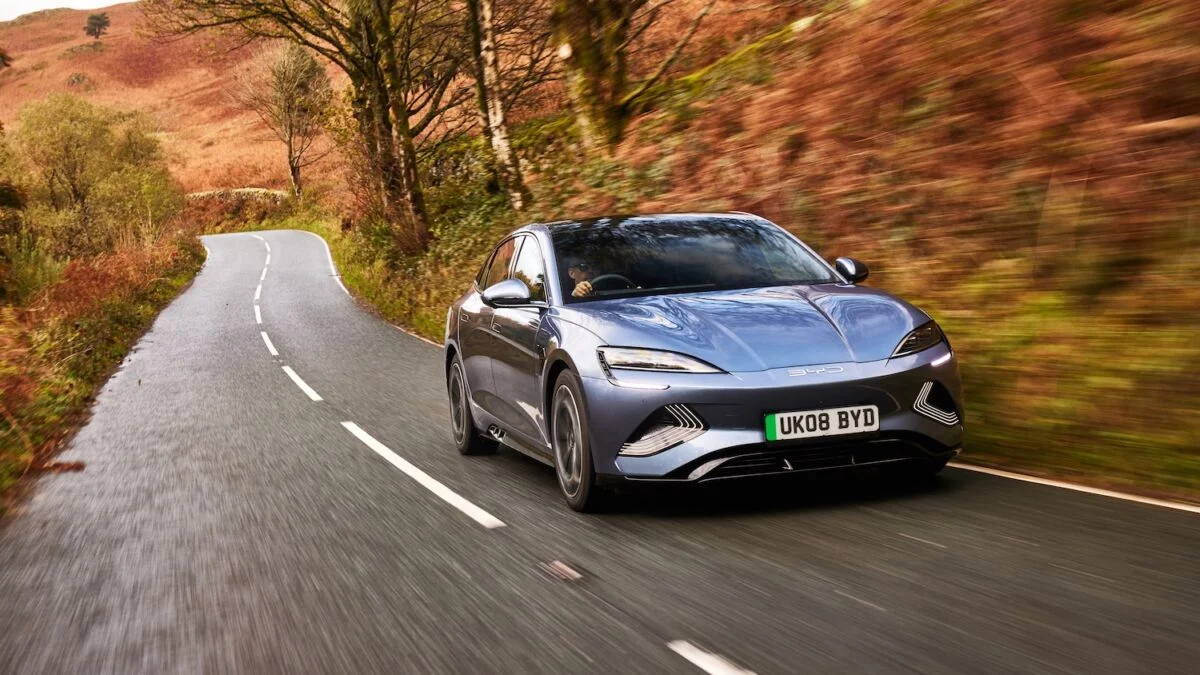
The border agent sighed, waving the electric SUV through. Just a trickle today, he thought, but what about next year? The shift is on: Canada is making big moves to reduce its economic reliance on the U.S., and that means Chinese electric vehicles are about to flood the market.
A New Automotive Landscape
I heard it straight from a Canadian auto dealer: “Trump’s tariffs are killing us.” Prime Minister Mark Carney just announced in Beijing a new strategic alliance with China. The headline? Canada will drastically cut tariffs on Chinese EVs, allowing up to 49,000 of them to enter the Canadian market.
This is not just a tweak; it’s a sharp turn away from the U.S., which slapped a 100% tariff on Chinese EVs back in 2024—a move Canada quickly mirrored. This pivot is a calculated risk, a bet that new Chinese investment will revitalize Canada’s auto sector.
Betting on the Future
My neighbor, a parts supplier for Ford, told me he fears that Canada is aiming for increased Chinese investment, specifically in the automotive industry. The Prime Minister’s Office stated that the agreement is expected to “drive considerable new Chinese joint-venture investment in Canada with trusted partners…and assure a strong build-out of Canada’s EV supply chain.”
In return, China will lower tariffs on Canadian canola seed, a major agricultural export, to approximately 15% from a previous 85%, starting March 1. Canada also wants to increase exports to China by 50% by 2030. This deal is more than just economics; it’s about hedging bets in an uncertain global landscape. This is like two tectonic plates grinding against each other, with Canada caught in the middle.
Will Chinese investment in Canada increase?
The short answer? Almost certainly, yes. China sees an opening, and Canada is rolling out the welcome mat. For China, Canada offers a back door into the North American market, bypassing those hefty U.S. tariffs.
Remember, though: the U.S. remains Canada’s biggest trading partner. In 2024, China accounted for $118.9 billion (€109.8 billion) in two-way merchandise trade, a fraction of the $762 billion (€704 billion) Canada trades with the U.S. So why the shift?
Trump’s Shadow Looms Large
One trucker I spoke with put it bluntly: “Trump’s unpredictable. China…at least you know where you stand.” Canada appears willing to gamble, given Trump’s escalating trade rhetoric, including talk of making Canada the U.S.’s 51st state. He’s already imposed tariffs on Canadian goods, with duties of up to 35% on certain products and steel tariffs reaching 50%. Even the United States–Mexico–Canada Agreement (USMCA) is under review.
Mark Carney told reporters that while Canada’s relationship with the U.S. is more profound than its ties with China, relations with Beijing have “become more predictable.” This is a significant statement, considering the recent history.
What was Canada’s relationship with China before this deal?
Until recently, the relationship between Canada and China has been tense, especially after Canadian authorities arrested Huawei CFO Meng Wanzhou in 2018 at the request of the U.S. That incident cast a long shadow.
When asked about Canada’s new deal, Trump downplayed it, stating, “That’s OK. That’s what he should be doing. I mean, it’s a good thing for him to sign a trade deal. If you can get a deal with China, you should do that.”
A Calculated Gamble?
This move is a high-stakes poker game, and Canada just placed a big bet. Lowering tariffs is the bait, hoping that China’s investments will revitalize its auto industry. This deal is like a weather vane, showing us which way the winds of global trade are blowing.
What are the risks for Canada in this deal?
There are a few. Over-reliance on China could backfire if relations sour. The U.S. could retaliate, imposing even more tariffs on Canadian goods. And there’s the question of whether Chinese-made EVs will truly resonate with Canadian consumers.
The Canadian gamble might pay off handsomely, or it might leave them exposed. Is it a bold move, or a dangerous overreach?