
I remember the first time I faced Vorax. My build, once a fortress, crumbled like sand. Then, a veteran player mentioned Grafting, a whispered secret among those who refused to be swept aside. It turns out Torchlight Infinite‘s Vorax season isn’t just about surviving—it’s about rewriting the rules with the gear grafting system, letting you completely revamp your character’s build.
Gears form the backbone of any ARPG, a truth that holds firm in Torchlight Infinite. What sets this game apart, however, is Grafting—a system poised to redefine how gear customization functions. Imagine crafting a piece of equipment with an affix previously deemed unattainable, perfectly tailored to realize your ultimate build.
Torchlight Infinite Grafting explained
Think of your favorite chef. They don’t just follow recipes; they experiment, remixing ingredients to create something entirely new. Grafting is similar. It’s the new gear crafting system within Torchlight Infinite, allowing you to acquire Vorax parts and imbue them with enhancements of your choosing. The level of customization is remarkable, providing boosts that can substantially alter your character’s capabilities.
Once you’ve gathered a decent stash of organs (yes, that’s part of the process!), access the Graft menu. You’ll begin by selecting the specific Vorax piece you wish to enhance. Following this, you can start applying affixes extracted from the harvested organs, which come in a variety of types, each offering unique benefits.
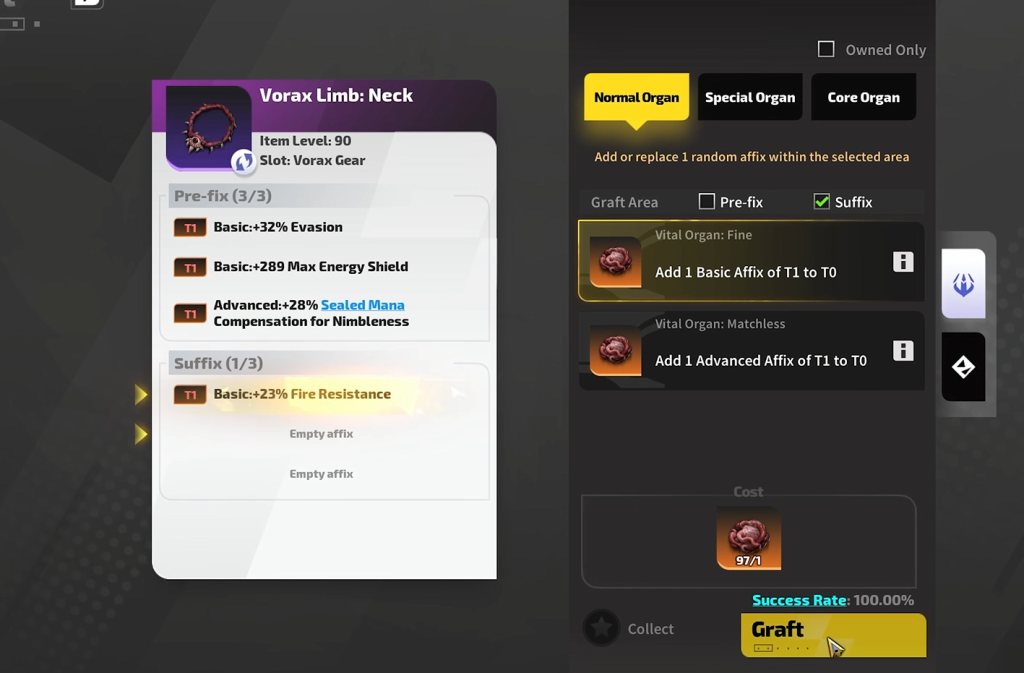
While there’s a limit to the number of affixes you can apply, Vorax parts don’t adhere to traditional slot restrictions. This means you can transfer buffs from a chest armor to a ring, or from a ring to your gloves. This opens up possibilities for gear utilization and enhancement.
How to graft in Torchlight Infinite
Remember building model airplanes as a kid? Each piece, seemingly insignificant alone, contributed to the final creation. Grafting is similar, but instead of plastic, you’re working with Vorax parts and harvested organs.
- Open the Graft menu and select the part.
- There are three types of organs: Normal, Special, and Core.
- Normal organs are basic affixes that are easy to obtain.
- Special organs apply powerful ultimates to your Vorax gear.
- Finally, you can recycle your Legendary gear and harvest them as Core organs. Then, their legendary power can be shifted onto the Vorax gear base. Once complete, your Vorax gear will inherit a new legendary power. As mentioned above, the equipment types don’t matter.
You can also apply Corrosion to your Vorax gear to gamble for even better results for your existing affix.
What are the best strategies for obtaining Vorax parts?
Focus on Vorax-infested areas within the game. Participating in events that specifically highlight Vorax activity will increase your chances of acquiring the necessary parts. Team up with other players to tackle tougher Vorax challenges, boosting both efficiency and reward potential.
How does the Corrosion mechanic affect Grafting outcomes?
Applying Corrosion introduces an element of risk and reward. While it can potentially enhance existing affixes on your Vorax gear, it also carries the possibility of negative alterations. Weigh the potential benefits against the risks before using Corrosion, and consider using it on gear that already has a solid base to mitigate potential losses.
Can I revert a Grafting modification if I’m not satisfied with the result?
No, Grafting modifications are, for the most part, permanent. This permanence underscores the importance of planning your Grafting decisions carefully. Consider the long-term implications of each modification, and make informed choices to avoid irreversible mistakes. Perhaps a future update will introduce a reversal mechanic similar to Diablo’s Mystic, but, until then, plan accordingly.