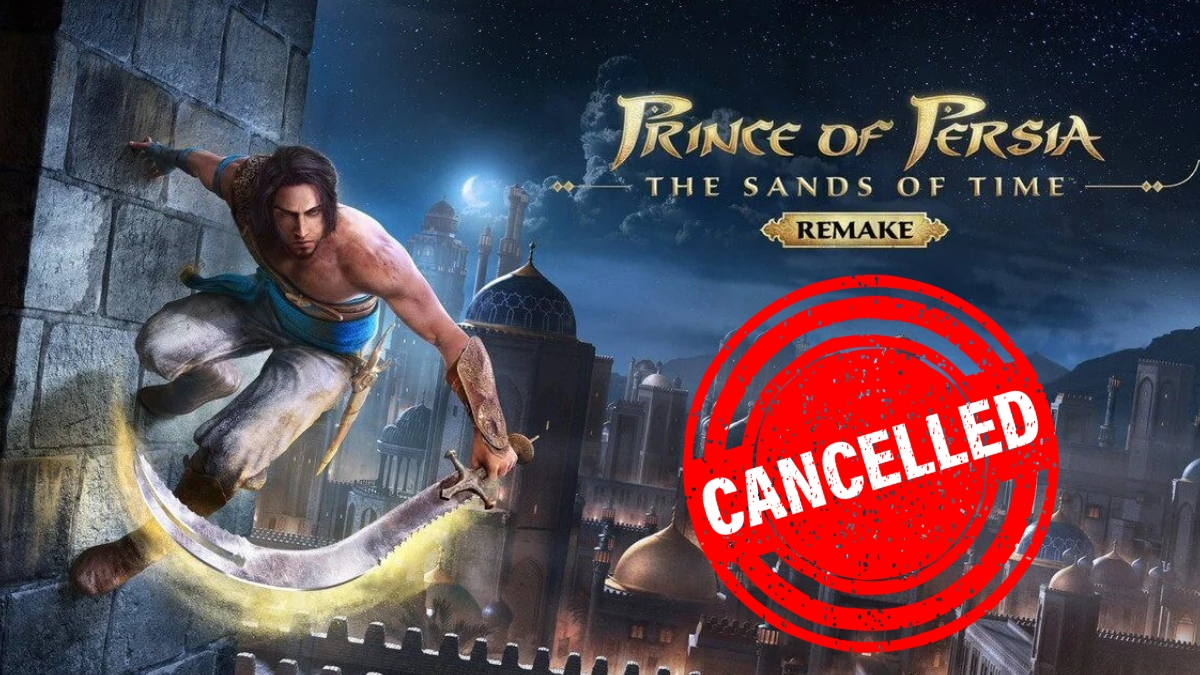
The email arrived just as I was finalizing my 2026 game release calendar, a meticulously crafted list dominated by a certain open-world crime simulator. Then, the subject line hit me: “Prince of Persia Remake – Update.” My hopeful anticipation instantly turned to disappointment; the sands of time, it seemed, had run out for this particular project.
Ubisoft’s announcement that they are cancelling Prince of Persia: The Sands of Time Remake sent ripples of disbelief through the gaming community. Originally revealed at Ubisoft Forward 2024 with a brief teaser, the remake promised a return to a beloved classic, but now joins five other axed titles. Let’s examine the unfolding situation at the French game studio.
Prince of Persia: Sands of Time Remake Canceled as Ubisoft Restructures Projects
The atmosphere is tense at Ubisoft France and Ubisoft Montreal. A statement released on the Prince of Persia X account confirmed the cancellation: “We’ve made the difficult decision to stop development on Prince of Persia: The Sands of Time Remake. We know this is deeply disappointing. The game carries enormous meaning for fans and for the teams who worked on it.”
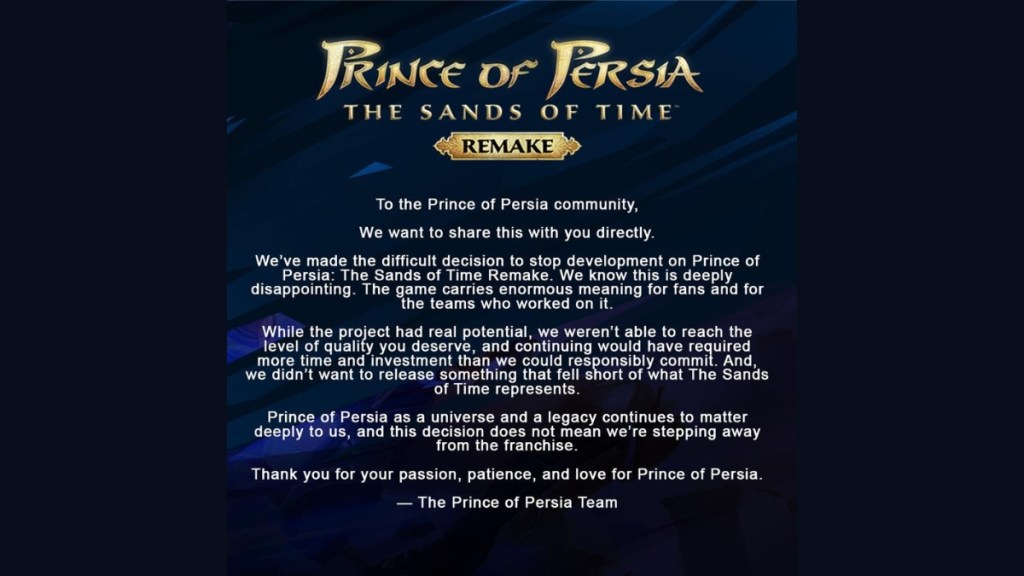
The statement continued, “While the project had real potential, we weren’t able to reach the level of quality you deserve, and continuing would have required more time and investment than we could responsibly commit. And we didn’t want to release something that fell short of what The Sands of Time represents.” It’s easy to imagine the internal debates leading up to such a declaration.
Geoff Keighley reported that Ubisoft has also shelved six additional projects (including three new IPs and a mobile title) and delayed seven games, including an unannounced title pushed from fiscal year 2026 to 2027. Layoffs are anticipated on February 12. The studio’s ambition was once like a mighty river, but is now being carefully redirected.
What is Ubisoft doing to improve game quality?
Ubisoft stated that they intend to “return to exceptional levels of quality on the Open-World Adventure segment” and to “change the group’s position in the native experiences segment”. Their Halifax and Stockholm offices are closed. The company will now operate under five “creative houses,” each managing different IPs with independent leadership.
These “creative houses” include Vantage Studios (Montreal), overseeing Rainbow Six, Assassin’s Creed, and Far Cry. The second handles The Division, Ghost Recon, and Splinter Cell. A third focuses on live experience titles like The Crew, Riders Republic, and Brawlhalla. The fourth oversees the fantasy genre (including Prince of Persia and Anno), and the fifth manages family-friendly titles like Just Dance and UNO.
Will there be any more Prince of Persia games?
Ubisoft has assured fans, “Prince of Persia as a universe and a legacy continues to matter deeply to us, and this decision does not mean we’re stepping away from the franchise.” The sands may have shifted, but the oasis could still appear.
What challenges does Ubisoft face with its open-world titles?
One potential issue is market saturation. Ubisoft’s open-world titles, while successful, sometimes face criticism for formulaic design. Re-evaluating development may allow them to recapture what made franchises like Assassin’s Creed so compelling. The shift to creative houses, allocating different IPs, may be exactly what the studio needs.
The question remains: can Ubisoft successfully navigate this restructuring and deliver on its promise of exceptional quality, or will these changes be merely cosmetic?