The call came at 3 AM. A frantic aide, voice tight with panic, stammered about tariffs, Greenland, and something about a “deal.” It sounded like a fever dream, but the red light on the phone was real—another crisis brewing in the incandescent glow of the Situation Room.
President Trump announced Wednesday he had a “concept of a deal” with European countries involving his plan to “acquire” Greenland. Details remain murky, but the announcement has raised eyebrows and more than a few questions about the future of Arctic security. What exactly does this “deal” entail, and how will it affect international relations?
Trump indicated the U.S. wouldn’t impose 10% tariffs on European countries that sent troops to Greenland for defense. These tariffs, initially slated for February 1 and potentially rising to 25% in June, were contingent on Greenland coming under U.S. control.
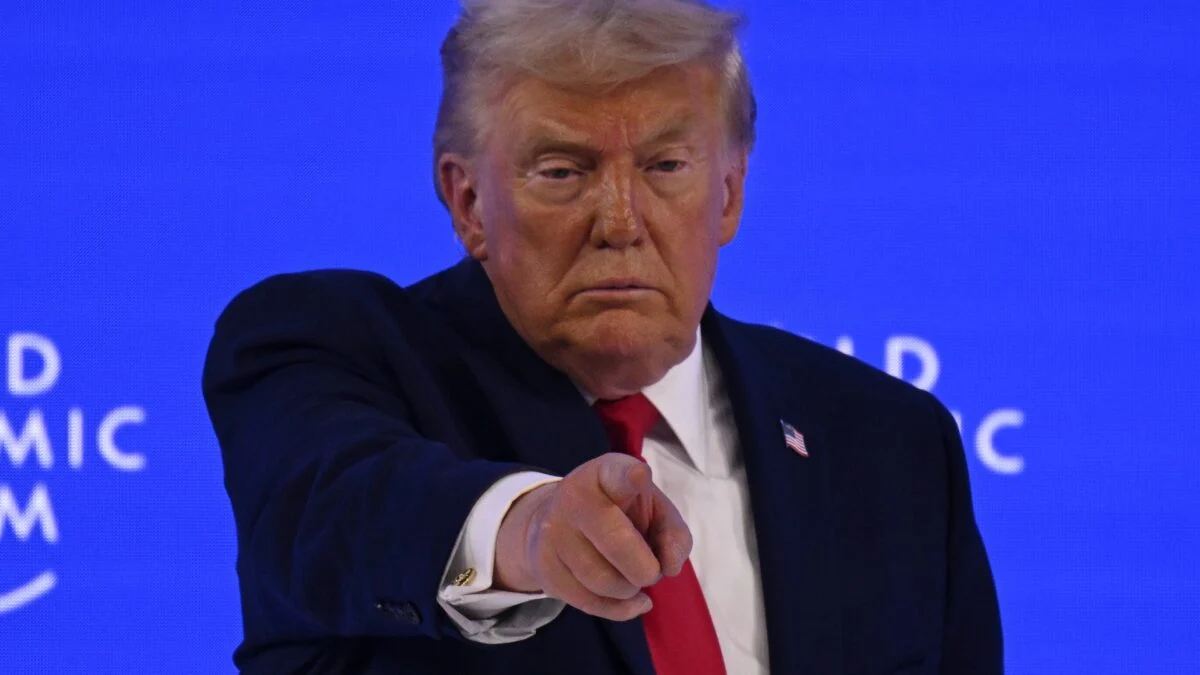
During an interview with CNBC’s Joe Kernen in Davos, Switzerland, the president was coy about specifics. He described it as “pretty much the concept of a deal,” stopping short of any firm commitment.
In brief, the deal is intended to be “forever.” Trump previously floated the idea of a 99-year lease for Greenland, suggesting a mineral agreement and addressing Arctic region security.
Trump: “We have a concept of a deal. I think it’s gonna be a very good deal for the United States. Also for them. And we’re gonna work together on something having to do with the arctic as a whole, but also Greenland. And it has to do with the security and other things.”
— Aaron Rupar (@atrupar.com) January 21, 2026 at 12:17 PM
The Players Involved: Rutte, Denmark, and Beyond
Imagine a chess game where the pieces are nations, and the board is the Arctic. Trump apparently negotiated with Mark Rutte, NATO’s Secretary General, leaving unclear the involvement of other countries. Kernen questioned whether Rutte consulted with Denmark, which governs Greenland. Trump responded, “I assume he’s been speaking to them, I assume he’s been speaking to all of them.”
Trump praised Rutte as a “very strong leader,” seeming to suggest Rutte represents European countries. Rutte, known for his positive view of Trump, has previously referred to him as “daddy.” Perhaps Trump mistook Rutte’s admiration as a green light to hand over Greenland—something Rutte cannot do—or Rutte genuinely offered the country to the U.S.
If Rutte discussed major concessions with Denmark, he likely would’ve informed Trump. The president’s response suggests nothing concrete has been achieved.
NATO issued a vague statement shortly after the CNBC interview: “Talks among NATO allies on the framework Trump referenced will focus on ensuring Arctic security through the collective efforts of allies, especially the seven Arctic allies.”
What is the strategic importance of Greenland?
Greenland’s geographical position makes it a strategic linchpin for Arctic security and resource control. Trump’s pursuit can be seen as part of a broader geopolitical play. The Arctic is becoming increasingly important for its natural resources and shipping lanes as ice caps melt, so it is no wonder there is rising interest in Greenland.
Market Reactions and Media Coverage
The markets are a fickle beast; they often react in mysterious ways to political news. Trump lamented that good news from him often causes the stock market to decline. Markets rose after his Truth Social post about a Greenland deal, followed by his CNBC interview an hour later.
The CNBC interview, led by Joe Kernen, was notably flattering to Trump. At one point, Trump told Kernen he was “too young” to remember a past era, prompting mutual compliments about their youthfulness. This kind of coverage, while favorable to the president, does little to clarify the complexities of the potential agreement.
CNBC’s Joe Kernen tried hard to not make any news during his big interview with Dear Leader. Get a load of this question lmao.
— Aaron Rupar (@atrupar.com) January 21, 2026 at 12:28 PM
Trump also mentioned selling Venezuela’s oil to aid the country, while “keeping some” for the U.S., revisiting his long-held view that the Iraq War was a mistake because the U.S. didn’t seize oil resources.
How much would it cost the U.S. to buy Greenland?
Estimates vary wildly, but purchasing Greenland would likely cost billions of dollars (€ equivalent). Beyond the financial aspect, there are complex political, social, and environmental factors that come into play. The real price extends far beyond a simple monetary transaction.
International Pushback and Shifting Alliances
The world stage is set, and the actors are taking their positions. Trump intensified his Greenland rhetoric with a widely criticized speech at the World Economic Forum, even confusing Iceland with Denmark.
Denmark, Norway, Sweden, France, Germany, the UK, Finland, and the Netherlands dispatched a small number of troops to Greenland to deter a potential U.S. attack. Global leaders have resisted Trump’s plan, with some of America’s closest allies expressing their discontent. French President Emmanuel Macron stated his country prefers respect to bullying and science to conspiracies, clear allusions to Trump’s approach.
Canadian Prime Minister Mark Carney suggested that American dominance no longer works and that his country’s relationship with the U.S. has changed permanently: “This bargain no longer works. Let me be direct. We are in the midst of a rupture, not a transition.”
Swedish Foreign Minister Maria Malmer Stenergard expressed cautious optimism, emphasizing that they wouldn’t be blackmailed regarding Greenland.
“Good that Trump has now backed away from tariffs on those of us who have supported Denmark and Greenland,” Stenergard posted on X, according to a DW translation. “The demands about moving borders has received well-earned criticism. That is also why we have repeated that we will not be blackmailed. It appears that our work together with allies has had an impact.”
Who currently controls Greenland?
Greenland is a self-governing territory within the Kingdom of Denmark. While Greenland has its own parliament and controls many of its internal affairs, Denmark handles its foreign policy and defense. Any agreement involving Greenland would require Denmark’s consent and cooperation.
The Future of Greenland and America’s Role
In the coming weeks, the Europeans will likely provide more details about Greenland’s future. Regardless of the final agreement, the U.S. has charted an isolated course. America no longer stands as a reliable ally to liberal democracies. Even with a U.S.-Europe understanding on military presence in Greenland, Trump could easily reverse course and threaten another invasion. In this intricate game of global politics, can any agreement truly be considered permanent, or is it merely a temporary truce in an ongoing power struggle?