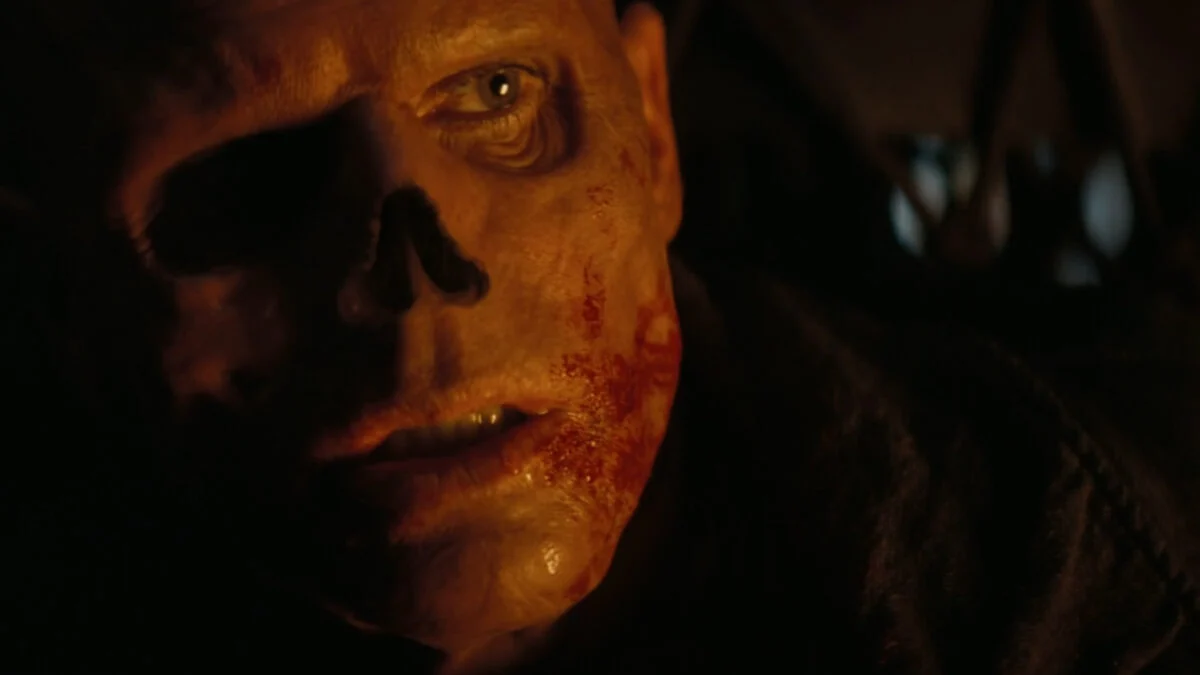
The air crackled with static. A lone figure, cloaked and weary, stumbled through the ruins of New Vegas, the neon glow of the Strip a distant memory. Then, a guttural growl shattered the silence, promising a threat far more dangerous than any raider—a new player had entered the game.
Fallout season two is building toward something big. While its narrative of revenge and survival has drawn inspiration from Fallout: New Vegas, the latest episode takes cues from elsewhere in the series, hinting at conflicts to come.

“The Other Player,” episode six of season two, throws several curveballs. The Ghoul’s betrayal leaves Lucy at the mercy of her father, Hank, while the Ghoul himself ends up impaled in New Vegas after Lucy throws Hank out of a window. Flashbacks reveal more of the Ghoul’s life as Cooper Howard. Just when things seem dire, a mysterious figure rescues him, whisking him away to a hideout to mend his wounds.
The Narrator Emerges: An Unexpected Alliance
Think back to the last time you heard a familiar voice in an unexpected place. That jolt of recognition, the immediate sense of connection—the showrunners are betting you felt something similar. Because that mystery person who rescues the Ghoul? It’s a Super Mutant, voiced by none other than Ron Perlman.
Perlman’s involvement is a brilliant move. He’s the voice that has introduced almost every Fallout game, reminding players that war never changes. But casting him as a Super Mutant? It’s a clue that they may be the real threat this season, even more so than Mr. House or Hank.

This marks the first significant appearance of a Super Mutant. Unlike Ghouls, who are mutated by radiation, Super Mutants are products of the Forced Evolutionary Virus (FEV), a bioweapon with a long history in the Fallout universe.
How does FEV affect Super Mutants?
FEV transforms humans, granting them enhanced strength and disease resistance. Different strains of FEV produce varying types of Super Mutants. Those with minimal radiation exposure often retain their intelligence. Perlman’s character seems to be one of these smarter mutants, pitching an alliance with the Ghoul against a common enemy: the Enclave.
The Enclave Rises: A Shadowy Cabal Returns
Imagine the whispers in the halls of power before the bombs fell. The deals made in secret, the levers pulled by unseen hands—that’s the Enclave. While the Enclave has been mentioned in season one through Doctor Wilzig’s history, the emergence of Super Mutants suggests they’re about to play a larger role.
The Enclave, primary villains of Fallout 2, are a fascist paramilitary group that existed before the Great War. They were a shadowy cabal that manipulated the U.S. for their own gain. After the war, they resurfaced, intent on wiping out wastelanders and establishing themselves as America’s rulers.
What happened to the Enclave after Fallout 2?
After their plans were thwarted in Fallout 2, the Enclave splintered into remnant factions. Given the show’s timeline, we might be witnessing the genesis of one of these factions, poised to become a major force. Their influence may already be woven into the show’s fabric.
A Powder Keg of Factions: Alliances and Animosity
Think of the wasteland as a chessboard. Each faction, a different piece, moving with its own agenda. The arrival of the Super Mutants throws a wrench into the existing power dynamics. Are they merely pawns, or are they about to become kings?
The wasteland’s power players might find themselves uniting against a shared foe. The stage is set for shifting alliances, betrayals, and a desperate fight for survival. Will the various factions band together against this new threat, or will they tear each other apart in the process?
Want more io9 news? Check out when to expect the latest Marvel, Star Wars, and Star Trek releases, what’s next for the DC Universe on film and TV, and everything you need to know about the future of Doctor Who.