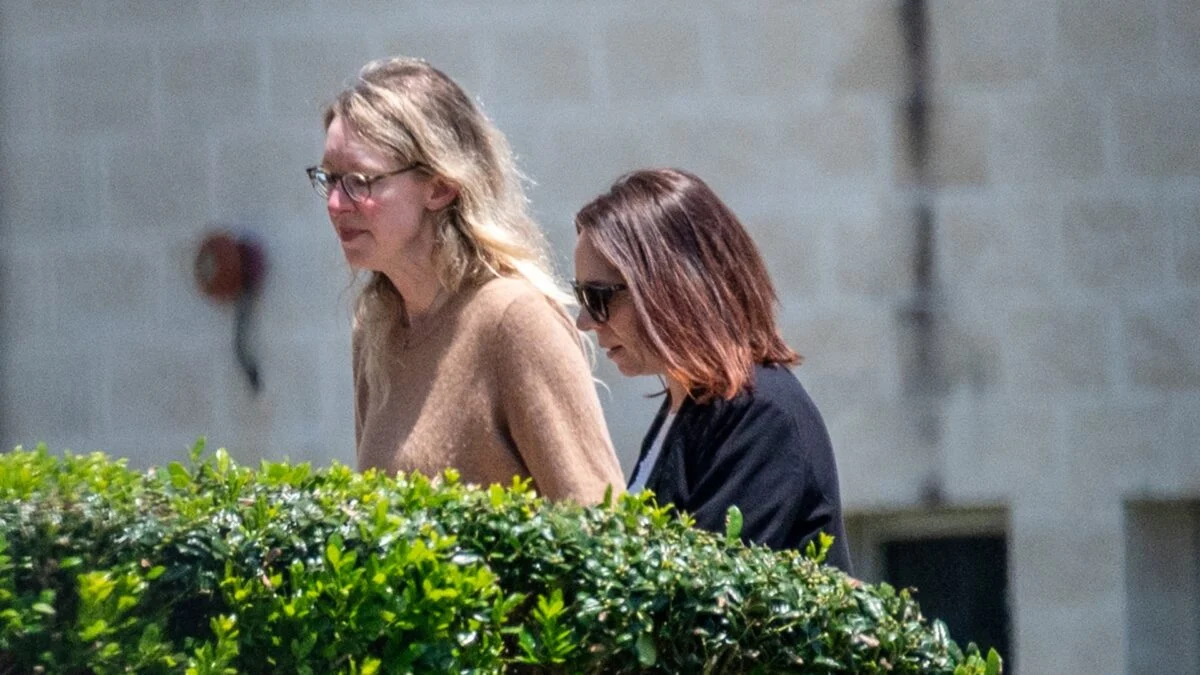
The prison doors clanged shut, not just on Elizabeth Holmes’ freedom, but on the empire she’d built on fabricated technology. Now, whispers are circulating that Holmes, the disgraced Theranos founder, is angling for a way out, years ahead of schedule. Could a well-placed appeal to Donald Trump be her golden ticket?
Holmes, who entered Federal Prison Camp (FPC) Bryan in Texas in May 2023, is currently slated to serve an 11-year sentence for defrauding investors. She was found guilty in 2022 of wire fraud and conspiracy related to her blood-testing company, Theranos.
The Presidential Pardon Power: A History of Surprises
I once saw a street magician turn a crumpled napkin into a twenty-dollar bill. That trick felt a lot like watching a presidential pardon in action—a seemingly impossible transformation. Since January 2025, Donald Trump has reportedly granted pardons and commutations to over 1,600 individuals. According to Liz Oyer, a former pardon attorney at the Justice Department, those pardons have erased more than $1.5 billion (€1.38 billion) in penalties.
Oyer, who says she was fired after refusing to reinstate Mel Gibson’s gun rights following his domestic violence conviction in 2011, has closely tracked Trump’s use of pardon power.
Consider Trevor Milton, founder of Nikola, the now-defunct electric and hydrogen vehicle company. Milton was ordered to repay $660 million (€607 million) to defrauded investors. Following a pardon from Trump last year, that debt vanished. Public records indicate Milton and his wife donated $1.8 million (€1.66 million) to Trump in 2024.
The Justice Department website indicates that just last week, Trump issued 14 pardons. Nine of those cases reportedly involved fraud.
Remarkably, Trump apparently granted clemency to one woman twice. Adriana Camberos, convicted of attaching counterfeit labels to 5-Hour Energy bottles, had her sentence commuted in 2021 during Trump’s first term. Then, after a subsequent conviction on an unrelated fraud case in 2024, she received another pardon last week, according to The Guardian.
Other high-profile figures who’ve received clemency from Trump include Changpeng Zhao, founder of Binance, and Ross Ulbricht, founder of the darknet marketplace Silk Road. Ulbricht had been serving a life sentence.
What is the difference between a pardon and a commutation?
Holmes and former Theranos President Ramesh “Sunny” Balwani reportedly owe $452 million (€416 million) in restitution to their victims. Holmes is said to be seeking a commutation, which would shorten her sentence but would not erase the debt she owes. A full pardon would wipe the slate clean.
Subtle Signals From Behind Bars?
It’s worth remembering that Holmes hasn’t explicitly requested a pardon on X, but she hasn’t exactly been silent either. Back in November, she referenced Dilbert cartoonist Scott Adams, who sought Trump’s assistance with medical treatment.
“Our healthcare system is fundamentally broken when we need help from POTUS to get treatment,” the Holmes account reportedly tweeted. “Context: Scott Adams needed immediate access to life saving treatment. he needed President Trump’s help as nothing else was working. He pleaded on X, and the President helped him.”
How does someone apply for a presidential pardon?
According to Bloomberg and the Substack of Liz Oyer, Elizabeth Holmes is one of what is suspected to be dozens, or possibly hundreds, of people that have asked President Donald Trump for a commutation. If precedent is anything to go by, Trump is most likely receiving these letters through a lawyer, a connection, or a wealthy benefactor.
Can a presidential pardon be overturned?
A presidential pardon is nearly absolute, a power granted by the Constitution itself. It’s meant to be a check on the judicial system, a way to correct perceived injustices or offer mercy. The only real limitation is that a pardon can’t protect someone from impeachment. Once granted, a pardon is extremely difficult to overturn. Short of proving the pardon was obtained through bribery or some other illegal act, it stands.
The scope of executive clemency might seem expansive, but the rationale behind it, at least in theory, is about offering a second chance, acknowledging rehabilitation, or rectifying errors.
With Holmes scheduled for release in 2031, the question isn’t just whether Trump can help, but whether he will. Given the patterns of the past, is justice now a matter of who you know?