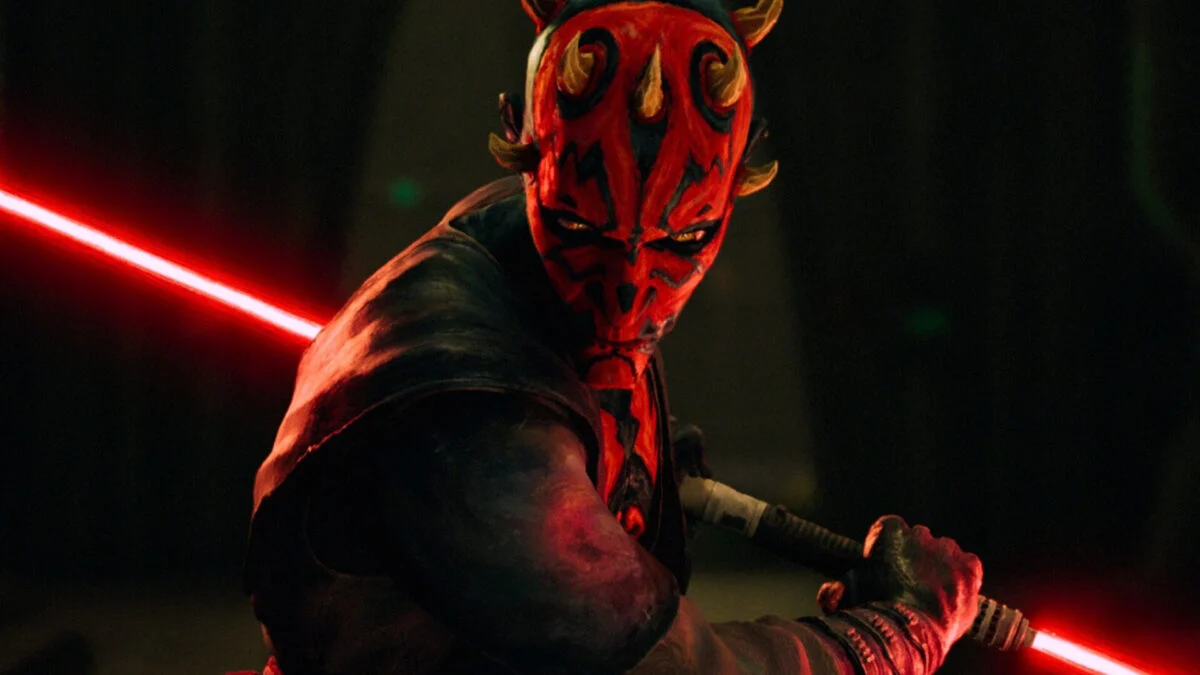
I’ll admit it: I screamed when I saw him ignite that double-bladed saber. 1999’s The Phantom Menace was a lot of things, but one thing it absolutely nailed was Darth Maul. Forget his minimal dialogue; Ray Park’s portrayal of the crimson Sith Lord was an instant icon.
Then, of course, he was sliced in half. Seemingly the end of the line for a villain with so much potential. For years, Maul was relegated to expanded universe comics and video game cameos. But just when we thought he was gone for good, Star Wars: The Clone Wars resurrected him, leading to his upcoming solo venture, Maul—Shadow Lord, bridging the gap between Clone Wars and Star Wars Rebels.
From the Grave to the Underworld
Remember when comic book deaths actually *meant* something? Good luck finding one today, and Star Wars isn’t much different. The modern era, arguably ignited by Clone Wars, owes a lot to the resurrection of Darth Maul. His brother, Savage Oppress, initially felt like a retread, but his introduction was merely a prelude to Maul’s grand return the following season.
Across Clone Wars and Rebels, Maul’s presence surprisingly shapes key events and characters like Obi-Wan and Palpatine, influencing the narratives of Revenge of the Sith and the original trilogy. It almost feels like a flex from Dave Filoni and George Lucas, bringing Maul back for rematches with Obi-Wan, alliances with Mandalorians, and a criminal partnership with Savage. It might all sound absurd if it weren’t for one thing: he’s consistently portrayed as a loser.
Why does Darth Maul come back?
Other revived characters, like Boba Fett and Ahsoka, sometimes suffer from the pressure to constantly be “cool.” Maul avoids this trap due to a degree of self-awareness baked into his character. Sure, he’s visually striking and has a dedicated fanbase, but he isn’t essential to the overarching narrative, even when it seems that way. He appears in a limited number of arcs in both Clone Wars and Rebels.
A Glup Shitto Who Just Won’t Quit
Think of Maul as a tenacious weed pushing through concrete. His persistence is almost admirable. His survival hinges on latching onto other characters’ stories. Each encounter with Obi-Wan ends in defeat. His closest confidant is a teenager he repeatedly tries to manipulate. His brother’s death stems from their ambition drawing Palpatine’s attention. Ultimately, Maul dies in Obi-Wan’s arms, a final, tragic echo of his obsession.

What is Darth Maul’s story?
He’s not the hero; he’s a supporting player desperate for a starring role. The irony of Maul is his relentless pursuit of significance, blind to the fact that he might be better off fading into obscurity. He’s the universe’s punching bag, and at this point, it’s kind of endearing.
Filoni and his team seem to understand this perfectly, maintaining a delicate equilibrium between acknowledging Maul’s appeal and knocking him down a peg (like getting tossed off a ledge by the guy he *just* blinded). But here’s where things get interesting with Shadow Lord: can the Maul we’ve seen stumble through Clone Wars and Rebels coexist with a Maul trying to build a criminal empire on a new planet? Will he keep his trademark loser energy, or is a glow-up on the horizon?
When is Maul—Shadow Lord coming out?
Maul—Shadow Lord arrives on Disney+ on April 6.
Want more io9 news? Check out when to expect the latest Marvel, Star Wars, and Star Trek releases, what’s next for the DC Universe on film and TV, and everything you need to know about the future of Doctor Who.