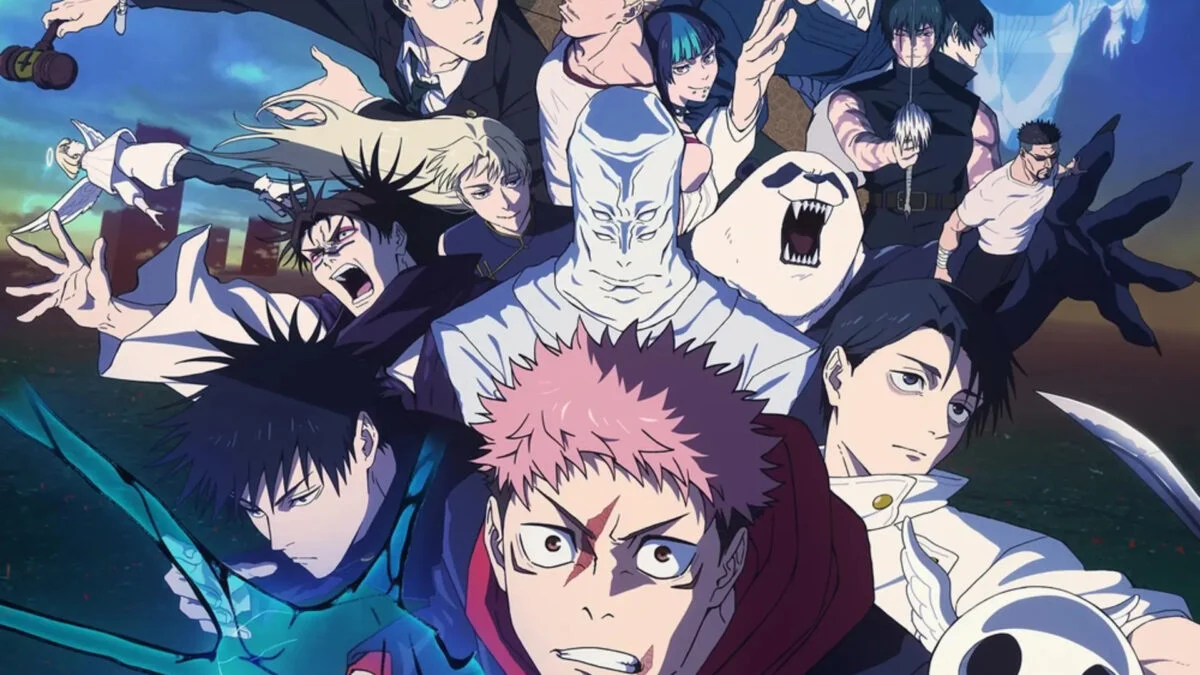
The scream ripped through the dojo, echoing off the cracked walls as Maki Zenin, the cursed sorcerer, slammed Naoya’s head into the tatami mats. Each blow felt like a thunderclap, resonating with the brutal beauty that has become Jujutsu Kaisen’s signature. This wasn’t just a fight; it was a statement.
The third season of Jujutsu Kaisen is already delivering some of the series’ best animation. Four episodes in, and the battles between old and new characters are visually stunning.
Both in the manga and the anime, Jujutsu Kaisen has been a visual treat. Gege Akutami’s art style, while “scratchier” than something like My Hero Academia, has a clarity that makes the Curses stand out. Across three seasons, studio Mappa has worked hard to capture the source material’s spirit, with each season having its own distinct feel.
In the first season, character designs were overseen by Tadashi Hiramatsu, known for his work on Parasyte. The characters had sharp features and intense expressions. Hiramatsu was joined in season two by Sayaka Koiso, an animation director from season one. While the characters became less detailed, their styles still worked well together, reflecting the interplay between the “Gojo’s Past” and “Shibuya Incident” arcs.
The first season of Jujutsu Kaisen focuses more on the impact of attacks. For instance, when Maki and Fushiguro fight Hanami, the emphasis is on the force of each blow, and you register their concerted efforts to weaken the Curse. Even when Yuji and Todou team up, the focus is on showcasing their raw power.
In contrast, season two amps up the speed. Toji Fushiguro overwhelms young Gojo and Geto with his incredible swiftness, and Yuji must move fast to stand a chance against Choso. Power remains important, but the battles convey how each character seeks to outmaneuver their opponent.
The Evolution of Style
Think about how a jazz musician improvises on a familiar melody, adding their own flourishes. That’s like what Jujutsu Kaisen has done with its visuals.
For season three, Yosuke Yajima and Hiromi Niwa have replaced Koiso and Hiramatsu. While both have worked in anime for years, this is their first time as character designers. Their designs build on the previous seasons, and the characters’ looks feel more defined. The fights in season three emphasize scale: Maki’s Kill Bill-esque rampage and the bloody brawl between Naoya and Choso.
Speed and scale are key in the latest episodes. Naoya’s Projection power grants him superspeed. Anything he touches must also adhere to his 24 FPS rule, rendering it immobile for a second if it doesn’t. This tactic, first seen against Choso, shapes how these fights play out. At first, Naoya seems to dominate Maki, knocking her around while belittling her compared to Toji.
But Maki’s enhanced senses allow her to perceive different frame rates. She endures an attack just to land a devastating punch on Naoya, shattering his skull. It’s the episode’s highlight, replayed from multiple angles to emphasize its impact.
MAKI PUNCHING THE SHIT OUT OF NAOYA’S BUM ASS…I NEED A STRONGER WORD THAN GOATTTTT pic.twitter.com/OapruFJic8
— nay (@getovrz) January 22, 2026
How does the 'Jujutsu Kaisen' anime compare to the manga?
The anime adaptation expands upon the manga’s foundation, using animation and sound to heighten the intensity. It’s a translation of Akutami’s vision into a more immersive medium, a vivid oil painting of a charcoal sketch.
Given Jujutsu Kaisen’s trajectory, Mappa is likely to continue the series beyond season three. It’ll be interesting to see how the show’s style evolves and how it brings the manga’s fights to life. The studio appears committed to outdoing itself.
How has Mappa handled the 'Jujutsu Kaisen' animation?
Mappa’s approach is one of continuous refinement. The studio doesn’t just replicate the manga; it interprets and enhances it. By entrusting each season to different key figures, Mappa allows for stylistic shifts that mirror the story’s changing tone and scope.
What makes the action sequences in 'Jujutsu Kaisen' so appealing?
The fights are more than just displays of power; they’re intricate dances of strategy and reaction. They combine impact with a sense of speed, creating a visually engaging experience. This focus on both power and tactics is what sets Jujutsu Kaisen apart.
Want more io9 news? Check out when to expect the latest Marvel, Star Wars, and Star Trek releases, what’s next for the DC Universe on film and TV, and everything you need to know about the future of Doctor Who.
With such high standards set, can Mappa truly maintain this level of artistry, or will cracks eventually start to show?