The email landed with a thud, another plea in an inbox already overflowing. A software engineer stared at the subject line: “Demand Your CEO Act on ICE Violence.” It felt like a betrayal to write it, but silence felt worse.
Hundreds of tech industry workers are now publicly asking their CEOs to stand up against the Trump administration’s actions concerning immigration. They are also condemning the ensuing violence.
In a letter signed by more than 400 employees from major players like Apple, Meta, Google, Amazon, Microsoft, Salesforce, OpenAI, and Nvidia, tech workers are demanding concrete action. They want their employers to cancel all company contracts with Immigration and Customs Enforcement (ICE), speak out publicly against the violence, and use their considerable influence to pressure the White House for change.
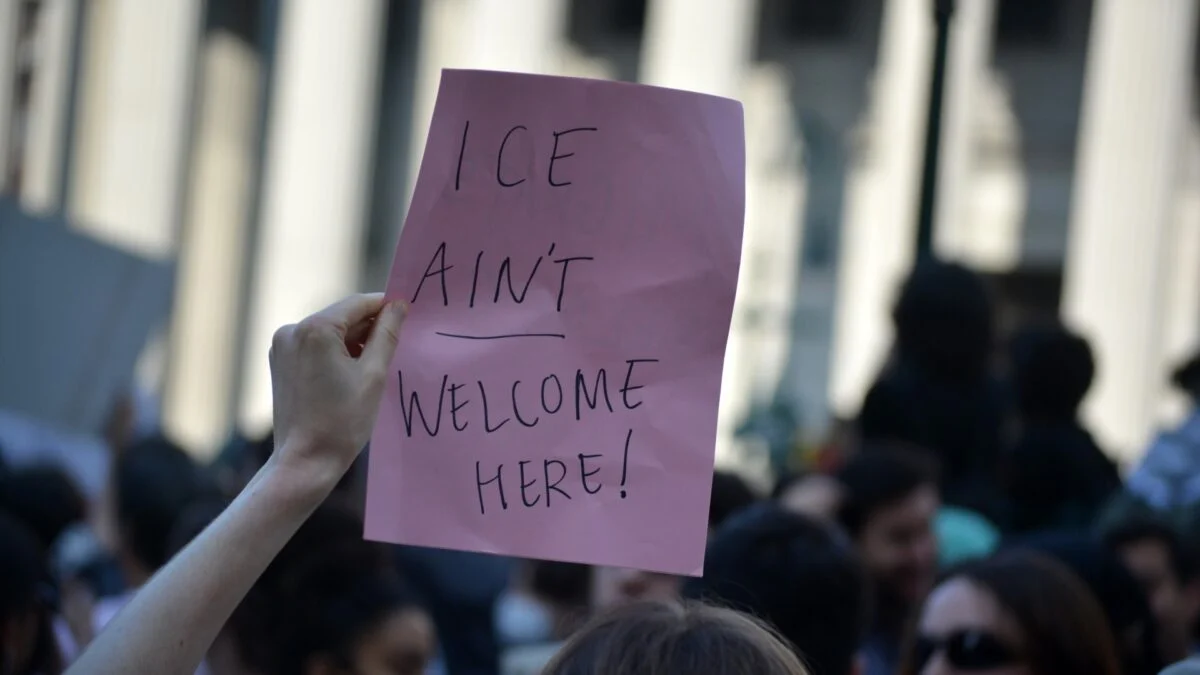
Protests against ICE’s actions have intensified across the country. Events in Minneapolis, Minnesota, have been particularly unsettling, with the deaths of Renee Good and Alex Pretti, both killed by ICE officers within weeks of each other.
The rise in violence against protesters and bystanders comes after a grim milestone: thirty-two people died while in ICE custody last year, marking the agency’s deadliest year since 2004. Data indicates that ICE was holding over 68,000 immigrants in detention as of mid-December, despite the fact that only about a quarter had prior criminal convictions.
“For months now, Trump has sent federal agents to our cities,” states the letter. “This cannot continue, and we know the tech industry can make a difference.”
Silicon Valley has enjoyed unusual access to President Trump. From the inauguration to trade meetings with foreign governments, big tech CEOs have been present at significant events during his second term. In return, Trump has seemingly prioritized Silicon Valley’s interests and fostered a pro-industry regulatory climate. This cozy relationship, however, has been met with increasing scrutiny as these same CEOs have largely avoided commenting on Trump’s more controversial policies, preferring instead to promote his agenda.
Tech companies have contributed to Trump’s agenda, including on immigration. Apple, for example, removed an app that allowed users to track ICE activity at the request of Attorney General Pam Bondi. Palantir, under CEO Alex Karp, built a $30 million (€27.6M) surveillance platform for ICE. While six Apple employees signed the letter, as of Monday afternoon, no current Palantir employees had added their names.
There’s at least one instance where tech CEOs have used their influence to get Trump to reconsider a decision. Back in October, Trump walked back his threats to increase the federal force in San Francisco after speaking with tech executives like Nvidia CEO Jensen Huang and Salesforce CEO Marc Benioff.
What leverage do tech CEOs actually have in these situations?
It’s a fair question. Imagine the tech industry as a massive engine. Its gears are innovation, its fuel is data, and its exhaust… is influence. That’s the card these workers want their bosses to play.
“Today we’re calling on our CEOs to pick up the phone again,” the letter urges. “We want to be proud to work in tech. We want to be proud of the companies we work for. We can and must use our leverage to end this violence.”
Why are tech workers specifically targeting ICE contracts?
The simple answer: money and ethics. Many see these contracts as a direct endorsement of ICE’s practices, providing not just financial support but also technological capabilities that some argue enable human rights abuses. It’s about stopping the flow of resources that fuel the agency’s actions. The moral calculus is plain to see.
Can tech companies really affect government policy?
Consider this: the modern world runs on code. These companies hold the keys to that code. Their influence extends far beyond their balance sheets. Tech companies have the power to shape public discourse, control access to information, and even sway political opinion. That is a lot of power.
What are the potential risks for CEOs who speak out?
Speaking truth to power comes with a price. CEOs risk alienating certain customer segments, facing political backlash, and even inviting regulatory scrutiny. But silence also carries a cost – the erosion of trust, the disillusionment of employees, and the potential for long-term reputational damage. It’s a high-stakes game of choices.
What specific actions are the tech workers requesting?
Beyond canceling contracts, workers want their CEOs to actively lobby against policies they deem unjust. They want them to use their platforms to amplify the voices of those affected and to advocate for humane immigration reform. It’s a call for active participation, not just passive compliance.
The tech world, once seen as a beacon of progress, now finds itself at a crossroads. It’s a test of its values. A litmus test of character. Will it wield its considerable power to effect meaningful change, or remain complicit in a system that many find deeply troubling? What do you think?