
The roar of the Night Fury was deafening, even through the theater speakers. As the credits rolled on How to Train Your Dragon in 2010, a question lingered: could this magic be captured again? Now, with the live-action adaptation on the horizon, childhood dreams are about to take flight once more as the sequel enters production.
How to Train Your Dragon Live-Action 2 Enters Production
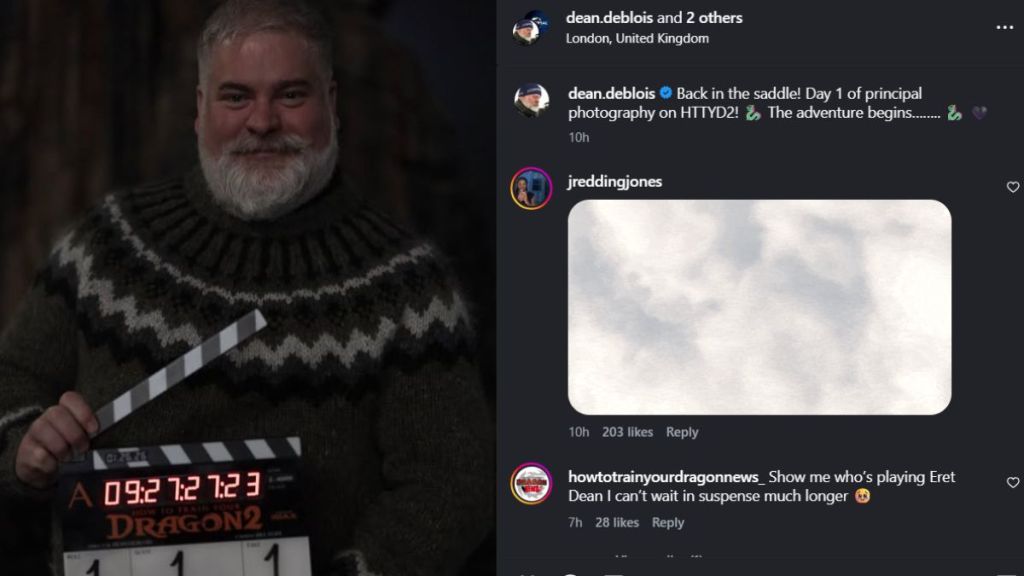
Remember the anticipation leading up to a favorite book’s sequel? The feeling is similar. Dean DeBlois, the creative force behind the original animated series and the 2025 live-action How to Train Your Dragon, recently posted an image that sent the fandom into a frenzy.
The caption read: ‘Back in the saddle! Day 1 of principal photography on HTTYD2. The adventure begins.’ He’s holding a clapperboard, and the image teases a new red logo. Mark your calendars: the film is slated for release on June 11, 2027.
Mason Thames returns as Hiccup, with Nico Parker as Astrid, Nick Frost as Gobber, and Gerard Butler as Stoick. But the cast expands further.
Cate Blanchett joins as Valka, Hiccup’s mother. Then Ólafur Darri Ólafsson embodies Drago, the sequel’s antagonist. It’s a welcome mix of familiar faces and fresh blood.
Will Cate Blanchett’s casting elevate the sequel’s performance?
Casting choices can make or break a film. Blanchett’s addition is a significant move, suggesting a deeper exploration of Valka’s character. This is not just about star power; it’s about adding layers to an established narrative. Consider, for example, how Tilda Swinton enhanced the complexities of the Ancient One in Doctor Strange. In this instance, casting Valka with Blanchett adds gravitas and emotional range to the world of dragons.
The first live-action film won over many due to its cast and visual effects. Now, the question is: will the sequel capture that same spark, or will it fall into the trap of diminishing returns? The success of this film hinges on maintaining the visual splendor of the first while amplifying the emotional depth of the second film’s narrative.
What challenges do live-action adaptations face?
Adapting animation to live-action is a high-wire act. The magic of animation often relies on exaggerated expressions and physics-defying stunts, which can feel jarring or artificial in live-action. The challenge lies in translating the heart of the story without sacrificing the fantastical elements that made the original so beloved. The 2019 version of The Lion King, while visually stunning, was criticized for lacking the emotional expressiveness of the animated version.
Perhaps the new film’s greatest challenge is capturing lightning in a bottle – or in this case, fire from a dragon’s mouth – twice. Can it recapture what made the first film so special?
How important are special effects to the success of the How to Train Your Dragon sequel?
Let’s be real: If the CGI in the film is poorly rendered, it will sink like a stone. The dragons have to feel real, majestic, and believable. For reference, think about the visual effects work in Avatar, which set a new benchmark. If the movie can deliver that level of visual immersion, it will be a huge win for the filmmakers and the fans.
How to Train Your Dragon is more than just a franchise; it is a touchstone for a generation. The pressure is on. Can the sequel soar to new heights, or will it remain grounded?