The lightsaber sizzled as it bisected Maul, sending him spiraling into the abyss. We all thought that was it. Yet, from the ashes of defeat, a more compelling narrative arose—one that made the initial shock of his survival a worthwhile investment.
Last week, Lucasfilm revealed our first proper glimpse of Star Wars: Maul—Shadow Lord, a new animated series chronicling the ex-Sith’s ascent in the criminal underworld following Revenge of the Sith. In a franchise now synonymous with miraculous returns, some corners of the internet expressed disbelief—genuine or feigned—that Maul, famed for his cool demeanor and abrupt dismemberment, was the latest to defy death.
Setting aside the selective amnesia surrounding Maul’s resurrection—an event orchestrated by George Lucas himself nearly 15 years ago—Maul’s journey highlights a recurring theme in recent Star Wars stories. The franchise, clinging tightly to its legacy, seems unable to resist resurrecting characters and plotlines, often at the expense of closure.
There’s a certain dark humor in the notion that sheer anger can allow a character to survive being sliced in half and plummeting into a chasm. However, Maul stands apart as a Star Wars character whose revival genuinely enhanced his persona—finally granting him depth beyond his initial, albeit visually striking, appearance—and offered a commentary on the nature of narrative erasure within the Star Wars universe.
From his reappearance in Clone Wars to his final confrontation with Obi-Wan Kenobi in Star Wars Rebels, Maul’s defining trait was his unquenchable rage. His fury—directed at Obi-Wan, Palpatine, and a narrative that discarded him—fueled his survival and actions. His plots, each presented as a grand scheme for retribution, possess a certain chaotic charm, from forming a Sith alliance with Savage Opress, to his fleeting ambition to conquer Mandalore, his successful turn as a crime lord, culminating in manipulating Ezra Bridger to uncover Obi-Wan’s whereabouts.
Maul, initially perceived as a silent, menacing figure, evolved into something of a tragic anti-hero, entangled in increasingly outlandish schemes. This relentless drive to lash out at the galactic forces that consumed and discarded him reveals a deeper tragedy: rage, while sustaining him, couldn’t fulfill his ambitions or quench his thirst for revenge. He became an empty shell, drifting from one plan to the next, desperately seeking someone to acknowledge his plight. Maul possessed only his anger, unable to channel it effectively or find lasting purpose.
The “Twin Suns” Duel
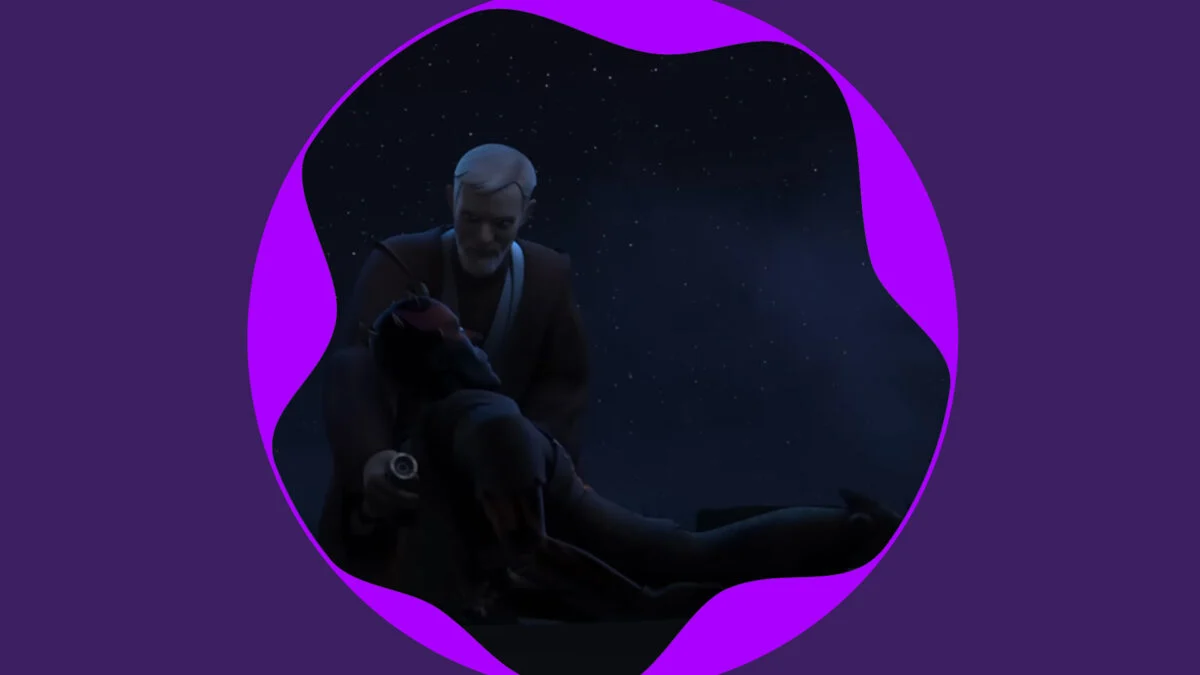
Consider the seasoned boxer, battered but not broken, stepping into the ring for one last fight. Star Wars Rebels delivers a masterclass in storytelling. “Twin Suns” represents Maul’s zenith, despite ending in defeat as swift as his initial demise. No grand soliloquy, no drawn-out duel marks his end against Obi-Wan on Tatooine. A single strike fells him, concluding the saga of Darth Maul. As he dies in Obi-Wan’s arms, Maul realizes his role in the larger Star Wars tapestry belongs to another—seeking reassurance that someone, if not him, will avenge him against Palpatine. Decades of rage culminate in a moment his first “death” denied him: finding peace and direction by relinquishing his hatred. Without that rage, what remains?
It’s a dilemma many Star Wars characters face as their narratives extend across eras: recognizing when to exit the stage, through death or otherwise, and entrusting the galaxy’s fate to future generations. Maul’s journey—transforming a meaningless death into a profound reckoning—makes his departure far more impactful than the sheer absurdity of his survival. He becomes a rare instance where Star Wars redeems the act of cheating death.
Why Did Darth Maul Come Back?
Darth Maul’s return wasn’t simply a plot contrivance, it was an opportunity to explore the themes of rage, revenge, and the corrupting influence of power. George Lucas saw potential in the character beyond his initial appearance, a potential that Dave Filoni and the creative teams behind Clone Wars and Rebels masterfully realized.
Maul’s Mandalore Arc and Crime Lord Era
Think of a wildfire, spreading erratically, consuming everything in its path. Maul’s trajectory mirrored this destructive force. His attempt to seize control of Mandalore, followed by his reign as a criminal kingpin, reveals this internal chaos. These weren’t calculated moves; they were desperate lunges for control in a galaxy that had stripped him of everything.
Maul’s actions during this period highlight his descent into darkness, offering a glimpse into the psychological toll of his dismemberment and abandonment. His alliance with Crimson Dawn, his conflict with Qi’ra, and his obsession with finding Obi-Wan are all manifestations of his broken psyche. He’s a puppet dancing on the strings of his own fury, a stark reminder of the perils of unchecked rage.
Did Darth Maul Truly Find Peace?
The question of whether Darth Maul achieved genuine peace in his final moments is open to interpretation. While he seemed to accept his fate and find solace in the idea that someone would avenge him, the years of torment and hatred likely left an indelible mark. Perhaps peace, for Maul, was simply the absence of rage.
The Broader Implications for Star Wars
Now, shift your focus. Forget Tatooine and think bigger: the galaxy. Maul’s resurrection isn’t an isolated incident; it speaks to a broader trend within Star Wars of revisiting familiar characters and storylines. This tendency, while providing fan service, can sometimes undermine the emotional weight of previous events. Maul, for all the narrative richness his return provided, highlights the challenge of balancing nostalgia with originality.
The saga of Darth Maul suggests that even a character seemingly relegated to a footnote can become a powerful force in the narrative. But at what cost? Are these resurrections a sign of creative stagnation, or a testament to the enduring power of these characters? The answer, like the Force itself, remains shrouded in mystery.
What Was Darth Maul’s Goal in Rebels?
In Star Wars Rebels, Darth Maul’s primary objective was to find and destroy Obi-Wan Kenobi. This obsession stemmed from his deep-seated desire for revenge, a desire that had consumed him for decades. He believed that by killing Kenobi, he could finally achieve closure and reclaim his place in the galaxy.
Want more io9 news? Check out when to expect the latest Marvel, Star Wars, and Star Trek releases, what’s next for the DC Universe on film and TV, and everything you need to know about the future of Doctor Who.
Was Darth Maul’s second death more meaningful because of the absurdity of his survival?