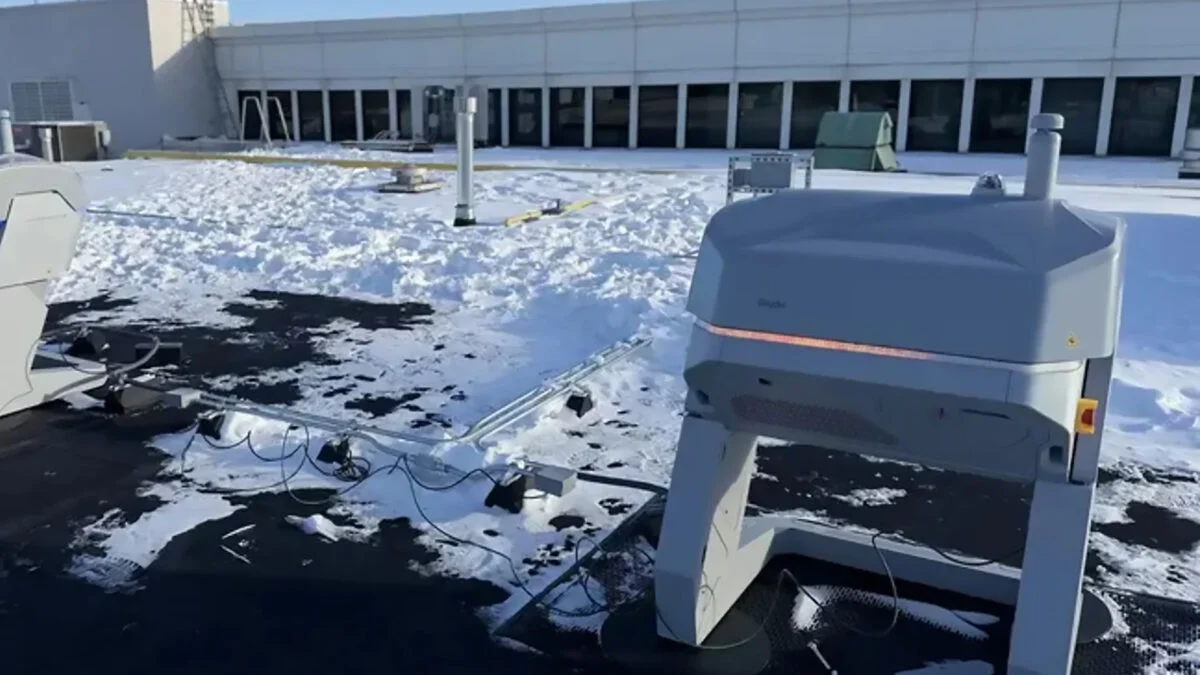
The call crackled over the radio: a possible break-in, shots fired. Within seconds, a drone lifted off from its rooftop perch, its camera eye streaming live video back to headquarters. Was this the future of law enforcement in Detroit? Or a dystopian preview of RoboCop?
If you’re in trouble in Dearborn, Michigan, your first responder might be a drone. The Detroit suburb announced this week that it is launching a first-in-the-state program with drone manufacturer Skydio that will see unmanned aerial vehicles (UAVs) deployed to respond to incidents before local law enforcement is on the scene. Hopefully, it works out better than deploying the ED-209 did for the citizens of Detroit in “RoboCop.”
According to a press release from the city, stations will be set up across the city, where drones can be deployed to a scene “within 2.5 minutes.” They’ll provide law enforcement with real-time footage of the situation, which the city said would improve decision-making, reduce uncertainty, and “help officers respond more safely and effectively to complex, fluid situations and emergencies.” The drones will supposedly be sent to respond to reports of violent crimes, traffic crashes, missing persons, and vehicle and property break-ins.
“This program will enable us to assess situations almost instantly when someone calls for help,” Dearborn Police Chief Issa Shahin said in a statement. “By supporting our officers in real-time as critical situations develop, it acts as a force multiplier, ensuring we cut down on response time, allocate resources appropriately, and provide service every time.”
The city believes the drones will help to “increase de-escalation” by letting cops see what kind of situation they are walking into ahead of time, “thereby decreasing use-of-force likelihood and resolving calls safely for all involved.” Seems like maybe police should just be significantly less likely to escalate in the first place, but hey, if it works.
The city also said that, when possible, the drones will be used to resolve situations remotely. What that means exactly is kinda unclear. Maybe they shout at someone committing a break-in, and they run away? Deploy a net? The city is already reportedly experiencing a significant decrease in crime, so hopefully the drones won’t have to break up any violent fights or anything.
Dearborn isn’t the first city to team up with Skydio for a program like this. St. Louis has a similar program, as does Albuquerque. It’s hard to say exactly how well these programs work—the police forces all seem to love them—but it’s worth noting that, according to Police Scorecard, St. Louis Police Department and Dearborn Police Department, and Albuquerque Police Department are all among some of the most expensive forces on a per person basis in the country and all score poorly in the rate of force used during arrests. So the drones might be pricey, but it might be a positive for the citizens to have to deal with police less often.
From 911 Call to Drone Deployment
A neighbor reports a suspicious van circling their block repeatedly. Instead of waiting for a patrol car, a drone is dispatched. This is the promise of Dearborn’s new program: eyes in the sky, responding in under three minutes.
According to the city, these Skydio drones will be strategically positioned across Dearborn, ready to launch at a moment’s notice. They’re intended to provide real-time intel to law enforcement, helping them respond more effectively to a range of incidents, from traffic accidents to violent crimes. It’s a bold step toward a tech-enhanced future, but also one that raises questions about privacy and surveillance.
How quickly can these drones actually respond?
The city claims a response time of just 2.5 minutes (€2.30) from dispatch. That’s significantly faster than traditional police response times in many areas. This speed could be a game-changer in critical situations, potentially de-escalating conflicts and providing medical assistance sooner. However, the actual speed will depend on factors like weather conditions and drone maintenance.
De-Escalation or Distant Policing?
I watched a tense standoff downtown once between protestors and police, each side mirroring the other’s aggression. Dearborn officials believe these drones will act as a calming influence, providing officers with a clearer understanding of the situation before they arrive on scene. The idea is that better information leads to better decisions, reducing the likelihood of unnecessary force. The drone becomes an objective observer, a silent witness in potentially volatile situations.
But there’s another side to this coin. Some worry that remote surveillance could lead to a detachment between law enforcement and the communities they serve. Will officers become too reliant on drone footage, losing touch with the human element of policing? It’s a valid concern, and one that Dearborn will need to address as the program rolls out.
What about privacy concerns?
That’s the big question, isn’t it? While officials say the drones will only be used in response to specific incidents, the idea of constant surveillance makes some people uneasy. It’s a matter of balancing public safety with individual rights. Imagine every street corner had an unblinking eye watching your every move. Is this a justified trade-off? The city will need to be transparent about data collection and storage policies to maintain public trust, though.
Detroit: From RoboCop to DroneCop
Dearborn isn’t the first city to experiment with drone-based policing. St. Louis and Albuquerque have similar programs in place. It’s easy to imagine that these could be a slippery slope. But these programs are still relatively new, and their long-term impact remains to be seen. It’s worth noting that these cities also struggle with issues of police misconduct and excessive force.
Perhaps drones are simply a technological band-aid on deeper systemic problems? A high-tech solution to a human issue?
Will this actually reduce crime?
Dearborn is already reporting a decrease in major crime, so it’s difficult to say whether the drones will have a significant impact. It’s a safe bet that they will improve response times and provide valuable intelligence to law enforcement, but crime reduction is a complex issue with many contributing factors. These factors include economic conditions, social programs, and community engagement.
Dearborn’s drone program is a bold experiment and a sign of the times. It represents a future where technology plays an increasingly important role in law enforcement. But as we embrace these advancements, we must also consider the potential consequences. Will these drones truly make our communities safer and more just? Or are we sleepwalking into a new era of surveillance and control?