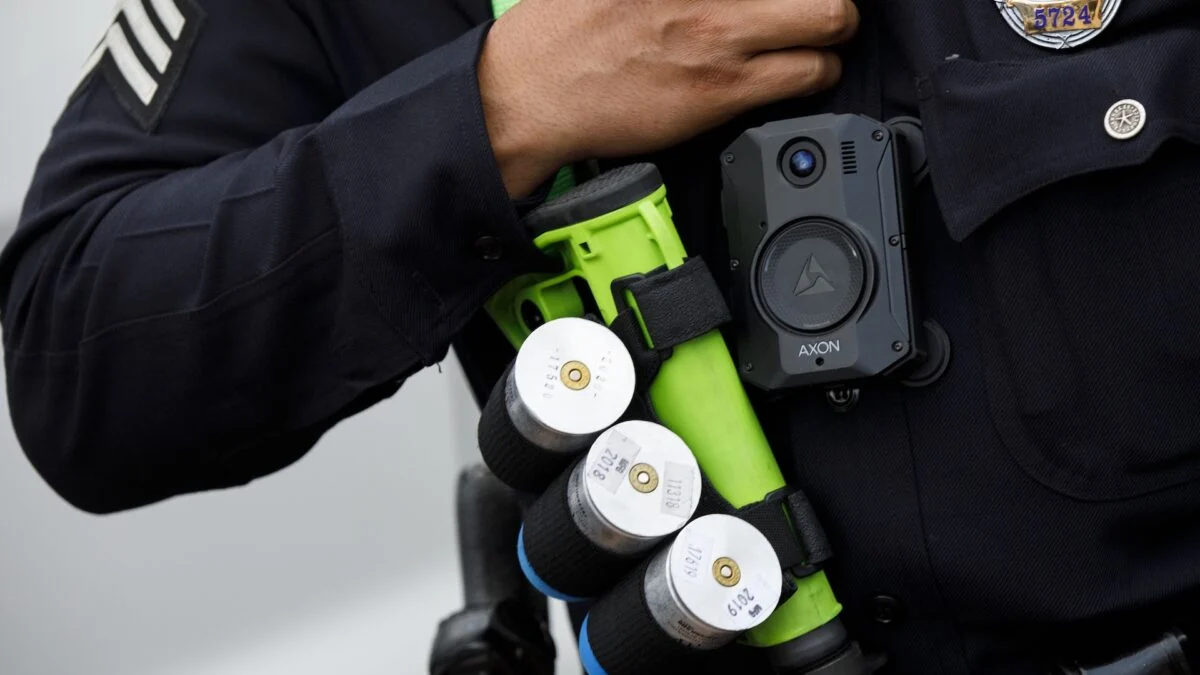
The flash of the bodycam’s red light seemed to mock Officer Pinheiro as he fumbled with the baggie. Thirty seconds earlier, that evidence wasn’t there. Now, a man would spend six months in jail, and Pinheiro’s career would become a cautionary tale.
In the mid-2010s, police body cameras saw widespread adoption in the U.S.; nearly half of all departments had them by 2016. The officers involved faced a steep learning curve with the new technology, and the resulting flurry of cops getting caught planting drugs on their own cameras, mostly between 2016 and 2018, feels especially relevant now. Particularly when the U.S. Department of Homeland Security routinely lies about officer-involved shootings, even when those incidents are caught on video from multiple perspectives.
It’s worth asking whether federal agents should be required to wear body cams, especially given DHS’s history of obscuring the truth. In some incidents, the truth is captured from half a dozen angles.
The 30-Second Gotcha
Walk into any police station in 2017, and you might have overheard hushed conversations about the “30-second rule.” The most frequent reason cops were caught by their own body cameras in the mid-2010s is that police didn’t grasp when the camera would start recording.
These early body cams worked by constantly recording, even before the “record” button was pressed, but would delete footage on a loop. However, when an officer hit the record button, the camera would also save the 30 seconds *before* the button press.
It was a hard concept for some to grasp. They weren’t always properly trained on the fact that their cameras didn’t start recording *only* when they pressed record. Hitting that button saved the previous 30 seconds as well – a neat feature that became their undoing.
How do police body cameras work?
That “30-second rule” wasn’t some urban myth. Body cams had a pre-record function. The implications of that tech detail were a communications failure. Think of it like this: imagine you’re using a voice-to-text app, but it’s secretly recording everything you said for the last 30 seconds, even before you hit the “record” button. Surprising, right?
Baltimore: Soup Cans and Body Cams
January 2017. Baltimore. A backyard. An officer searches through garbage, finding a bag of heroin tucked away in a soup can. But just thirty seconds before the officer “found” it, the same body camera showed him planting the drugs.
The officer, Richard Pinheiro, returned moments later and acted like he just discovered it. The man who was wrongfully charged spent six months in jail.
According to an NBC report, the Baltimore Police Department had one of the largest body cam programs in the country at the time. They were intended to increase transparency after Freddie Gray’s death in 2015, after he sustained fatal injuries while being transported in a police van.
Richard Pinheiro was found guilty of fabricating evidence in 2018, a misdemeanor, and received a three-year suspended sentence and two years of supervised probation, according to the Baltimore Sun.
Pinheiro’s drug planting incident and subsequent media attention prompted a review of over 100 cases in Baltimore. That review uncovered another incident caught on a cop’s body camera – an even earlier one.
Baltimore, Again: November 2016
Consider the sequence: an initial search of a car turns up nothing. Then, officers turn off their body cams. When one turns his camera back on, another officer is caught on film planting drugs.
CBS Mornings reported that it was about 30 seconds before they “found” the drugs, suggesting the officer didn’t know when the footage would be saved.
Los Angeles: Wallet Surprise
April 2017. Los Angeles. Another officer plants drugs. This time, it’s cocaine placed directly into a suspect’s wallet.
CBS 2 in L.A. reported that the officer picked up cocaine and placed it in a suspect’s wallet. The news outlet explained: “After allegedly putting the drugs in the wallet, it appears the LAPD officer activated the recording on his camera. But the previous 30 seconds is automatically saved.”
Again, it seemed cops in 2017 just didn’t understand how their technology worked.
How long do police body cameras save footage?
It depends. Retention policies vary wildly by jurisdiction. Some departments might keep footage for a few weeks unless flagged for an investigation; others might hold onto it for months or even years. The determining factor is typically local and state law, as well as departmental policy. It’s a murky patchwork out there.
Florida: The Body Contortionist
Some cops knew exactly how their cameras worked and tried to deceive them. They still got caught.
Florida sheriff’s deputy Zachary Wester was sentenced to 12 years in prison back in 2021 after being convicted of planting drugs on suspects in 2017 and 2018. Wester used various tactics to conceal his actions, including contorting his body in ways that covered the camera.
In one video, Wester can be seen with a baggie of meth in his palm, however briefly, while searching a woman’s truck. Wester pulled over Teresa Odom for a defective brake light in Feb. 2018, and Odom agreed to a search of her vehicle. The bodycam is pointed away when he actually lets go of the drugs. Odom denied the drugs were hers when confronted.
Odom pleaded no contest to the drug charge and received four years’ probation. It’s not uncommon for innocent defendants to plead guilty or no contest out of fear that they’ll receive harsher sentences if they maintain their innocence.
Wester, who was accused of planting drugs in at least a dozen vehicles, would turn off his body cam to conceal his crimes. This became much more common in the following years.
New York: The Camera Cut
By 2018, cases where officers were accused of planting drugs were harder to prosecute because the cops would frequently turn off their cameras mid-search.
An officer in Staten Island, New York, was accused of planting drugs in incidents from 2018, as the Intercept reported in 2020. The New York Times characterized the video as “not conclusive” because one of the officers, Kyle Erickson, turned off his camera in the middle of the stop. But it was “problematic” enough that charges were dropped against the suspect.
And that gets to one of the main criticisms of body cameras. Cops know that pushing the button means their previous actions from at least 30 seconds earlier will be recorded. And if they want to just turn off the camera or obscure it in some way, that’s also an option.
Are police required to wear body cameras?
There’s no universal law requiring it. It is, ironically, a local decision. Some states mandate it, others leave it to individual departments. It’s a classic example of American federalism in action, or perhaps, inaction.
Democrats, DHS, and Body Cams
Democratic leadership in Congress is trying to negotiate a deal with Republicans for DHS funding. Rep. Hakeem Jeffries and Sen. Chuck Schumer have presented a list that includes requests that ICE and other federal agents not wear masks (except in special circumstances) and wear body cameras.
DHS has preemptively said it is deploying body cams to Minnesota as it continues to occupy the state and terrorize its residents in the name of “immigration enforcement.” It’s probably a bad sign when DHS just goes ahead and does the thing Democrats have asked for without any real pressure.
DHS might be more than happy to wear cameras because they know video won’t actually bring justice to the agency’s victims. The agent who shot Renee Good in Minneapolis last month recorded the killing with his own cameraphone and leaked the footage to a right-wing outlet. The killing of Alex Pretti, not long after Good’s death, was captured from multiple angles.
There’s reportedly body camera footage from the officers involved in Pretti’s death. The catch? DHS has not released that video, and there’s no requirement for the agency to do so. It doesn’t really matter if you get cops to wear body cams if they have the power over what gets released. Obviously, the Trump regime is going to distribute any potential footage it finds exculpatory and withhold any footage that may be damaging. That’s a problem that some minor policy adjustments can’t fix.
The bodycam era was supposed to usher in an age of transparency. Instead, it revealed that technology alone can’t fix a broken system; it is merely a stage for human behavior to play out. So, what good are bodycams if the footage remains under lock and key?