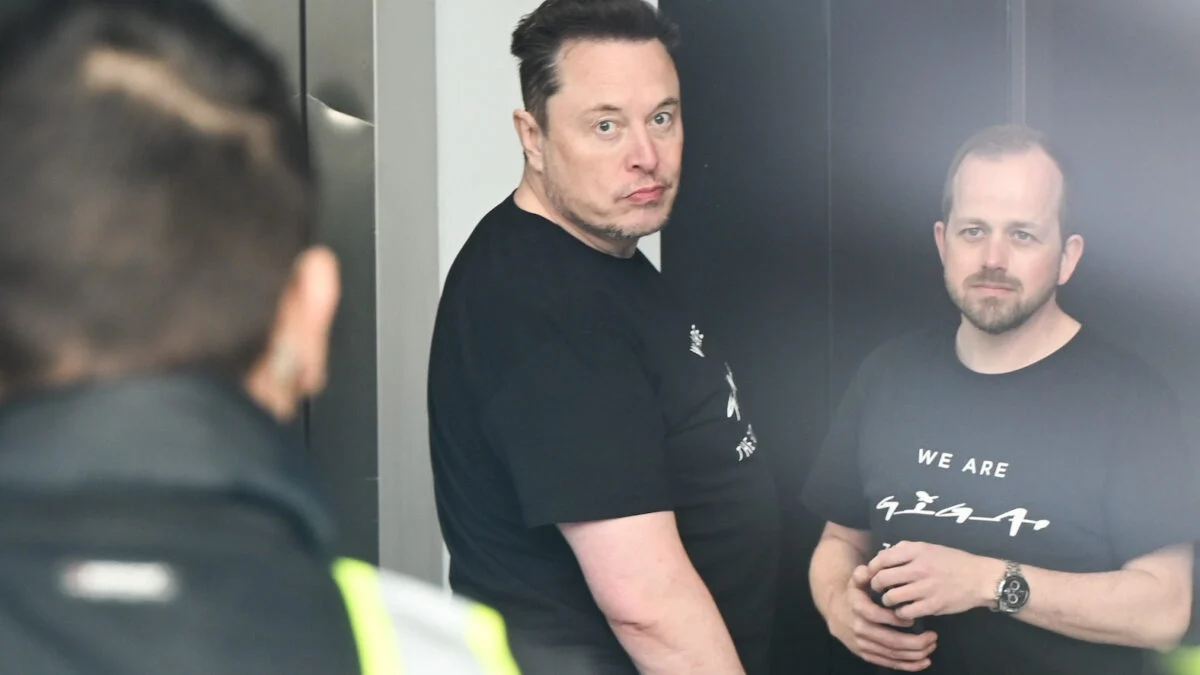
André Thierig, Tesla’s director of manufacturing in Germany, described a recent incident as “truly beyond words!” Imagine a clandestine recording of a meeting that ignites a firestorm; that’s precisely what happened when a union representative from IG Metall faced accusations of surreptitiously capturing a discussion among Giga Berlin’s employee council. Following this, Tesla promptly called the police, filing a criminal complaint.
At first, recording a meeting might not seem shocking, but the longstanding labor tensions simmering at the Berlin-Brandenburg Gigafactory tell a different story. As you’ll discover, understanding European labor dynamics is crucial, especially in a landscape starkly different from American freedoms.
German Unions Aren’t What You Think
While you might assume that unions are more prevalent in Germany, that’s not entirely accurate. It’s not that the labor movement is weak; rather, the structure is fundamentally different. In Germany, the widespread use of sectoral bargaining means many non-union workers benefit from collective agreements.
About half of the German workforce enjoys such protections, translating into significantly more favorable working conditions compared to the U.S. Interestingly, France boasts an even lower union membership, yet an astonishing 96% of private sector employees remain covered by collective contracts. In Germany, labor relations aren’t merely about union cards—they extensively involve legally mandated works councils in any company with over 20 employees.
IG Metall: The Undying Presence
When Giga Berlin opened, Tesla’s approach leaned heavily toward management control. This led to the establishment of a works council predominantly favorable to management. IG Metall, however, didn’t retreat in defeat. In 2023, reports began surfacing of workers voicing concerns over long hours, scant breaks, and NDAs cultivating a climate of fear regarding retaliation from management.
Fast forward to 2024, and as staffing levels grew, a new works council election became necessary. IG Metall captured a plurality in the vote but fell short of a majority, igniting friction with the anti-union chairperson, Michaela Schmitz. Complications escalated when Tesla allegedly began sending managers to sick workers’ homes, raising alarms about workload stress. IG Metall contended these practices exacerbated a vicious cycle of overburdening healthy employees.
Dramatic Tensions Build as Elections Approach
Recently, the air at Giga Berlin has grown thick with anticipation. With another works council election scheduled for March, the stakes are higher than ever. Local reports reveal that IG Metall is pushing for wage increases and a 35-hour workweek—movements becoming the norm for German autoworkers.
“A 35-hour week is a red line for me; we will not cross it,” Thierig remarked, setting a collision course between management and union demands. This backdrop frames the sensational incident where Tesla filed a complaint against IG Metall for alleged unauthorized recording during a meeting. As the turmoil unfolded, IG Metall vehemently denied these accusations, framing them as a “blatant and calculated lie.”
What happens when labor and management clash?
When labor disputes escalate, the consequences ripple through entire industries. For Tesla, this situation begs the question: is it truly beneficial to maintain operations in Berlin amid unrest?
Is Tesla’s Future in Europe in Jeopardy?
As tensions mount, Tesla’s position in Europe raises eyebrows. A recent report reveals that in November, the company sold 12,130 vehicles in the EU—a stark contrast to 18,430 just a year prior, marking a staggering 34% drop.
Speculation about potential closures of the Berlin factory looms large. Analysts suggest that if Tesla were to downsize or close, it might pivot the narrative away from declining demand to a “woke union” dilemma, crafting a convenient exit strategy for Elon Musk.
As the shadow of labor turmoil looms large, are we witnessing the beginning of the end for Tesla’s ambitions in Europe? Or is this just another chapter in a story defined by turbulence and triumph?