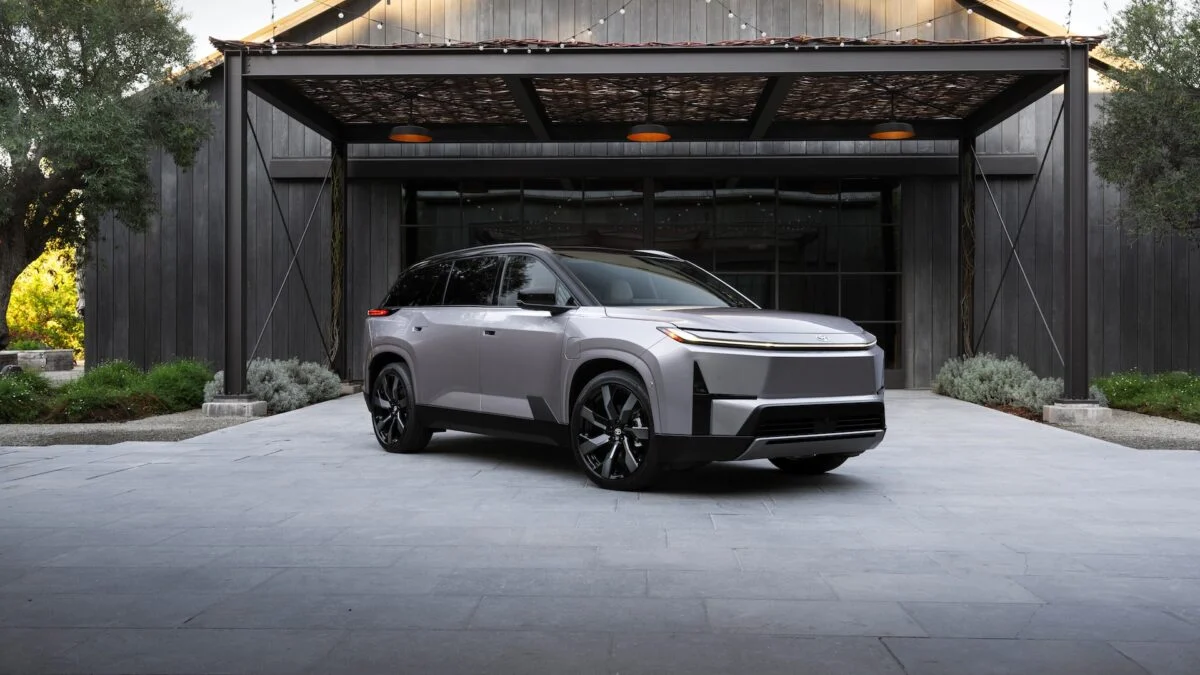
Imagine a family loading up their Toyota Highlander, setting off for a weekend getaway, the trunk packed with snacks and sports gear. Fast forward to 2026, and that very vehicle is about to undergo a monumental shift—becoming fully electric. But in a world where consumers are often hesitant to stray from the familiarity of gasoline engines, will this iconic model maintain its loyal following?
Toyota, once synonymous with American automotive culture, has firmly planted its roots in the U.S. As the name fills our streets, taxis now bear the Highlander insignia instead of the traditional Crown Victoria. Its upcoming electric model promises to not only preserve that legacy but transform it, showcasing what it means to be American in an electric age.
The 2027 Toyota Highlander was recently unveiled in California, revealing a model that, while familiar on the outside, boasts a very different foundation. Unlike Toyota’s existing electric line, which includes the bZ series, the Highlander is a distinct shift; it fully embraces an electric future, stepping away from a 25-year legacy of gasoline and hybrid engines.
Just as some brands hesitate, Toyota has been methodically shifting its popular models towards hybrids—think of the Camry and RAV4. The Highlander, however, is setting a new course, betting on all-electric technology instead. This might seem like a gamble, yet it makes perfect sense considering today’s market demands.

In 2024, the introduction of the Grand Highlander, a larger variant using similar engines, set the stage for this transition. With too many models sharing the “Highlander” nameplate, the shift to an electric SUV offers clarity for customers. If you still crave the traditional gas-powered experience, Toyota’s Grand Highlander remains available—it’s a clear play on customer choice.
For the 2027 model, Toyota has sourced its batteries from a new facility in North Carolina, assembling the vehicle in Kentucky. Expect two base models featuring a 77-kWh battery, with a single motor producing 221 horsepower. The more impressive 95.8-kWh version boasts an estimated range of up to 320 miles. With the Highlander offering fast-charging capabilities akin to Tesla’s, it outpaces expectations.
Imagine a family of six enjoying spacious comfort across three rows, reveling in modern tech, all while their batteries quietly hum. The Highlander will come equipped with an upgraded infotainment system and a Drive Recorder—a dashcam that embodies Toyota’s blend of innovation and practicality.

Despite its promising evolution, Toyota faces a challenge: will consumers embrace an all-electric Highlander? Competing models like the Hyundai Ioniq 9 and Kia EV9 illustrate the skepticism surrounding three-row electric SUVs. Their initial success has tapered, suggesting that buyers of larger vehicles may still cling to gasoline options.
Last year, Kia sold around 22,000 EV9s, but sales dipped nearly a third in 2025. Even the Hyundai Ioniq 9, which debuted in May 2025, struggled to break through the sales barrier—averaging fewer than 1,000 units monthly. This isn’t the trajectory Toyota envisions for its electric Highlander.
As many fleet drivers continue to rely on gasoline hybrids, it seems likely that ride-sharing services will initially stick with conventional engines. With mounting economic uncertainty and skyrocketing vehicle prices, consumers may stick to what’s tried and tested—opting for hybrids or gas-powered variants rather than embracing an uncertain electric future.
If ownership patterns continue along this path, will Toyota’s latest venture find traction, or will it remain a Contender struggling to find its place in an evolving market?