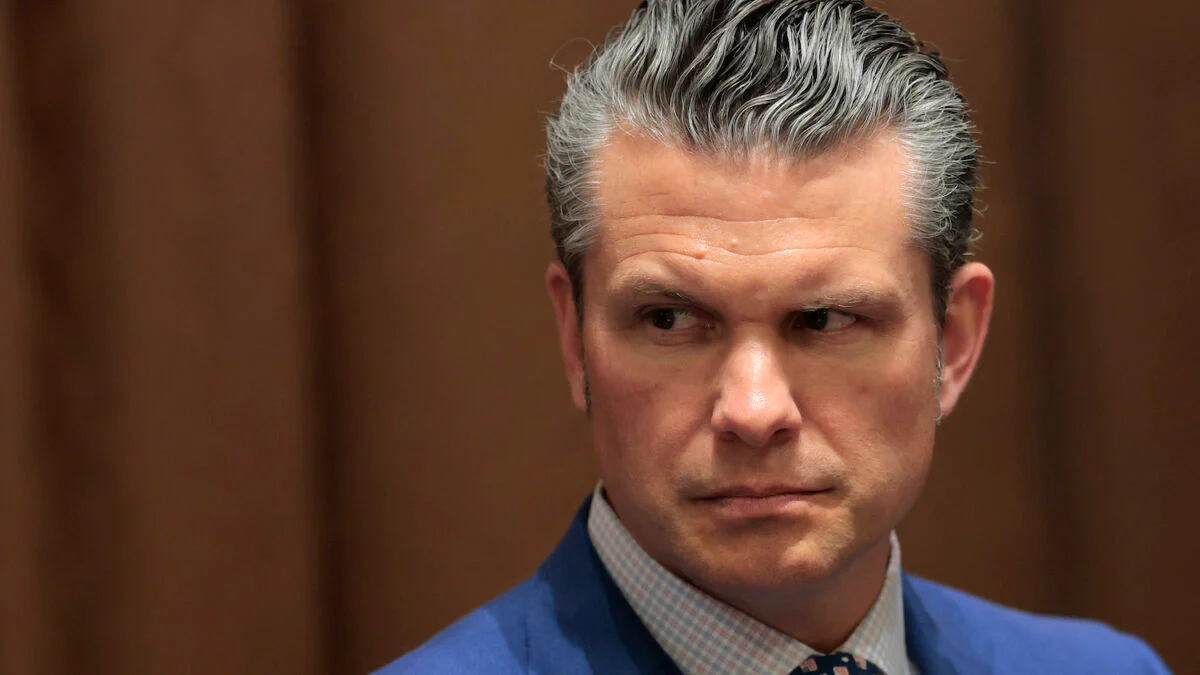
I read the Axios report and the room tightened: a senior Pentagon official saying Anthropic could be labeled a formal supply-chain risk is not a routine policy dust-up. You should care because that designation would force every contractor who wants to work with the U.S. military to cut ties with the startup. If you follow AI and defense money, this is the kind of move that can rewrite market assumptions overnight.
At a Pentagon briefing this week officials talked about a supply‑chain label.
Here’s the simple mechanics: Defense Secretary Pete Hegseth is weighing not just ending DOD contracts with Anthropic but formally calling the company a supply chain risk, according to reporting. If that label is applied, any firm that sells to the U.S. military would be required to sever commercial ties with Anthropic or face exclusion from defense work.
Why that matters to you: contractors from Palantir to smaller systems integrators would have to choose between Anthropic’s Claude and the Defense market, and that choice can cost hundreds of millions of dollars. Last summer Anthropic announced a deal worth up to $200 million (€185 million) with the Department of Defense; that revenue line is the kind of thing a supply‑chain label can instantly jeopardize.
“It will be an enormous pain in the ass to disentangle, and we are going to make sure they pay a price for forcing our hand like this,” an unnamed senior Pentagon official told Axios — a line meant to telegraph both leverage and consequences.
Anthropic has been explicit about where it draws the line with military uses.
Anthropic’s executives have told military officials they do not want their models used for autonomous weapons targeting or domestic surveillance — a stance that has irritated some at the Pentagon. I’ve listened to debates where engineers and ethics leads push back on classifiers and weaponization; this looks like one of those moments spilled into policy.
CEO Dario Amodei has publicly warned that someone should “hold the button on the swarm of drones,” arguing current oversight is insufficient. That warning landed in a tense environment where the Pentagon has been pressing Google, OpenAI, and xAI to permit their models for “all lawful uses.” Anthropic’s refusal to remove limits places the company at odds with a department that sees operational flexibility as nonnegotiable.
Anthropic is walking a tightrope over a political canyon.
GenAI.mil is already a live battlefield for model selection and trust.
The Department of Defense launched GenAI.mil in December and it now serves roughly 3 million civilian and military users with customized models. OpenAI made a tailored ChatGPT available through the platform; xAI and Google’s Gemini are present too. Anthropic’s Claude is not on GenAI.mil, which matters because access to that platform is where real-world adoption converts to contract momentum.
Chief Pentagon Spokesman Sean Parnell told Gizmodo the Pentagon is reviewing “the Department of War’s relationship with Anthropic” and framed the debate around support for warfighters and public safety. That language signals the argument will be framed as mission-first — and you can expect the political pressure to follow.
The Pentagon’s threat landed like a thunderclap inside a quiet startup.
What does it mean to be designated a “supply chain risk”?
Such a label would be an administrative rope: it doesn’t ban Anthropic outright, but it removes the company from the ecosystem of approved suppliers. Contractors using Anthropic would need to decouple or risk losing access to classified systems and future contracts. For a company whose models already appear inside classified environments via third parties, the financial ripple would be immediate.
Could Anthropic lose Defense Department business?
Yes — and the knock-on effects are plain. The DoD can curtail existing relationships and block placement on platforms like GenAI.mil. Companies that sell mission systems tend to avoid suppliers flagged as risky; that behavior would shrink Anthropic’s addressable market inside defense unless a policy reversal or legal pushback changes the calculus.
A few strategic fingerprints to watch on this story.
Observation: OpenAI, Google, xAI, Palantir and their tailored offerings are already inside DOD systems while Anthropic remains partly constrained.
If you track the players, notice who answers the Pentagon’s demand for “all lawful uses.” OpenAI’s ChatGPT customization for GenAI.mil and Google’s Gemini are explicit signals the department is building options that do not depend on a single vendor. That gives the Pentagon leverage when it asks private firms to open access — or faces them closing off.
For you as a reader, the key trade is simple: a company that sells a public ethic of constraint can win trust with civilians and researchers but lose access to the largest tech budget in the world. That’s the political arithmetic at the heart of this dispute.
What to watch next on the timeline and the politics.
There will be three immediate moves: a formal review memo inside the Pentagon, contractor re-evaluations, and public pushback from Anthropic and its allies. If Hegseth or his staff move ahead with a designation, industry groups and Congress will almost certainly enter the debate.
I’ll be watching statements from Pete Hegseth, Sean Parnell, Dario Amodei, and contract notices tied to GenAI.mil. You should, too: the outcome will shape which models get battle-tested and which become boutique experiments in safe‑AI rhetoric.
Which side will win the argument over control, profits, and principles — and where will you place your bet?