You open your laptop two hours before a product launch and realize the hero shot still doesn’t exist. You feed your site into a Google Labs experiment and, while you make coffee, studio-ready images and social copy appear. By the time the team arrives, the assets are done and the panic has evaporated.
I’ve been testing Google’s new tool—Pomelli—and I want to tell you how it changes the rules for product marketing. You’ll get the quick version, then the exact ways to use it if you run a tiny shop, a growing brand on Shopify, or handle creative on Instagram ads.
A café owner I met spent a weekend staging recipes: Google Pomelli Can Help Small—Medium Businesses
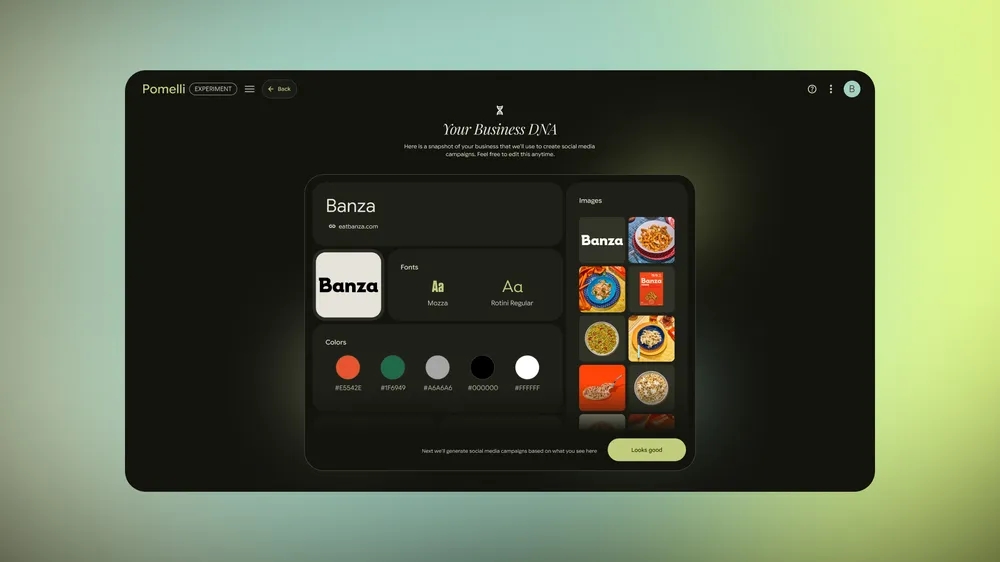
Pomelli, announced in a Google blog post and built with help from DeepMind, is an experimental feature available through Google Labs. It reads your website—fonts, tone, palette, imagery—and returns a suite of marketing assets: campaign ideas, social-ready posts, and pro-style photoshoots.
Think of Pomelli as a digital art director. It doesn’t replace your taste; it accelerates it. You tell it your site URL, and it crawls what’s public to learn your brand DNA, then proposes visual directions that already fit your voice.
What is Google Pomelli?
Pomelli is an AI-driven creative assistant for marketing teams and solo founders. Its core promise: generate scalable, on-brand campaigns without hiring an agency. Google pitches it as a way for SMBs to feed the engine their website and receive finished assets that can go straight to social ads or product pages.
A founder I spoke with paid a freelancer $600 for one hero shot: How Pomelli actually builds assets
The tool pulls style cues from your site, then generates editable assets you can tweak. It creates campaign blueprints, image mockups, and photorealistic product photos—ready to download in high resolution. You can iterate on prompts to refine mood, composition, or copy.
It is a mirror that learns your brand, then offers versions you can accept, edit, or reject. That process cuts hours of back-and-forth with photographers and designers, and it keeps visual consistency across posts and ads.
How does Pomelli work with existing platforms like Shopify or Instagram?
Pomelli outputs files you can upload to Shopify product pages, schedule in Later, or push into Meta ads managers and Instagram campaigns. It won’t magically connect to every platform for you yet, but the export formats are standard: PNG/JPEG, copy snippets, and campaign outlines that map directly into ad creatives.
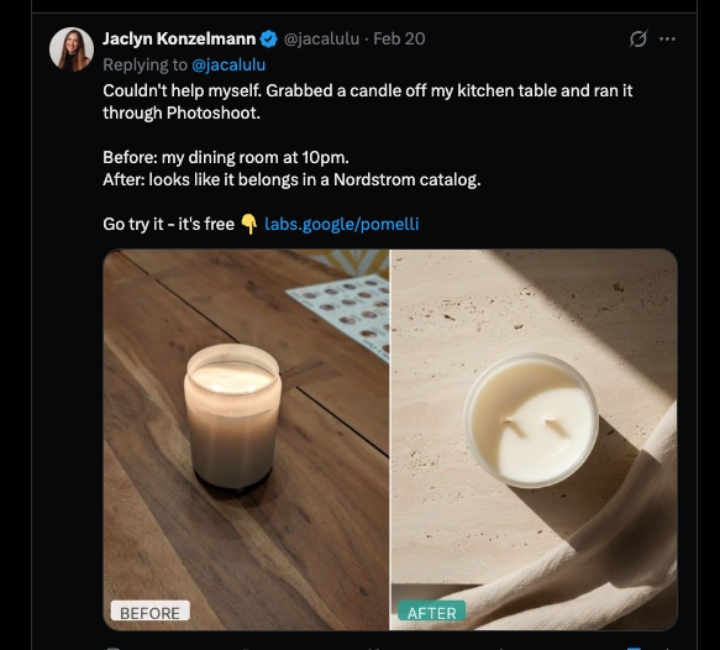
An early tester on X posted results that went viral overnight: Why marketers are already buzzing
People on X praised the tool for generating unexpected, high-quality photoshoots from simple prompts. That social proof matters: it shows the technology produces shareable material fast—exactly what small teams need when resources are tight.
For business owners, Pomelli means lower friction. You don’t need a studio, props, or a week of scheduling. You do need clear briefs and the confidence to edit outputs—this is a creative shortcut, not a one-click miracle.
Is Pomelli free to use?
Right now Pomelli is available at no cost in the US, Canada, Australia, and New Zealand—free (USD $0, €0). Availability and pricing could change as Google experiments in Google Labs, so if you depend on it for launches, treat this as an opportunity to test before you commit long-term.
Practical notes: it respects public site assets but check your own licensing if you feed it third-party photography. Keep brand governance in your workflow so generated assets match legal and style rules.
Who benefits first? Solo founders, local retailers, Etsy shops, and small marketing teams who need professional-looking visuals without agency budgets. It shortens timelines, reduces cost-per-shoot, and makes A/B testing visual concepts far cheaper.
What I’d watch next: integration depth with Google Ads, any Shopify app tie-ins, and whether Google offers Creative APIs for bulk processing. If those arrive, your content calendar could go from manual to semi-automated overnight—good for growth, risky if you become complacent about brand standards.
If you run creative, try a single hero campaign through Pomelli and compare time, cost, and engagement to a traditional shoot. Measure click-throughs and conversion, not just likes—because impressions don’t pay the bills.
Ready to run a test yourself, or do you think letting AI touch your brand photos is a line you shouldn’t cross?