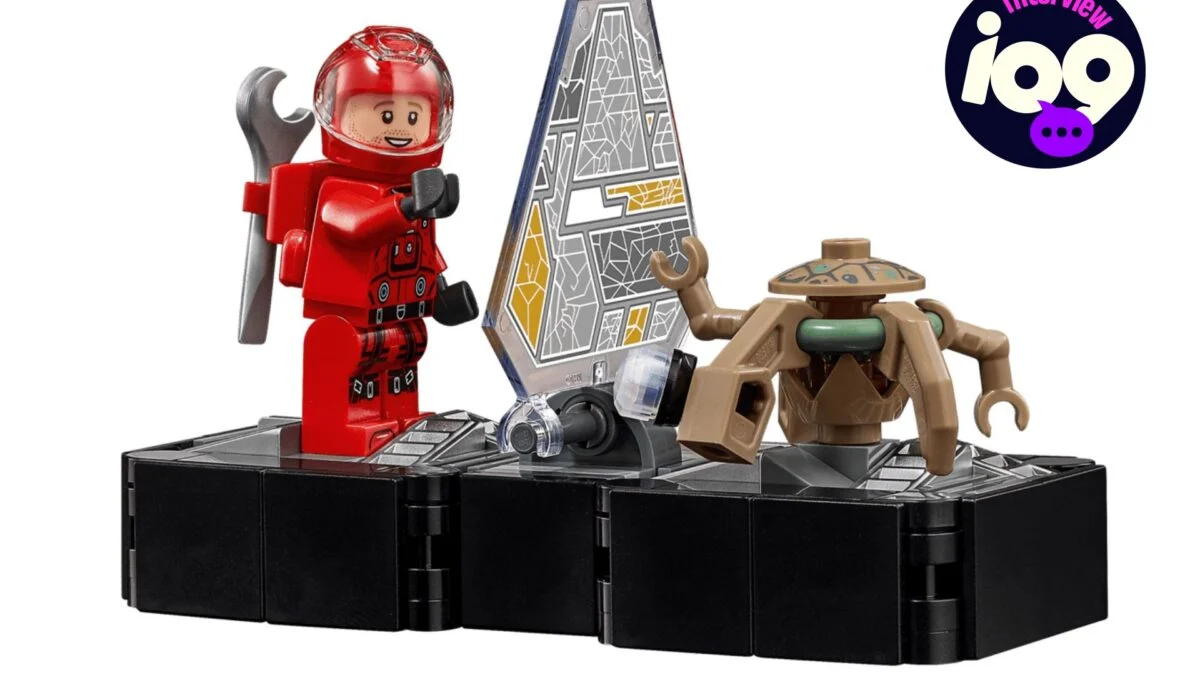
I was on a London soundstage when a group from The Lego Group walked in with polite skepticism and left with something closer to wonder. You could feel a rulebook being rewritten: a company that usually bets on established franchises agreeing to build a set for a single, literary sci-fi film. That small, decisive moment sealed the story of how the Project Hail Mary Lego came to be.
On a press junket in Los Angeles, a casual remark became an invitation.
I spoke with Phil Lord and Chris Miller — the pair who gave us The Lego Movie — and they told me their history with Lego was more than name recognition; it was social capital. “They don’t normally do things that are not based on already successful franchises,” Miller said, admitting the company was reluctant. You get the sense that when you’ve worked at Lego before, the handshake carries weight.
On a London set, Lego designers watched a secret 10-minute cut and changed their minds.
The directors invited Lego to the shoot, they sat them down, and they showed a compact piece of the film that wasn’t public. Lord remembers it “blew them away.” That’s the kind of persuasive proof executives rarely get at a single meeting: raw footage that answers questions faster than a deck of slides. When the team saw the chemistry between a man and an alien solving impossible problems by science, the project stopped being a risky pitch and started looking inevitable.
Why did Lego make a Project Hail Mary set?
Because Lord and Miller converted skepticism into experience. They didn’t just ask Lego to bet on a new property; they brought the property to life in person. Their previous collaborations with Lego smoothed the path, but the real turning point was the footage — an emotional proof-of-concept that convinced designers the story would resonate with fans and collectors alike.
On the factory floor of concept and craft, the team treated the ship like a puzzle toy.
Designers had to translate gravity tricks and a rotating ship into plastic and studs. Ryan Gosling, who stars in the film, said the set “rotates, and it does the different gravity configurations. It’s pretty awesome.” That line hints at the small engineering feats behind the model: mechanisms that simulate orientation changes and play features that mirror movie moments. It has the precision of a mechanism you can study with your hands; it ticked like a Swiss watch.
Is the Lego set faithful to the movie?
Yes and intentionally so. Lego’s brief wasn’t to make a generic spaceship; it was to capture recognizable scenes and functional beats — the rotating sections, the alien companion’s presence, and the sense of isolation that drives the narrative. The designers balanced fan-service with build integrity, which is why the model reads well on a shelf and as a tactile retelling of the film’s quieter scenes.
On camera, the pitch used authority and scarcity to nudge a conservative decision.
They invited Lego “a million” times, Lord joked, until the company came. That persistence matters: repeated exposure to a creative vision lowers resistance. The directors framed the film as a singular emotional experience, and the Lego team responded to the scarcity — a one-off movie set that, if handled well, would become a sought-after artifact for collectors. Fear of missing out played a part; if Lego sat out, they risked ceding a unique tie to a high-profile film.
There are two forces at play: relationships and evidence. Lord and Miller had the relational capital from previous Lego work, and the 10-minute piece delivered the evidence. Combine those and you get a rare product collaboration that looks like a natural fit only in hindsight.

On the collector’s shelf, this set functions like a story token.
If you’re someone who follows Lego drops, movie tie-ins, or the careers of Lord and Miller, you’ll feel the pull. The set is both a display piece and a conversation starter — a small artifact that invites retelling. It glowed like a lighthouse on release day: visible to anyone watching the intersection of cinema and merchandising.
I told you the moment at the start because these projects are rarely the product of a single phone call; they’re negotiations of taste, trust, and tangible proof. If you want to predict what collabs come next, watch who brings footage, who can seat an audience in a room, and who has existing social capital with brands like The Lego Group and media outlets such as io9. That combination moves deals from maybe to signed documents.
So if Lego can be persuaded to make a set for a solitary sci-fi human-alien duet, what other unexpected pairings will studio marketers and toy designers try to force into the marketplace next?