
You hit start and the hallway goes silent; a single groan tells you the choice you made matters. I’ve been there — breathing, counting ammo, wondering if I should have set the game harder. You’ll find the differences aren’t cosmetic; they change how the story feels.
Resident Evil Requiem: All Difficulty Settings
People tweak difficulty the way commuters set their thermostat: small changes that alter comfort and stress. In Resident Evil Requiem the settings are fourfold and each one shifts enemy damage, resource frequency, and save mechanics in ways that matter to both first-timers and veterans.
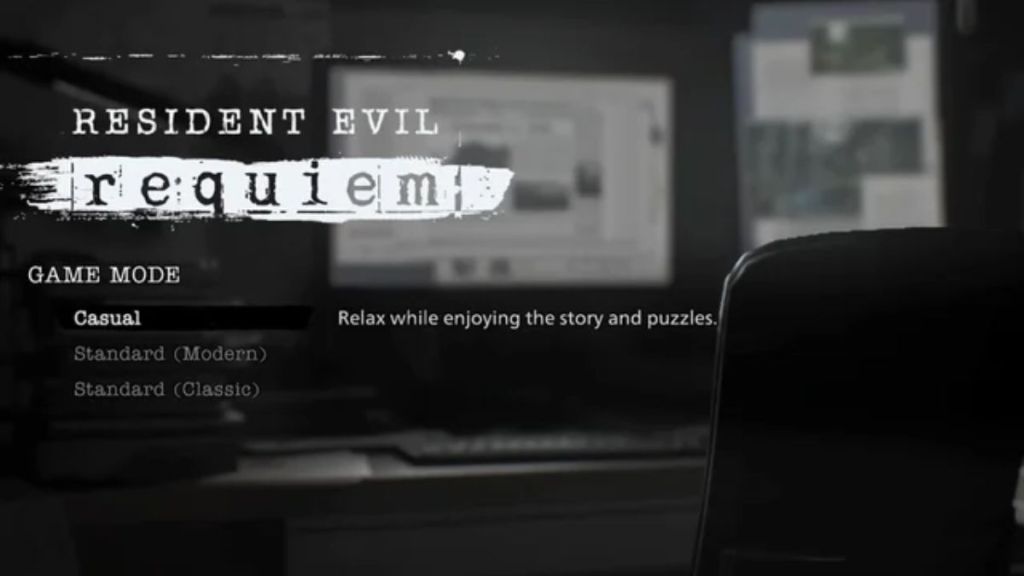
- Casual
- Standard (Modern)
- Standard (Classic)
- Insanity
Casual Difficulty Explained
New players often pick Casual because they want the story and atmosphere without the punishing resource economy. In Casual, enemies deal the least damage, ammo and healing items appear more frequently, and aiming assistance is more generous when you play as Leon or Grace.
I recommend Casual if you’re focused on narrative beats, exploring environments, or streaming a relaxed run on Steam or PlayStation. You’ll see fewer deaths, more autosaves, and much less stress while you learn the maps and enemy patterns.
Standard Difficulty Explained
Experienced players treat Standard like the baseline release version they want to master. Capcom split Standard into two behavior patterns — Modern and Classic — that mostly share enemy damage and resource balance but change how saving works.
Standard (Classic): Saving while playing as Grace requires Ink Ribbons, and autosaves are less frequent. That scarcity forces you to plan routes and manage risk the way older Resident Evil titles did.
Standard (Modern): No Ink Ribbons required; autosaves occur more often. If you want the intended challenge without archaic save constraints, this is the middle ground.
This is the setting most players and reviewers (I’m looking at you, Metacritic threads and capcom-community forums) consider the intended experience: balanced puzzles, steady enemy threat, and rewards that feel earned.

Insanity Difficulty Explained
Hardcore players put Insanity on their menu the way collectors keep a rare coin in rotation — it has a ceremonial place. Insanity is the game’s steepest climb: enemies hit harder, resources are far scarcer, some item placements change, and the Ink Ribbon save mechanic from Standard (Classic) returns.
Insanity becomes available after you complete the main game and defeat every boss; it’s intended for speedrunners, completionists, and anyone chasing maximum Challenge Points (CP). CP is the in-game currency you spend on permanent rewards — think Infinite Ammo, special weapons, unique upgrades, and weapon charms.
If you aim for 100% completion on PC, PlayStation, or Xbox, Insanity is functionally mandatory because it multiplies CP gains and alters item locations, which affects endgame trophies and leaderboards on Steam and console networks.
Is there an easy mode in Resident Evil Requiem?
Yes. The Casual setting is effectively the easy mode: low enemy damage, frequent resources, and looser aiming to keep you moving through the story. If you’re streaming a first playthrough on PlayStation or testing performance on a new GPU, Casual keeps the pressure light.
What is the hardest difficulty setting in Resident Evil 9?
Insanity is the hardest setting. It becomes accessible only after a full clear of the game and cranks up damage and scarcity while reintroducing Classic save constraints, which drastically changes how you approach combat and exploration.
I’ve played the game across settings and watched friends trade strategies on Reddit and Discord; you can treat these modes as tuning knobs that change pacing and tension. Which setting will you pick for your next run?