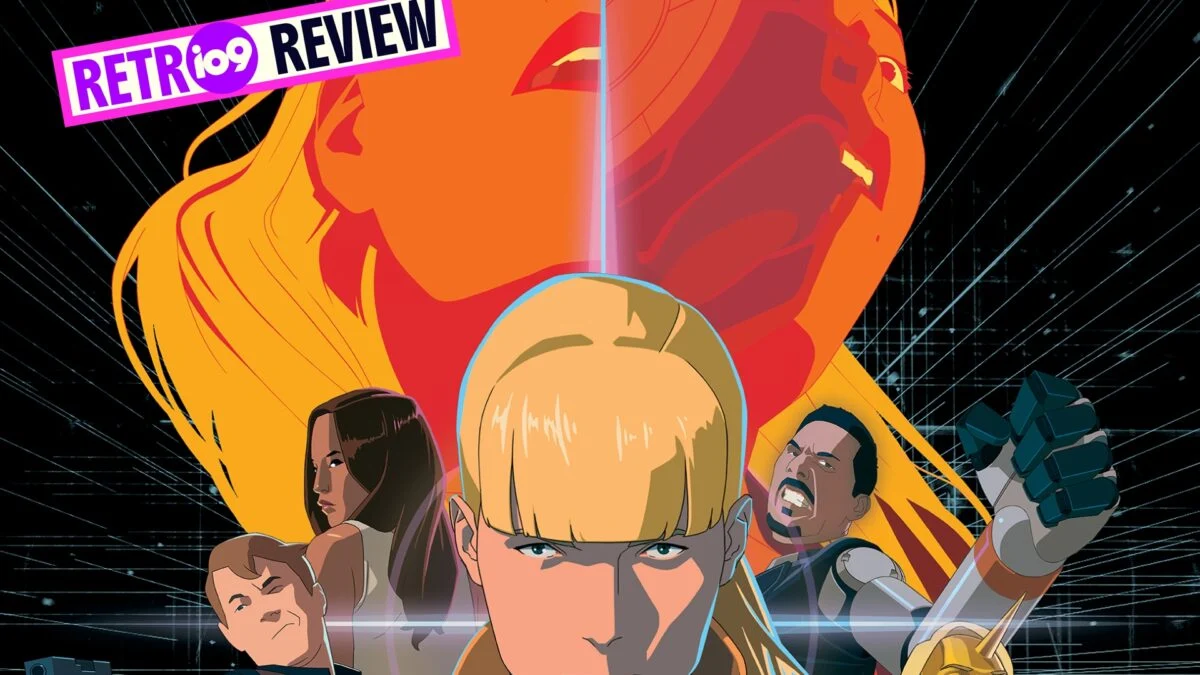
Aline leans against a rain-streaked window while a courier drone flashes past and the club below inhales the night. I hit pause and felt the unfamiliar sting of a film that refused to flatter the future. You will notice—fast—that Mars Express doesn’t glamorize its world; it argues with it.
Observation: People treat cyberpunk as style before substance
I have seen the trend: neon sells, chrome distracts, and people wear dystopia like a coat. Mars Express refuses the costume party. Jérémie Périn’s first feature from Everybody on Deck and distributed by GKids uses those visual cues, but it refuses to let them do the moral work for the story. Instead the film makes you feel how worn and ordinary the future can be—firmware updates interrupt surgery, doctors scroll during procedures, and empathy is a subscription only a few can afford.
What is Mars Express about?
It centers on Aline, a cyber-enhanced private eye, and Carlos, her synthetic partner, chasing a hacker who jailbreaks helper robots. That case peels back into a missing-person mystery, corporate bio-tech intrigue, and a broader question about machine autonomy. The plot is a conduit; the movie is mostly interested in the social rust that accumulates around convenience and authority.
Observation: Cyberpunk should read like a warning, not an advertisement
Walk past any tech launch floor and you’ll hear the same promises: faster, smarter, easier. Mike Pondsmith once argued that cyberpunk is a warning. I think Périn heard him. Mars Express treats neural implants and augmentation as routine utilities that break and betray, not fashion accessories. In that way the film is a rusted compass pointing at the genre’s conscience.
The film’s tone borrows from noir discipline: short scenes, hard beats, and character reveals doled out with surgical patience. The animation is tactile—camera jolts, over-the-shoulder framing, and small facial shifts that say more than lines of dialogue. That restraint keeps curiosity alive; you want to know exactly how each small fracture will grow.
Is Mars Express worth watching?
If you care about science fiction that interrogates its premises instead of glamorizing them, yes. Aline and Carlos are the emotional fulcrum: she’s sardonic and frayed, he’s an android with a human underside that complicates every ethical choice. Their rapport holds a world together that might otherwise fall apart under the weight of its ideas.

Observation: Small, believable details sell a future more than spectacle
I keep thinking about a single gag in the film: a medical robot pauses mid-suture for a firmware update. It’s funny until it’s terrifying. Those tiny choices—group calls inside your head, cars rerouting without concern for human sightlines—accumulate into real dread. The dread isn’t cinematic flourish; it’s the same feeling you get when a familiar app changes overnight and your life subtly costs you something you can’t log back.
That is where the film’s economy shines. The storytelling shows rather than explains; the result is a world that feels discovered. And that trust in you, the viewer, is rare. It’s also why the film’s tension spreads slowly and efficiently; it’s a slow leak in the dam that keeps you watching to see where the water will go.

Where can I watch Mars Express?
The film is available to rent or buy on Prime Video, Apple TV, Fandango at Home, Google Play, and YouTube. If you prefer physical or festival contexts, check Everybody on Deck’s screenings and GKids’ distribution notes for special presentations. Watching it on a dark screen matters—the movie rewards focused viewing.
Observation: Strong genre films respect mystery and ambiguity
At a screening I watched an audience lean forward during silence; no soundtrack, just an image holding a secret. Mars Express uses that discipline. It lets motives flicker instead of explaining them, and the result is moral complexity: jailbreaking robots becomes less an act of liberation and more a messy ethical test with human casualties.
That moral tension is reinforced by the film’s designs and score. The animation never feels ornamental; every frame pushes the plot or the characters’ inner life. As a result, the movie doesn’t shout its thesis. It leaves you with a question that stays with you after the credits roll.

If you want a cyberpunk piece that remembers why the genre exists, give Mars Express a watch. It will nag you, unsettle you, and then quietly make a case that style without moral teeth is just scenery. Do you think the future in our fiction should frighten us more than it flatters us?