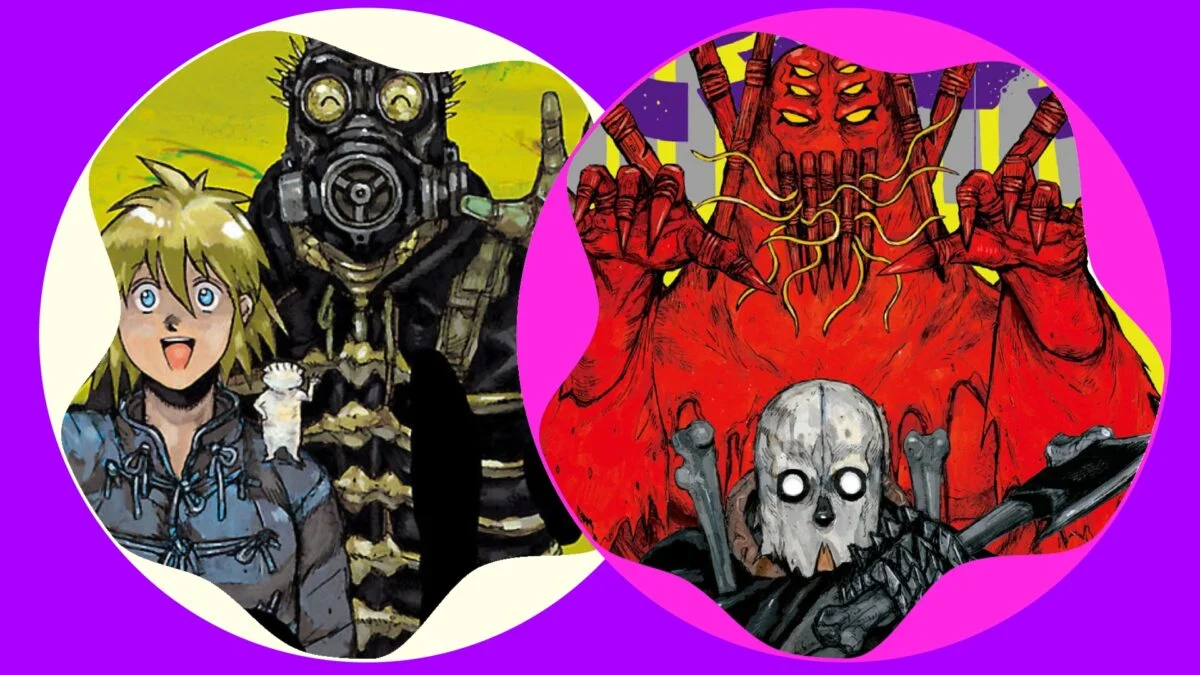
I remember the first time a panel made me stop mid-scroll: a lizard-headed man snarling with a whole city’s grit in his teeth. You, hunched over your phone, feel that sharp inhale—the one that insists you finish the chapter tonight. I’ve spent years tracing how those tiny shocks add up into obsession, and Q Hayashida’s work is where the habit begins.
I write this as someone who reads for craft and craving. You probably came here because Chainsaw Man rewired your appetite—good. But if you want food that keeps tasting bolder every chapter, you need to add Dorohedoro and Dai Dark to your rotation right now. Both are rough, funny, and slyly philosophical in ways that reward patience.
In crowded bars, people compare which manga made them laugh and wince in the same panel — Dorohedoro is the one they bring up first
Dorohedoro reads like controlled chaos. I’m not exaggerating: Q Hayashida mixes gore, black humor, and tender domestic scenes and keeps the whole thing coherent. The core hook is simple—Caiman wakes up beheaded by memory and identity theft—and the world around him is a filthy, ingenious machine of sorcery, commerce, and small kindnesses.
What is Dorohedoro about?
At heart it’s a hunt story turned inside out. You follow Caiman and Nikaido as they force sorcerers’ heads into Caiman’s mouth to identify the curse, and the chase spirals into a cross-city turf war with En, a sorcerer boss whose network unravels in violent, hilarious ways. The series manages sudden slaughter and dishes of gyoza in the same chapter with equal weight.
I’ll tell you plainly: Mappa’s anime is an excellent door into the series—its hybrid 2D/3D look and a soundtrack that sticks are irresistible—but Hayashida’s manga is more visceral. The panel work is razor-precise, evoking a quality of line that ranks alongside the late Kentaro Miura for sheer impact. Expect Mortal Kombat-level gore, yes, but also those quiet, warm beats where characters cook beneath a kotatsu and feel human again.

I’m partial to En—he’s the rare antagonist who can be monstrous and oddly gentlemanly. The cast is a parade of memorable types: bruisers, muscle moms, and sorcerers who die in scenes that are almost operatic. The world-building is granular; every corner of the Hole feels used and lived in. If you loved Fujimoto’s quick tonal shifts, you’ll recognize the DNA here: sudden laughter, then a gut-punch of violence.
Chainsaw Man: Messages from Mappa and Fujimoto
byu/NoDespair inmanga
At conventions you’ll see fans swap chapters like mixtapes — Dai Dark is the one they hand you with a grin
Dai Dark moves the dirtball energy of Dorohedoro into deep space while keeping Hayashida’s idiosyncratic handwriting. The conceit: Zaha Sanko’s bones are rumored to grant a wish to whoever collects them. That rumor turns him into a walking bounty, and his crew—Avakian (a sentient skeleton backpack), Shimada Death (a gender-ambiguous personification), and Hajime Damemaru (who can’t die)—are wonderfully absurd companions.
The series favors aimless joy: sidequests, pet spiders, sandwich debates, and odd merchants who feel like rare drops from an expensive RPG. Dai Dark spends long stretches on downtime for a reason: those interludes build affection. The set pieces remain brutal and inventive, but Hayashida lets you breathe with the characters, which makes the violent beats land harder.

Dai Dark is slightly looser in plot than Dorohedoro, which is part of its charm if you prefer your space operas with more collisions and fewer signposts. Its tone can flip in a panel—funny, then menacing—so if you came to manga for tonal whiplash, this is a promise delivered.
Where can I read Dai Dark and Dorohedoro?
Physical and digital options are solid: Viz Media handles Dorohedoro, and Seven Seas Entertainment distributes Dai Dark in English. Streaming wise, Mappa and TOHO animation have pushed adaptations—check Netflix and other platform announcements as season windows change. If you prefer buying volumes, bookstores and the official publisher sites are the most reliable sources for complete editions.

At panel Q&A’s, creators mention influences — Hayashida’s fingerprints show up everywhere
Conversations with other mangaka and animators often circle back to her aesthetic. Fujimoto joked that Chainsaw Man borrowed from Dorohedoro, and that’s an honest nod: both use tonal whiplash and grim humor to punch through convention. But Hayashida’s methods are distinct—she stitches world-building and grotesque charm into a fabric many creators now wear.
Those industry cues matter. I’ve watched discussions where Rumiko Takahashi and Hiromu Arakawa are cited for craft and character; Hayashida deserves that association for her ability to blur genre lines. Her art has influenced choices in adaptation studios—Mappa brought kinetic energy to Dorohedoro, and TOHO animation has pushed season news and key visuals that amplify the series’ reach.

If you want lineage, there it is: Hayashida fits into a short list of mangaka who can make readers laugh and recoil in equal measure while keeping characters sympathetic. Her use of offbeat humor, grotesque set pieces, and tender downtime scenes is a template others borrow from—Fujimoto among them. I’ll also point to her unique panel rhythms; they are part of the reason Chainsaw Man fans feel an immediate affinity.
I’ve used two metaphors so far to pin feeling to form: Dorohedoro is a pressure cooker—constant heat, then explosive release—and Dai Dark is a ragtag circus ship hurtling through starry static. Both phrases aim to capture motion and disorder without flattening either series into a single feeling.
If you want to broaden your manga diet with titles that taste raw, inventive, and slyly humane, read these in the order that fits your appetite: start with Dorohedoro if you crave sharper plot teeth; grab Dai Dark if you prefer whimsical danger among the stars. Which one will you choose to read first, and can either of them dethrone Chainsaw Man as your favorite tonal wild card?
Dorohedoro Season 2
Worldwide streaming starts on April 1!
Check out the brand-new chaotic and stylish key visual.Season 1 will be available on even more platforms on March 8, so catch up before Season 2 begins!
Stay tuned for more updates!#Dorohedoro #TOHOanimation pic.twitter.com/m93P8Rhh8T
— TOHO animation EN (@TOHOanimationEN) February 8, 2026