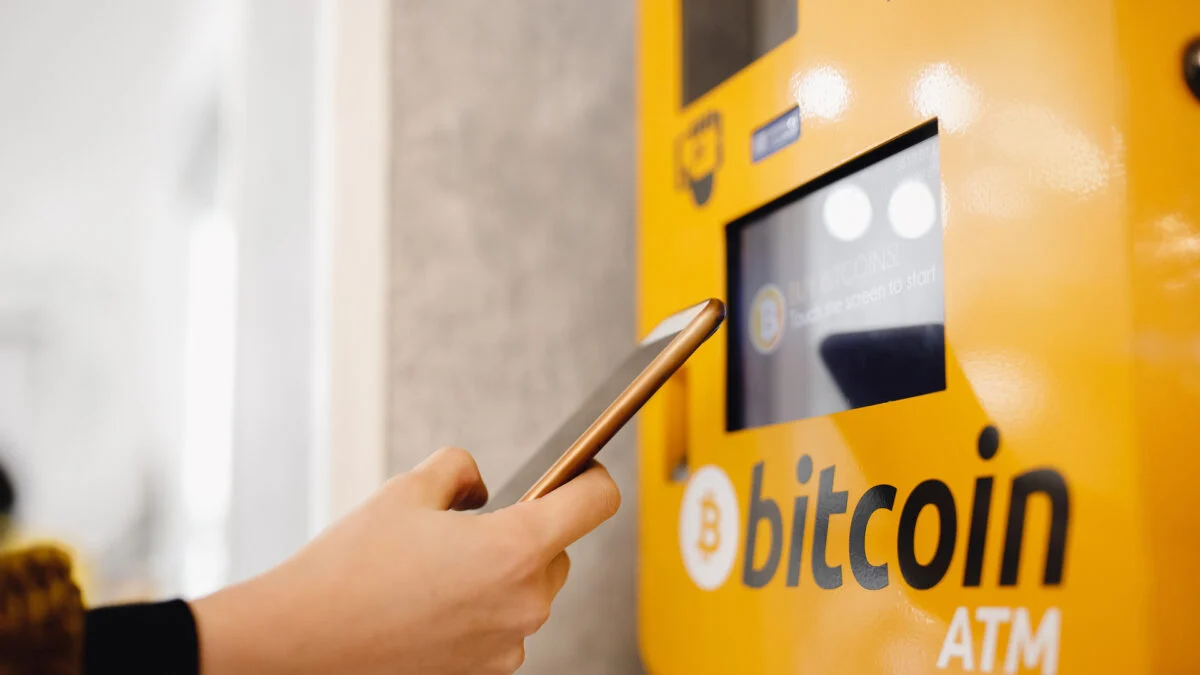
She counted the bills on her kitchen table and realized she had nothing left for rent. For six months she had been coaxed to the nearest bitcoin kiosk—small withdrawals at first, then larger transfers that vanished into a maze of wallets. I heard that story from Woodbury Police Det. Lynn Lawrence and it still sits with me.
I want you to hold that image as we read what Minnesota lawmakers and local police are proposing: a statewide ban on crypto ATMs. This is not theoretical. It grew from complaints, raw testimony, and a pattern that stretches from St. Paul to Phnom Penh.
Observation: A woman on a fixed income told police she lost half her monthly pay to repeated kiosk withdrawals
You should know how the Minnesota bill reads in blunt terms: House File 3642, introduced by Rep. Erin Koegel, would outlaw the operation of virtual currency kiosks that accept cash or debit cards for instant crypto purchases and repeal last year’s lighter regulatory framework. I’ve watched regulators try warnings and limits — signs that the machine is not legal tender, a $2,000 daily cap for brand-new customers, and 14-day refund windows — and still see fraud find a way.
The Department of Commerce logged 70 complaints last year totaling $540,000 (€502,000) in losses, while officials told lawmakers scammers often coach victims to use existing accounts or ATMs across the Wisconsin border to evade protections. Larry Lipka of CoinFlip called the thefts “terrible” and argued an outright ban punishes a legal product; law enforcement called the kiosks a persistent vector for abuse.
Are crypto ATMs legal in Minnesota?
Short answer: they were legal under a 2024 framework, but that may change. The proposed ban would remove the regulatory carve-out that allowed kiosks to operate and would criminalize running those machines statewide. I follow both the Commerce Department and Rep. Koegel’s office — they frame this as a consumer-protection emergency backed by police testimony.
Observation: Regulators in other states have hit kiosks with lawsuits and settlements
This is not just Minnesota. In Massachusetts, Attorney General Andrea Joy Campbell sued Bitcoin Depot, alleging the operator knowingly facilitated scams that cost residents more than $10 million (€9.3 million). Internal data reportedly showed 13–16 percent of transactions were scam-related in early 2023 and over half of money volume from August 2023 to January 2025. Maine negotiated a nearly $2 million (€1.9 million) settlement that required Bitcoin Depot to remove kiosks from the state.
Those are hard numbers. The FBI recorded nearly 11,000 crypto ATM scam complaints in 2024 totaling $247 million (€230,000,000), and that climbed toward $333 million (€310,000,000) in 2025 before December was tallied. Remember that most victims never call the FBI; the visible totals almost certainly understate the real damage.
Why do scammers use crypto ATMs?
Because some targets—often older Americans—can be guided to hand over cash, scan a QR code, and walk away with no online account or traceable bank transfer. Det. Lynn Lawrence described a victim who feared living in her car after repeated ATM-directed losses; that image is why lawmakers and AARP chapters across states are pushing for strict limits or bans.
Observation: Investigations trace a global supply chain of coercion and money laundering
The fraud is often industrial. Asian syndicates run “pig butchering” operations from forced-labor compounds in Laos, Cambodia, and Myanmar, coaxing victims into fake trading platforms from dating apps and then routing cash through crypto ATMs. I’ve read the Chainalysis reports and Justice Department filings — one seizure froze 127,272 bitcoin, roughly $13 billion (€12.1 billion), alleged to be tied to such schemes.
These scams are tuned for human weakness: loneliness, fear, and the illusion of a quick fix. The kiosks become the last visible step — a small machine at a convenience store that closes the loop. They act like a roadside baited fish hook, bright and cheap; once snagged, the line is already set.
Observation: Congress is moving to fold kiosks into federal money-transmitter rules
The Digital Asset Market Clarity Act (CLARITY Act) and draft Senate language treat kiosk operators as money transmitters with Bank Secrecy Act obligations. The Senate Banking Committee’s market-structure draft would require registration of kiosk locations with the Treasury, identity confirmation for new customers, transaction limits, refund procedures for suspected fraud, and a dedicated compliance officer.
If the federal law lands, kiosk operators would face quarterly reporting and stricter anti-money-laundering controls. Supporters say that closes gaps; privacy advocates, including voices from the Cato Institute, argue this chips away at one of the few cash-to-crypto on-ramps that preserves some anonymity.
The lawmaking fight also touches on stablecoin rules and whether mainstream banks should be able to earn interest on reserves — a line that separates industry players from traditional finance and slows progress on a final federal mandate.
Observation: Local police, advocacy groups, and companies disagree about the right fix
Det. Lawrence and the Commerce Department push a ban or tight licensing. CoinFlip and other operators say bans punish legitimate users and that the true target should be the scammers. AARP chapters, especially in West Virginia, have backed licensing bills after residents reported $7.6 million (€7.1 million) in losses in a single year.
There’s an unresolved human question here: do you remove the tool that makes crime easier, or do you police the criminal networks and keep options open for consumers who use crypto for legitimate reasons? The kiosks are a Trojan horse for fraud—but removing the horse won’t erase the army that built it.
Will banning crypto ATMs stop pig butchering?
Banning kiosks would close an accessible door, but the international syndicates will find other ways to harvest victims. Enforcement and cross-border cooperation—along with platform policing by companies like Bitcoin Depot, better on-the-ground training for retail hosts, and tougher AML checks—would lower the odds that someone like the woman in Woodbury gets emptied out.
If you follow Chainalysis and DOJ filings, you see illicit crypto activity jump to about $154 billion (€143 billion) in 2025 from $57.2 billion (€53.2 billion) in 2024 — a spike that reflects state actors, darknet flows, and the persistence of fraud economies. Lawmakers are reacting to pain stories; you can feel the urgency when officials say “previous efforts have failed.”
I’ve briefed policy teams, read court filings, and spoken with detectives who trace victims’ last ATM steps. My read: Minnesota’s move will sharpen the national debate about whether convenience can ever outweigh the known harms of a deliberately opaque cash-to-crypto channel. If you were advising a legislator today, what would you tell them to do next?