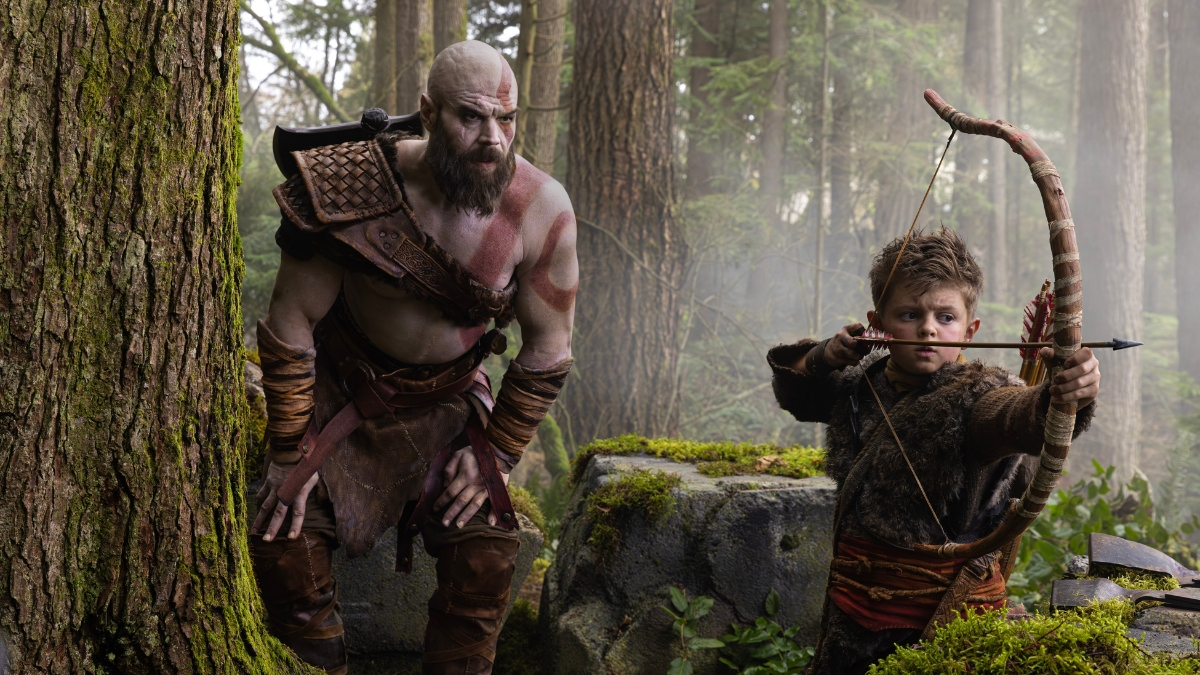
It was a single image, dropped to an eager internet at breakfast. Within hours a veteran creator had turned that still into a verdict. The mood shifted from curiosity to complaint in one scroll.
I’ve watched reactions move faster than any official statement, and I’ll walk you through why David Jaffe’s words matter — and why you might care even if you’ve never played a God of War game.
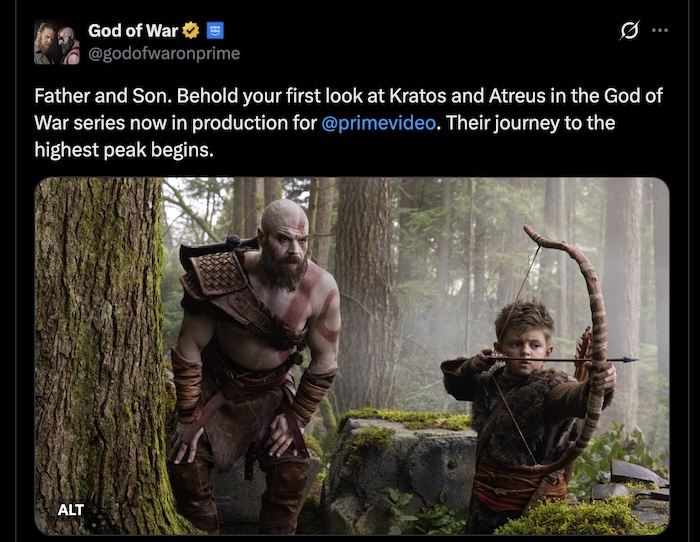
On a morning when a single frame was supposed to excite fans — David Jaffe didn’t hold back
YouTube clips now act as editorial columns; Jaffe used his channel to call the first-look image “stupid.” He wasn’t attacking the actors or the team by name, but his language was sharp and specific: the pose, the expression, the staging. You can hear the authority in his voice: he created early God of War entries and still holds currency among older fans and developers.
Jaffe asked a practical PR question: if this is how you introduce your lead, do you risk turning curious viewers away? He floated an alternative theory — that the creatives wanted to sell the father-son arc and downplay Kratos’ rage — but then argued the photo fails even on that level, saying it looks like “he’s shitting in the woods.” That blunt framing is the kind of statement that feeds headlines on X and clips on YouTube.
Why did David Jaffe call Kratos “stupid”?
Because the image communicates an emotional tone that, to him, contradicts the character’s established gravity. I read it as a complaint about framing choices: expression, body language, and setting offer the first impression to millions. If you’ve ever run a campaign on Amazon Prime Video or managed talent rollouts on social, you know first impressions shape narrative arcs fast.
At the grocery line, strangers judge a poster the same way we judge a show — instantly
Jaffe’s critique landed in the same wild ecosystem where spoilers, takes, and memes wage a war for attention. He didn’t single out Ryan Hurst (Kratos) or Callum Vinson (Atreus) personally, but his tone felt dismissive toward the casting choices to some readers. You should know the context: Jaffe created early God of War titles and has publicly argued with later creative directions from Santa Monica Studio.
The reaction wasn’t universal. Some viewers defended Amazon’s reveal, pointing to the promise of character work and the difficulty of translating a hyper-mythic hero to live-action. Others leaned into Jaffe’s bluntness. The image, for many, sits like a sculpture frozen mid-roar — iconic to some, awkward to others.
Who plays Kratos and Atreus in the series?
Ryan Hurst is cast as Kratos and Callum Vinson as Atreus. casting news circulated across X and was amplified by outlets after Prime Video posted the still. If you follow entertainment reporting on YouTube and trade sites, you’ve already seen the clips and commentary threads that shape fan expectations.
The conference-room truth: early optics shape fandom anger or goodwill
Marketing teams live and die by the first image; a single frame can charge or calm a fanbase. Jaffe’s critique is valuable to the degree you care about preserving a tonal throughline from game to screen — but it’s equally performative, designed to spark conversation and hold creatives to account.
There’s another angle: creators sometimes pick an awkward image to suggest intimacy or vulnerability rather than spectacle. That choice can work or backfire depending on audience appetite. I’ve seen similar moments in franchise rollouts where one odd poster generated more engagement than a perfectly polished reveal.
The reaction also speaks to ownership feelings; fans treat these adaptations like heirlooms. When a creator with Jaffe’s pedigree critiques a show, it amplifies emotions—some see critique as protection of the source material, others as gatekeeping. The response has momentum: commentary clips on YouTube and threads on X compound perception quickly.
Will David Jaffe’s reaction hurt the show?
Short answer: probably not in the long run. Controversy often equals free publicity. But if your aim is to build trust among core players who live in Reddit threads and Discord servers, dismissive takes from a respected creator matter. You should expect Amazon Prime Video and the showrunners to weather the noise, refine their outreach, and hope the pilot does what a poster cannot: convince viewers in motion.
I’m curious: do you read Jaffe’s critique as protective fandom or as gatekeeping — and does a single photo really decide a show’s fate?