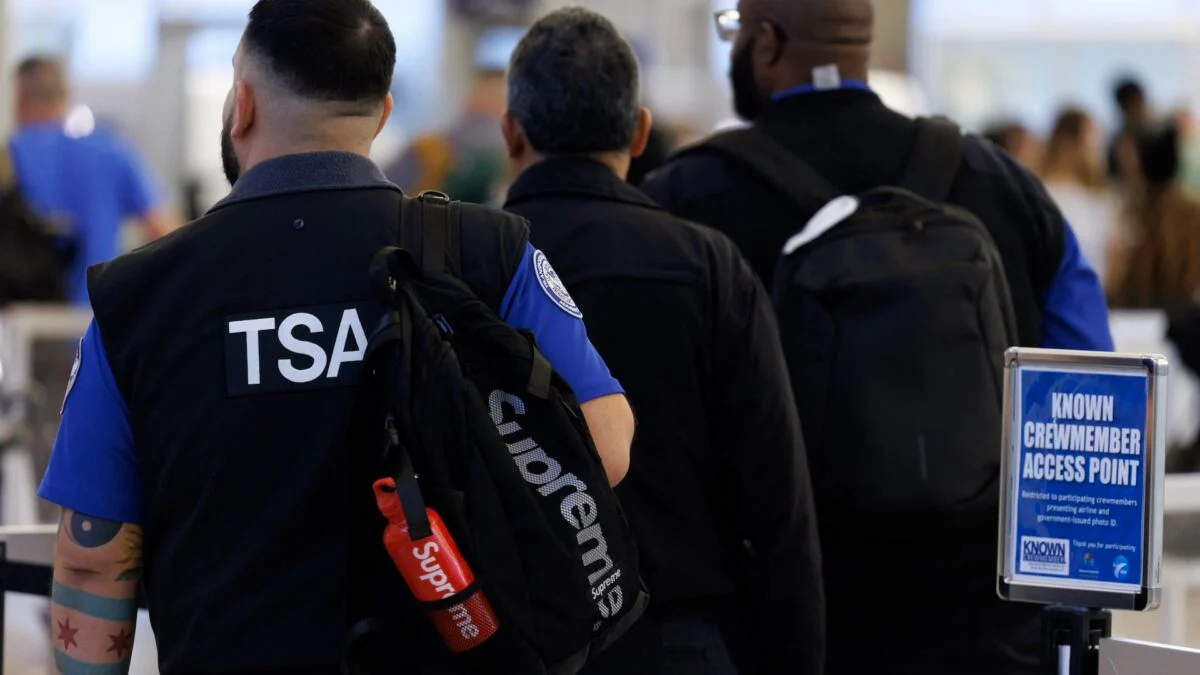
I watched a live clip of travelers spilling back into an Austin terminal, faces tight with panic as a line snaked out the door. You can feel the hinge of routine starting to sag: no pay, fewer officers, more people stuck on the wrong side of security. I want you to know what that means for your next flight—and why the next week matters more than the last one did.
A line out the door at Austin-Bergstrom suggested this wasn’t a random afternoon surge.
On Friday, Department of Homeland Security employees—including the Transportation Security Administration—missed their first full paycheck as the partial government shutdown continued. Two weeks earlier TSA officers received only about one-third of their usual pay; this week they received zero. That gap matters because most people live paycheck to paycheck, and the cash crunch is already changing behavior inside airports.
Why didn’t TSA officers get paid?
The short answer: DHS funding stalled in Congress over policy fights tied to Customs and Border Protection (CBP) and Immigration and Customs Enforcement (ICE). You’ve seen the headlines—Republicans and Democrats are locked over policy changes aimed at ICE, including limits on masks for agents. A Senate effort to fund non-immigration parts of DHS failed when every Republican and Sen. John Fetterman voted no.
At Houston’s Hobby Airport, roughly half the officers called out sick on March 8–9—an on-the-ground signal that shortages are uneven but acute.
Six percent of TSA officers nationally reported absences as of Thursday; on the ground in some hubs the numbers spike much higher. CBS News tallied 304 TSA officers who quit from Feb. 14 through March 9, and that quits-and-callouts dynamic is contagious. When entire shifts shrink, bottlenecks appear like clockwork at checkpoints, and people start missing flights or buying higher-priced last-minute tickets.
Will airport security lines get worse?
Short answer: yes—especially where staffing is thin. Training replacements takes four to six months, according to CBS News, so any resignations have a delayed ripple. The 2025 shutdown cost TSA roughly 1,100 officers; this round threatens to accelerate that attrition. Airports may post calming videos on X (formerly Twitter)—Austin did—but public clips from the White House and other accounts showing long lines keep the panic feeding itself.
Denver asking for grocery and gas gift-card donations showed how tight things have become for workers on the ground.
Some airports—Denver among them—are organizing food drives and asking travelers to drop off $10 or $20 grocery and gas cards to help unpaid TSA staff. Those amounts—$10 (~€9) and $20 (~€18)—read small, but they buy a lot when your next paycheck is missing. The gesture is practical and revealing: the system is fraying into local charity where federal payroll used to be the safety net.
An Austin viral video of four-hour waits and later airport-posted clips of short lines showed how social media shapes perception in real time.
Videos move faster than staffing plans. A clip posted early Friday showed long lines and travelers missing flights; hours later the airport shared footage of manageable checkpoints. Platforms like X, CBS News, ABC and The New York Times become both reporting tools and pressure valves—amplifying worries and forcing airports and the White House to play a choreography of calm and alarm.
What can travelers do to avoid the worst delays?
Use tools you already trust: check airline alerts, load TSA PreCheck or CLEAR status into your plan, and download airport apps for live wait times. Give yourself extra buffer—arrive earlier than you usually would. Think of it like packing a spare phone charger: most of the time you don’t need it, but when you do it saves a day.
Behind the scenes, the pay structure and politics are the real levers changing what you see at the checkpoint.
The average TSA officer makes about $50,000 (~€46,000) per year—below the U.S. median wage of roughly $62,000 (~€57,000) in 2025, per Fidelity. With gas averaging $3.63 (~€3.34) a gallon, small expenses add up fast. Officers are taking second jobs; some quit altogether. When paychecks stop, loyalty peels away and recruitment slows, and replacing an officer can take months.
I’ve tracked shutdowns before: the system behaves like a pressure cooker about to release steam—small leaks become big ones fast. Every day without funding increases the odds of longer lines, more missed flights, and higher ancillary costs like surge fares or rerouting in the airline system.
The politics are raw: footage from the White House labels Democrats to blame while Democrats ask for policy limits on ICE.
At stake is more than pay. DHS funding is tangled with immigration enforcement policies that many Democrats want to constrain; Republicans refuse changes that would limit ICE actions tied to the president. The impasse isn’t just fiscal theater—it’s a decision that affects airport operations, CBP and ICE behavior, and how quickly DHS workers get back pay.
Airlines and airports are watching. Airlines like Southwest and Delta will feel pressure if passengers miss connections and rebook en masse; the Federal Aviation Administration monitors throughput and could start issuing advisories. AAA, CBS, ABC, and major newspapers are already flagging the story; expect more business headlines if staff shortages spread into baggage handling or fueling, where price pressure on routes could show up quickly. Think of the system as a leaky bucket: when one hole widens, other holes appear and the drain accelerates.
You should be paying attention not because this is theater, but because it changes how you travel, how much you pay, and who covers the cost when service fails. I’ll keep watching the staffing numbers, quit rates and congressional votes—will you change your next trip plans accordingly?