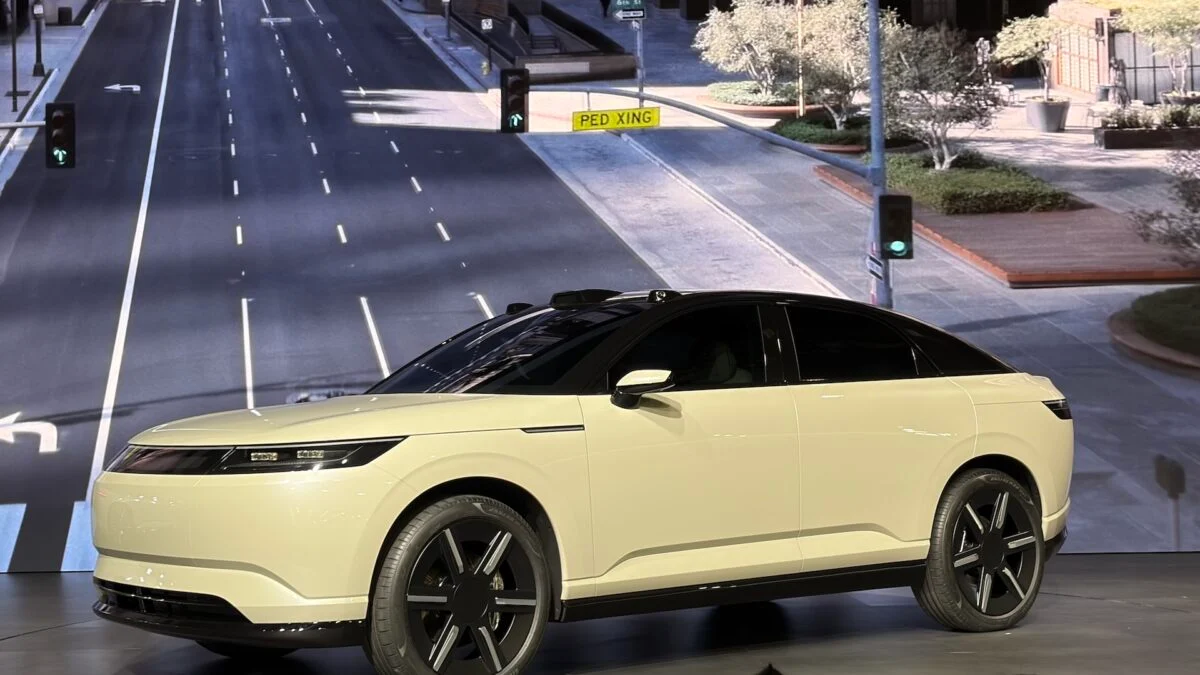
I stood under the CES lights as the Afeela’s screens blinked to life. You could hear the pitch: PlayStation inside an electric car, games, movies, AI—everything you wanted for long drives. Two months later the joint venture announced the whole project was dead.
I’ll tell you what went wrong, who gets hurt, and why this feels bigger than one canceled model.
I saw the Afeela prototype at CES before the announcement.
The car looked like a promise: PlayStation integration, in-car movie screens, Zoom, a voice assistant, and hints of generative AI. Sony Honda Mobility (SHM) marketed the Afeela 1 as the EV for entertainment-minded drivers, with a path to Level 4 autonomy. For buyers it wasn’t just a car; it was an idea you could reserve online and imagine driving through California freeways.
People were already handing over reservation fees.
You weren’t the only one who clicked reserve. SHM had opened bookings, and eager customers paid to hold a place in line. Now the company says it will return those fees in full. That’s the simple fix. The bigger mess is the lost promise of hardware, software, and integration that never gets finished.
Why did Sony and Honda cancel the Afeela?
SHM blamed Honda’s reassessment of its automobile electrification strategy. In practice, Honda told investors it would take a $15.7 billion writedown—about €14.6 billion—related to its U.S. EV plans, the company’s largest-ever hit and one that will push it to post a loss for the fiscal year. As Honda pares back the Honda 0 series and other U.S. EV projects, SHM says it no longer has access to “certain technologies and assets” Honda was meant to supply. So the venture has decided there isn’t a viable path forward for the planned models.
I read Honda’s investor notes while the news broke.
That writedown wasn’t a whim. It reflects weaker U.S. EV demand, falling incentives, and ferocious price competition from Chinese OEMs. Bloomberg reported Honda’s problems weren’t just recent; the company’s late, heavy investment in EVs left it outpaced by BYD and Tesla. The market context matters: fewer buyers, cheaper rivals, and the loss of the $7,500 federal EV tax credit combined into a hard reality for big bets like Afeela.
Will customers get refunds for their Afeela reservations?
Yes. SHM says it will issue full refunds. That preserves consumer cash but not consumer trust. Refunds close the transaction; they do not compensate for months of anticipation or the mental inventory of an imagined PlayStation EV in your garage.
I watched headlines flip from hype to damage control.
Press coverage ran from Gizmodo’s gadget praise to Bloomberg and The Guardian’s market analysis. The Afeela’s CES moment earned kudos for automotive tech, but the applause couldn’t cover the underlying economics. Public attention shifted from product features to corporate health—restructuring, accounting losses, and shifting strategy.
Is the PlayStation-integrated EV dead?
The Afeela models shown and the unnamed SUV concept are canceled. SHM says it will keep talking with Sony and Honda about future plans, which leaves a sliver of ambiguity. But for now the project is shelved. Think of it like a demo disk that froze mid-play: all the promise is still visible, but it won’t boot back up the same way.
I spoke to industry contacts who track supply chains and software stacks.
They told me the technical hurdles were real—integrating PlayStation-level software into a vehicle, certifying advanced driver-assist features, and planning for Level 4 autonomy is expensive and slow. Add the need for chips, semiconductors, and software teams, and the capital required balloons. When one partner tightens its belt, the whole stack can crumble.
Dealers and competitors are recalibrating the market.
Chinese brands continue to undercut with low prices and rapid scale. Legacy automakers are cutting models and writing down investments. Rising gas prices from geopolitical shocks have nudged some buyers back toward EVs, but the overall demand picture in the U.S. is still uneven. That volatility makes long-shot projects—cars that try to be entertainment centers and autonomous platforms at once—hard to justify.
The Sony name still carries weight in consumer electronics, and PlayStation’s software expertise remains sought after. Honda still has engineering talent and manufacturing scale. But a joint venture needs both partners aligned on spending and strategy. When that alignment breaks, what looks futuristic can vanish overnight—like a castle built on rented sand.
So where does that leave you? If you reserved an Afeela, you’ll get your money back. If you were watching for the idea of a console-meets-car, the lesson is that cross-industry glamour must meet hard auto economics. If you follow the EV market, this is another sign that the field will reward scale, affordable pricing, and relentless cost control.
Who benefits from the disappearance of the PlayStation car—legacy automakers, cheap Chinese EV makers, or consumers left holding the reservation?