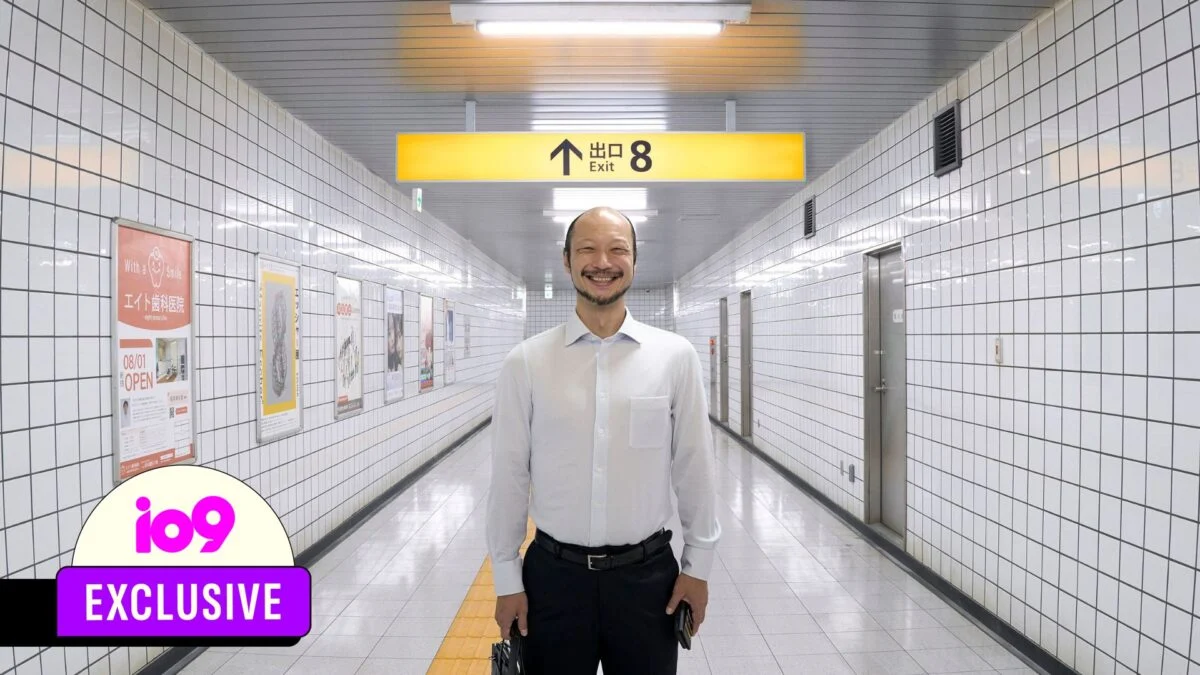
The corridor goes dark and a smile keeps following you. I move, you hold your breath, and for a moment the exit isn’t an exit at all. If you’ve ever felt a city close in on you, this film will make that feeling stay.
I watched the exclusive clip from Exit 8 and then read Genki Kawamura’s answers. I want to show you why this adaptation feels like a game you could almost control, and why its scares settle into something quieter and tougher to shake.
Crowds in theaters lean forward — why the film feels like a playable experience
I told Kawamura that the first time I saw Exit 8 I wanted the characters to pick the right route for me. He didn’t shrug—he planned for it. Borrowing an observation from Shigeru Miyamoto, he built a film that lets the audience be player and spectator at once.
That intention shapes pacing and camera work. Instead of conventional cuts the movie stretches long takes so you hunt for anomalies the way a gamer scans a level. Kawamura framed the audience’s attention with production design, score, and choreography so you sometimes feel responsible for decisions you never made.
Is Exit 8 based on a video game?
Yes. The film adapts an indie game whose core thrill is being trapped inside an uncanny subway loop. Kawamura chose not to mimic the game’s mechanics literally; he used the game’s rules as scaffolding for a cinematic structure that echoes game-play tension—think Miyamoto’s notion that a good game should thrill those watching as much as those playing, a point Kawamura referenced from his conversation with the Nintendo legend.

Most subway corridors look ordinary — how the set becomes uncanny
I asked about the risk of boredom when a film stays trapped in a single white corridor. Kawamura agreed and answered with a method: build two identical corridor loops and shoot long takes that hide the seams.
That “copy and paste” construction produces an effect that makes the space behave like a Möbius strip. The production leaned on design signals—Escher posters, sterile lighting—to tell your brain something is off before any explanation arrives. He called it an “architectural cinematic experience,” and when you watch the clip you feel the space itself press on the scene.
When does Exit 8 come out in theaters?
Exit 8 opens in U.S. theaters on April 10. Neon handles distribution, and you can expect festival buzz and reviews to climb into mainstream coverage across io9, Kotaku, and entertainment feeds ahead of the date.

The hallway often feels like a trap — the single-take stunt and performance detail
I watched the clip where the “Walking Man” appears behind the protagonist, smiling without blinking. Kawamura confirmed that sequence was achieved in a single uninterrupted take with no VFX.
They filmed on the dual-loop set and relied on choreography and the camera’s movement. Yamato Kochi was directed to move with the compressed, gliding precision of Noh theater; the effect is uncanny because it mimics CG motion with flesh. That performance pushes your discomfort into a physical register—presence over trickery.
How much of Exit 8 was shot in one take?
The director says many key sequences use long takes and the clip we premiered is an uncut single take. The approach favors practical craft over post-production illusions—a choice that grooves the film’s tension into your nervous system.

City life trains you to look away — the film’s moral engine
People on trains read their phones and ignore each other. Kawamura took that everyday habit and turned it into the film’s moral pressure.
He borrows classical sources—Dante’s Purgatory, Mizoguchi, Kubrick—and ties them to contemporary anxieties about social media and eroding family authority. The corridor becomes a test: anomalies force characters to face small moral choices that accumulate. The score—Ravel’s Boléro—repeats and grows, steady and relentless, like a silent metronome.
If the game gives you rules and an empty space, Kawamura places human guilt inside that shell. The result is a horror that feels less like a jump scare and more like a persistent accusation.
I recommend you watch the clip, pay attention to the long takes, and then read Kawamura’s interview if you want to see how the technical choices serve the theme. Between Nintendo’s Miyamoto comment, the Escher cues, and Neon’s festival strategy, this adaptation feels designed to be talked about.
Will you be able to look at a white corridor the same way after you see Exit 8?