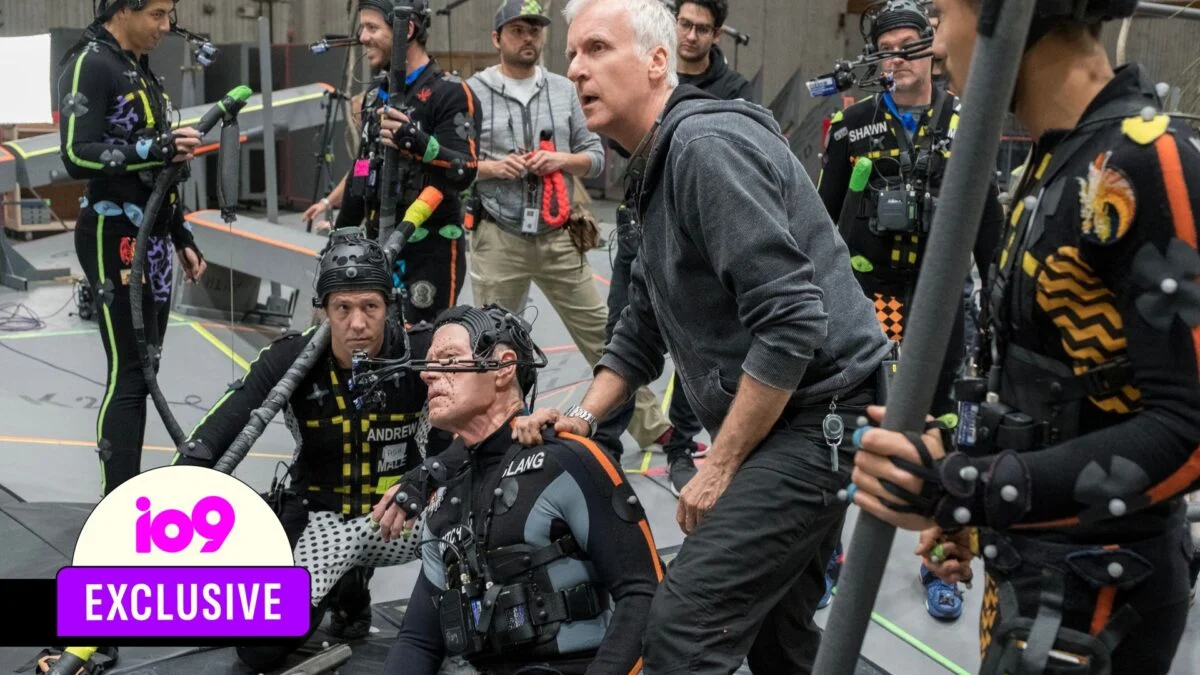
I watched a raw clip where James Cameron stepped onto his set, shoulder‑mounted camera humming, and the room suddenly tightened. You could feel the shot shift from planned to personal in a heartbeat. I’ll show you what that moment tells us about how the film was made—and why the home release matters.
You know James Cameron as the director who makes billion‑dollar movies ($1B ≈ €0.93B). He writes, produces, edits, and sometimes literally puts his hands on the camera. In that clip—exclusive to io9—you see him take control in ways most directors never would; he’s like a maestro stepping into the orchestra.
On the set: a moment where direction becomes hands‑on
I stood there, camera framed, while a single take changed the scene’s rhythm. Cameron hopping behind the lens isn’t a stunt; it’s a decision that rewires how performance and virtual capture converse. The result is an intimacy that carries through the finished film and into the extras that arrive with the home release.
When does Avatar: Fire and Ash release on digital and physical formats?
Good news if you want to watch this craft session for yourself: the film hits digital on March 31, and lands on 4K UHD, standard and 3D Blu‑ray, plus DVD, on May 19. Those physical discs bring the full suite of featurettes and behind‑the‑scenes footage to your living room, so you can pause and study every decision Cameron makes.
In the cutting room: editors who quietly reinvent the footage
I noticed editors working like cartographers—turning raw motion into mapable moments. The home release includes a segment on Editing and Virtual Camera that explains how captured “scenes” become performance edits, camera loads, and finished shots. If you’re fascinated by craft, watching an editor assemble a sequence is a lesson in controlled chaos.
What special features are included on the home release?
The extras are stacked. The main collection, Igniting the Flame: The Making of Avatar: Fire and Ash, breaks down the film in focused featurettes: Writing the Sequels; Pandoran Design with Dylan Cole; RDA Design from Ben Procter; The Women of Pandora; Varang and the Mangkwan featuring Oona Chaplin; Capturing Performance; Stunts with Garrett Warren; WĒTĀ FX and ILM spotlights; Score with Simon Franglen and Miley Cyrus’ “Dream As One” music video; The Art and Impact of 3D; and a warm Jon Landau Tribute.
There’s also a playful RDA Orientation packet—Na’vi 101 and a Pandora Intelligence Brief—that treats the film’s world like a real training program. The marketing materials and trailers round out the package, giving you the build‑up and the aftercare in one box.
On the effects floor: teams turning pixels into life
I walked past a Wētā FX bench where a single render could take days. The VFX crews on Fire and Ash had to render entire ecosystems with photoreal detail—creatures, virtual characters, and giant set pieces. ILM takes two major sequences (Jake in a thanator cage; the Bridgehead tarmac escape), and those scenes are explained shot by shot in the extras.
Did James Cameron operate the camera himself?
Yes—occasionally. The clip shows Cameron stepping in when a scene needs a specific rhythm or eye. He’s not replacing his camera team; he’s recalibrating the performance from within. That hands‑on move feeds the film’s sense of immediacy and was captured for the home release so you can watch the director directing in real time.
Costume and creature design: small teams, massive impact
I remember a workshop table covered in clay models and beadwork—little things that read big on-screen.
Pandoran Design and the Varang/Mangkwan featurettes reveal how production designers, concept artists, and body artists built new clans—the Wind Traders and the Ash People—so they feel lived in. You’ll see costume mockups, body art, and the performance choices that make those details read as culture rather than decoration.
Sound and score: music that pushes mood
I heard Simon Franglen play a cue once and the room changed color.
The Score section walks through how the music supports both the majestic and unsettling sides of the film. Miley Cyrus’ “Dream As One” music video is included, too, tying the emotional finish to a song meant to linger after the credits.
Home viewing: technical options and collector appeal
I compared a 4K disc to a streamed copy and the difference was night and day for depth and 3D layering.
If you care about the technical side—stereoscopic 3D, high‑dynamic range, disc menus—the physical releases are where the full experience lives. The Art and Impact of 3D feature explains why Cameron still insists on stereoscopic capture: it gives Pandora literal depth, not just scale.
Why this matters for filmmakers and fans
I’ve seen directors hand off control and I’ve seen them take it back; Cameron does both, often in the same shot.
The home package is a Swiss Army knife of material: it teaches, entertains, and inflames curiosity. For filmmakers, it’s a playbook—lighting, capture, virtual camera technique, editing choices. For fans, it’s access: you’re close enough to hear the set laughs, the on‑the‑spot direction, the creative arguments.
James Cameron’s third Avatar will be in your home soon—will his hands‑on approach change how you think about directing, or is it just another auteur anecdote to argue about?