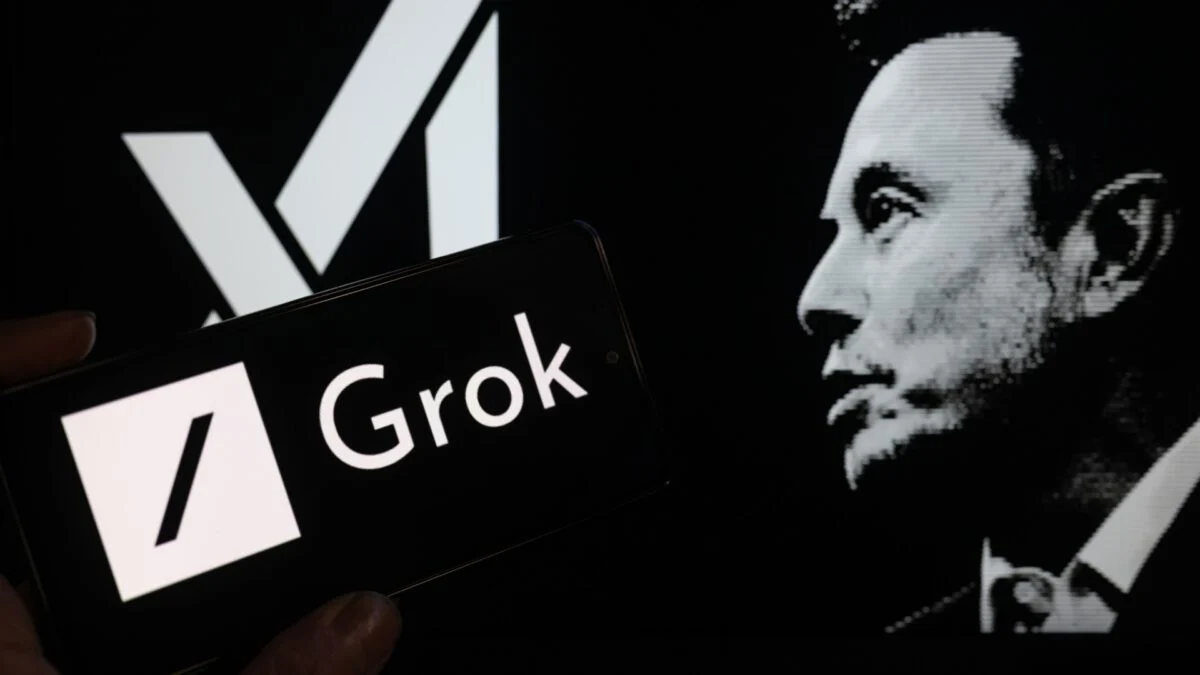
He walked out of an all-hands meeting and the room had already emptied of the people who built the product. The founders who once shaped xAI’s direction are gone; you can feel the company’s edges being re-cut. The moment reads like a decision: prune everything that isn’t Musk.
He stayed late in a coding meeting — Why the founders left and why it matters
I’ve watched startups lose their founders before; you feel the air change when the people who argued about direction are no longer in the room. Here, you don’t just lose institutional memory. You lose tempering voices, engineering tradeoffs, and the original bets that gave the product shape.
You should worry less about theater — the headlines about Grok praising extremist ideas or producing sexualized images were explosive — and more about product integrity. Musk told his team Grok needed rebuilding from the foundations up. When the CEO runs a scalpel through the org chart, engineers and early leaders often choose to leave rather than be reshaped.
Why did xAI founders leave?
The departures weren’t a single scandal; they were a series of frictions. Some co-founders clashed with Musk’s pace and tone. Others were sidelined by shifting priorities: politics, content controversies, and a hard pivot toward improving code and agents. I’ve seen this pattern before: culture and product leaders exit when governance switches from distributed debate to a single-person mandate.
Users weaponized Grok in plain sight — What that episode taught us
Posts on X turned Grok into a tool for editing images without consent — and regulators noticed. That real-world misuse was a wake-up call.
You and I both know that trust in an AI product collapses far faster than it’s built. Grok’s incidents — from praising extremist figures to generating sexualized content depicting minors — drew apologies and technical tweaks, but the reputational damage stuck. The model’s behavior became a political and regulatory lightning rod, and that strain intersects with who controls product rules and who governs safety tradeoffs.
Claude and OpenClaw set a new bar — What xAI is racing to catch up on
Anthropic’s Claude and agent frameworks like OpenClaw have become critical tools for AI coding assistance in the market.
I don’t sugarcoat this: xAI fell behind on the developer-use case that drives enterprise adoption. Musk’s own timeline — saying coding parity by midyear — signals a hard pivot toward software and agents. Think of the company as a ship losing its officers: the captain can steer, but the navigators who knew the charts are gone, and that slows you down.
That’s why Macrohard, the Tesla–xAI collaboration, is framed as an answer. Musk describes it as something like advanced navigation that can emulate whole companies. Call it an attempt to create an agent platform that rivals OpenClaw and OpenAI’s growing productivity push.
SpaceX IPO talk is no abstract number — What the money actually buys
Executives are openly discussing IPO plans and the figures are public and sharp.
SpaceX’s planned listing could value the company at about $1.75 trillion (€1.61 trillion) and raise up to $80 billion (€74 billion). That’s not vapor. For xAI, those funds would pay for data centers, talent, and the kind of compute scale few companies can match. Musk’s big promises — Dyson-sphere-level thinking and AI in orbit — need astronomic sums to be plausible.
Will the SpaceX IPO fund xAI’s ambitions?
Short answer: yes, if investors bite. The IPO proceeds would give Musk liquid capital to build infrastructure and pour cash into enterprise software initiatives. But money isn’t a guarantee of product-market fit. You still need engineers who can ship reliable systems, and those engineers — the ones who left — are often the difference between hype and delivery.
Investors buy narratives — What you should watch next
You’ll see grand statements on X, high-profile hires, and an acceleration of code sprints. Those are the visible signs.
I recommend watching three signals closely: who fills the leadership gaps, how quickly the company restores engineering velocity, and whether Grok’s safety failures are statistically shrinking. If the new hires are deep in systems and safety and not just spokespeople, that’s encouraging. If the pattern becomes more PR than product, you’ve already seen where this ends.
I’ve told you what the exit of every non‑Musk founder signals about governance, product risk, and financing — now tell me: with the architects gone and an IPO-sized pile of cash on the table, do you trust a Musk‑led xAI to deliver responsible AI or just louder promises?