
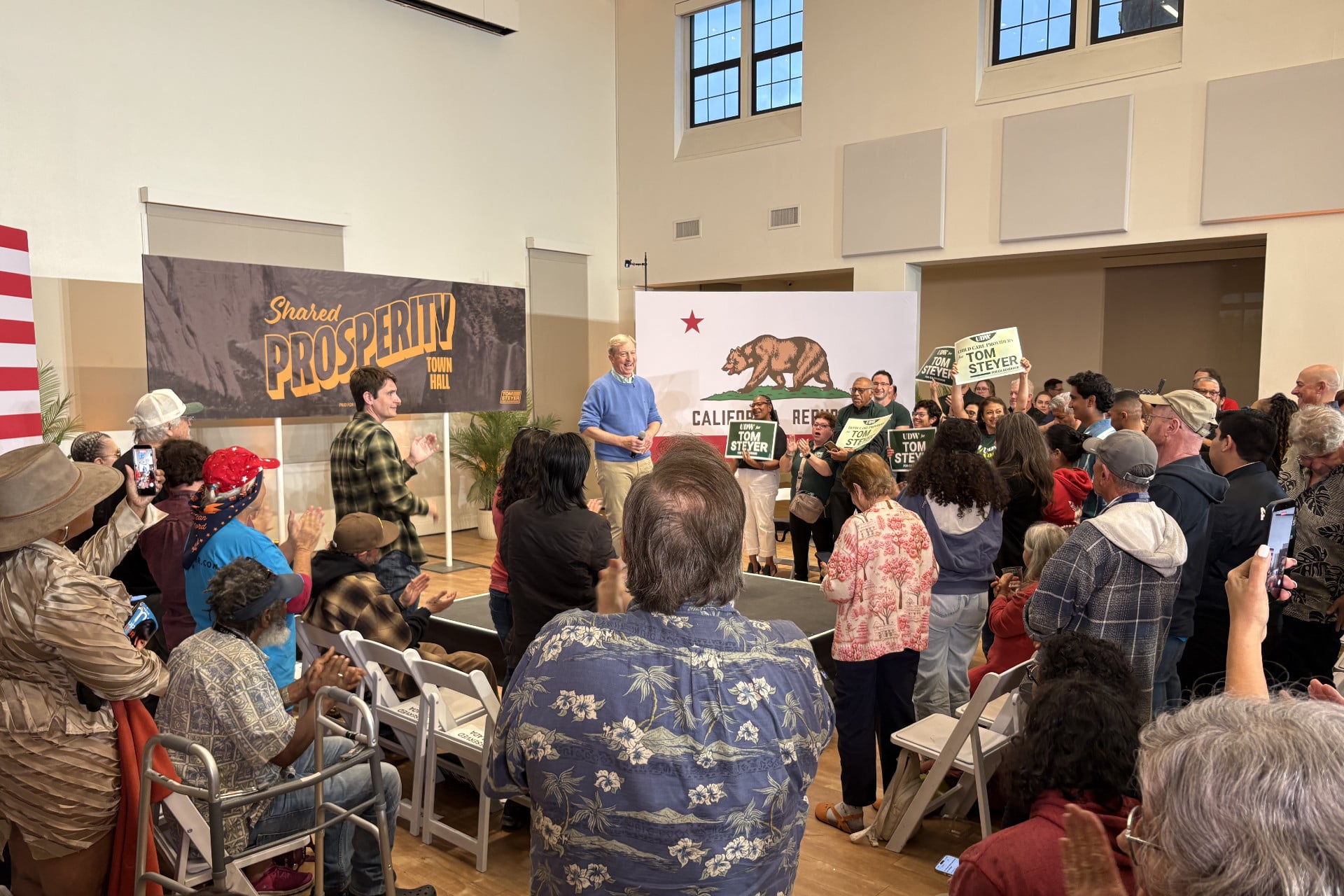
I was in a room in San Diego when Tom Steyer said, “This is a technology which basically enables a computer to replace the thought of millions of people.” You could feel the applause and the unease threading the crowd at the same time. That moment, raw and blunt, became the hinge for his pitch: tax AI tokens, build a Golden State sovereign wealth fund, and funnel money into education, retraining and direct payments.
I’ll be blunt with you: this is not small-policy theater. I want you to follow the trade-offs and the arithmetic—because the choices you make at the ballot box will shape which workers get a ladder and which get left on the curb.
People laughed and clapped in the room—the fear was real, and it was specific.
Steyer cast AI as an economic force that could put white-collar salaries at risk. He argued that the machine learning stacks powering OpenAI and Anthropic can “replace the thought of millions of people”—and that ownership of that software funnels income to shareholders, not to the displaced. I’ve seen that argument before: AI is arriving like a tide that lifts some boats and drowns others. His remedy is blunt: tax the corporate use of AI tokens and invest the proceeds.
A man in the crowd shouted about soaring utility bills—data centers are changing local economies.
That shout landed on a simple point: AI doesn’t just run on algorithms; it runs on electricity, human data, and local infrastructure. Steyer tied his plan to these realities, saying the companies that built their empires in California should help pay for the consequences—higher energy prices, strained grids, and the job dislocation that follows.
Someone mentioned the tech founders in the Bay Area—Steyer reminded the room who built the industry.
He pointed to OpenAI and Anthropic by implication and name: California hosted the talent, the data, and the venture capital that let these firms scale. That’s part of his political framing: if you trace the value chain, a slice of the upside ought to flow back to the state’s residents.
What is a token tax on AI?
Here’s the short version you can explain to someone on the phone: the proposal taxes the units of data processed by large language models—tokens—at a fraction of a cent each. The idea has roots in Dario Amodei’s 2025 proposal at Anthropic and was popularized in policy conversations last year. Steyer calls it a token tax and wants the revenue to seed a Golden State Sovereign Wealth Fund.
How would a sovereign wealth fund for AI work?
Think of it as a state-managed investment pool: money from the token tax would be invested, and the returns would pay for public education, workforce retraining, local infrastructure, and, potentially, periodic cash dividends. A sovereign fund could act as a shock absorber for paychecks—smoothing income while workers retrain or move into new roles.
Would taxing AI hurt innovation?
That’s the argument you’ll hear from Silicon Valley backers of lighter regulation. I asked myself the same question: does a small per-token levy choke off startups, or does it force big incumbents—OpenAI, Anthropic, the cloud providers—to internalize costs they currently externalize? Steyer suggested the rate would be negotiable; Dario Amodei has said parts of the industry find the idea fair. The counter is predictable: companies will lobby hard, and some economic models show uneven impacts between small labs and giant models.
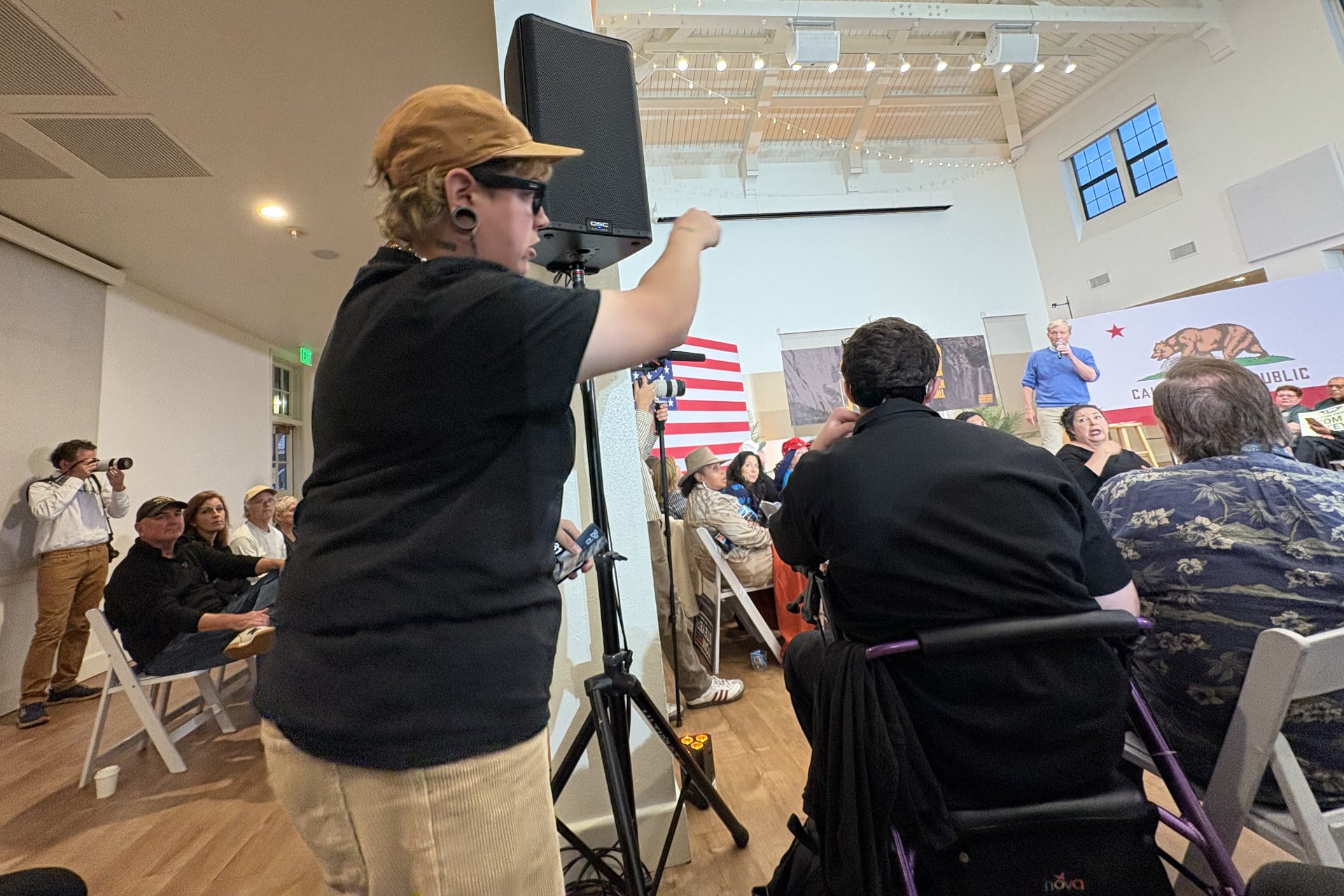
A woman in the audience demanded accountability for past investments—his record followed him.
Three protesters stood up to challenge Steyer over Farallon Capital’s past investment in CoreCivic, the private prison operator. He acknowledged it as a mistake, said his fund exited more than a decade ago, and promised to give away most of his fortune in his lifetime. Forbes lists his net worth at $2.4 billion (€2.2 billion), which complicates his platform of higher taxes on the wealthy—he’s both sponsor and subject of the levy he advocates.
A reporter asked for numbers—he offered principles instead of spreadsheets.
Steyer described the tax as “a fraction of a cent for every unit of data processed by Big Tech” and floated the creation of the Golden State Sovereign Wealth Fund on his campaign site. The outline is political theater and policy sketch at once: the phrase is specific enough to spark debate but vague enough that the rate, exemptions, and collection mechanism would still need months of legislative and industry negotiation.
You’re weighing trade-offs—so am I—and the political arithmetic matters.
California’s primary is an open one, and if two Republicans lead in June, they could be the only names on the November ballot. Steyer and multiple Democrats split the progressive lane, and players like former Rep. Katie Porter, Rep. Eric Swalwell, and San Jose Mayor Matt Mahan complicate the map. Mahan is courting Silicon Valley; Steyer’s platform is courting activists and the union lane. That clash of donors and voters will shape whether a token tax ever reaches legislative daylight.
Policy won’t be decided in a single town hall. It will be hammered out in the State Assembly and in the back rooms where lobbyists from cloud providers and startups meet with legislators. If you want a short reading list: start with Dario Amodei’s economic note at Anthropic, the lobbying playbooks of major cloud platforms, and the public filings of Farallon Capital. Politico and Forbes have the financial context; local reporting at CalMatters and investigative outlets show the human cost in places like Otay Mesa, where more than 1,000 detainees have reported dire conditions.
We can argue about fairness and growth, but the political reality is this: someone will frame AI as either a source of shared prosperity or a private jackpot. Steyer wants the state to take an ownership stake; opponents will warn that taxes slow innovation. I’m watching to see whether you—voters, organizers, and legislators—prefer a fund that pays for training and dividends or a market that keeps most returns inside corporate cap tables.
Which option will you defend at the ballot box?