
I stood in a dim repair bay as a technician set an air bag inflator on a metal cart and said, “This came out of a car after a crash.” You can feel the room tighten when you realize that a safety device became a weapon. I want you to know what regulators found, who’s involved, and what to do if you spot one of these parts.
The National Highway Traffic Safety Administration (NHTSA) said Thursday it’s weighing a permanent ban on inflators made by Jilin Province Detiannuo Safety Technology (DTN) after parts linked to at least 10 deaths and multiple serious injuries were found in U.S. vehicles. Transportation Secretary Sean Duffy warned that “these substandard parts are killing American families.” The agency’s initial findings point to aftermarket installs of DTN inflators in Hyundai Sonata and Chevrolet Malibu vehicles, and NHTSA believes many of the parts were imported illegally.
At a local shop I watched a mechanic point to a dented module and say it had been replaced after a crash.
NHTSA opened its DTN probe in October 2025 after repair shops began using the inflators as aftermarket parts. The agency’s paper traces the suspect inflators to 2021 and 2022 production runs and ties them to 12 incidents that caused deaths or severe injury; in at least 10 of those cases the parts were installed after the vehicle had already been in a collision where its airbags deployed. These inflators exploded like loaded cannons—sending metal fragments into chests, faces and eyes when they were supposed to protect people.
The Department of Transportation (DOT) published the initial decision and opened the document for public comment through April 17. DTN says it does not do business in the U.S.; NHTSA suspects illegal importation. The Wall Street Journal reported DTN’s stance, and investigative outlets such as ProPublica have documented broader DOT regulatory rollbacks under the current administration, which adds political heat to the technical probe.
Are Chinese airbag parts legal in the U.S.?
Short answer: not if they bypass required approvals and import rules. NHTSA’s authority covers aftermarket parts that affect crashworthiness. When a foreign supplier’s inflators arrive through undocumented channels and end up in U.S. cars, regulators can pursue enforcement, recalls and import bans. The DOT and NHTSA are coordinating with Homeland Security Investigations (HSI/ICE) and the FBI to trace how the parts reached repair shops.
A label on the part read DTN and a stamped year; the sticker didn’t tell the whole story.
Federal investigators are mapping the supply chain: where the parts were made, who shipped them, and which shops installed them after a crash. NHTSA’s initial findings focus on aftermarket installs into Hyundai Sonata and Chevrolet Malibu models, but the agency warns other makes and models could be affected. Industry names in the thread now include NHTSA, DOT, ICE, the FBI, Hyundai, Chevrolet and DTN.
The agency is weighing a permanent ban on DTN inflators and asking the public and industry to comment. Anyone tracking regulatory action should watch the NHTSA SaferCar portal and recall.gov for updates and official recalls tied to NHTSA’s docket.
How do defective inflators cause fatalities?
Inflators are small devices that rapidly generate gas to inflate a bag on impact. If the propellant or housing fails, the inflator can rupture and hurl metal fragments into occupants. NHTSA’s investigations document cases where a deployed bag did not cushion a crash—it produced shrapnel injuries instead.
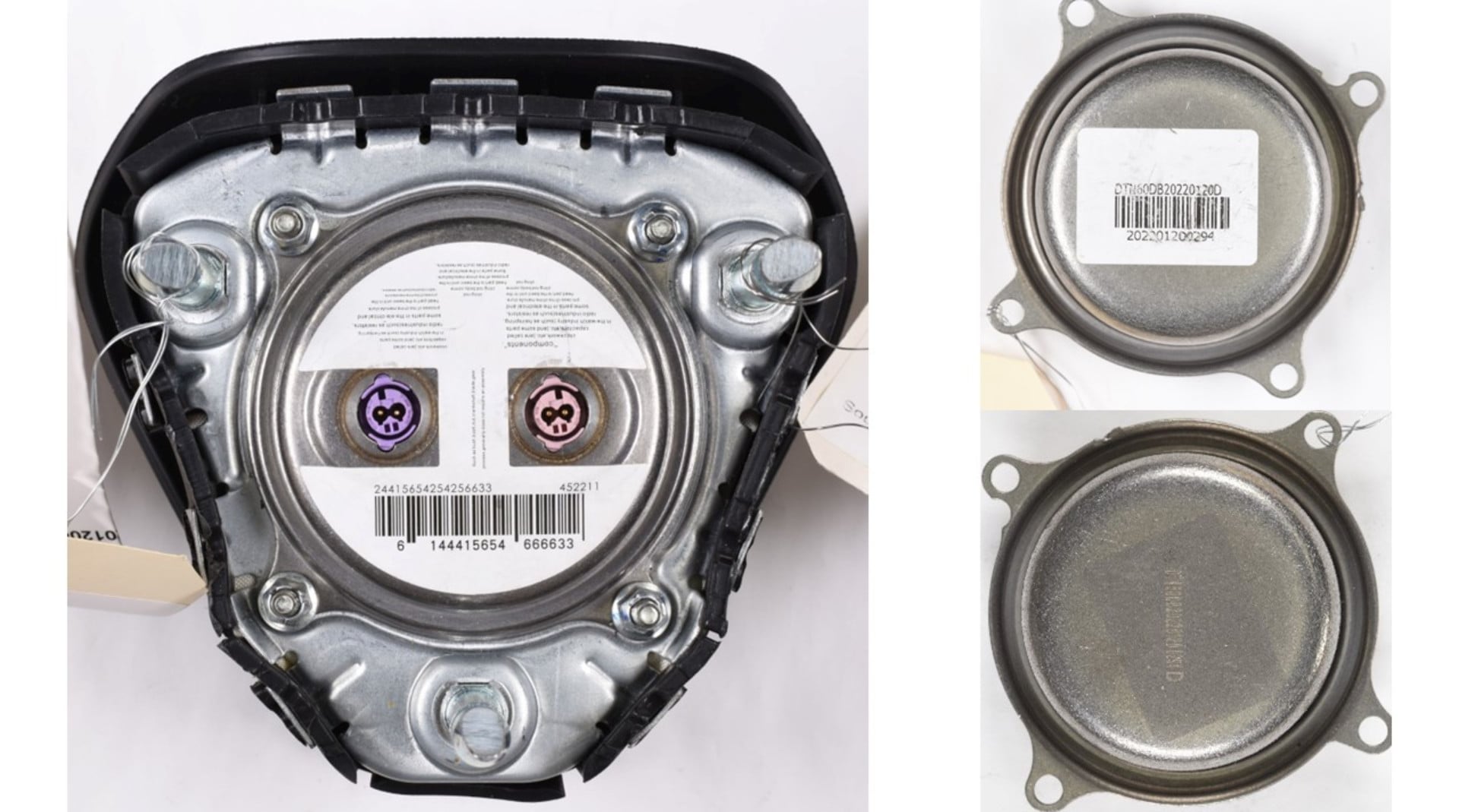
I called the DOT press office and they pointed me to local HSI and FBI field offices for tips on suspect parts.
The Department of Transportation’s statement urges anyone who finds a DTN inflator to contact their local Homeland Security Investigations office or an FBI field office. If you’re a consumer, a technician, or run a repair shop, use tools such as NHTSA’s VIN lookup and the recall.gov database to verify parts and recalls before installation. If you suspect illegal importation or a dangerous part in circulation, report it: HSI/ICE and the FBI are the law enforcement channels NHTSA is directing people to.
The political angle matters: Transportation Secretary Duffy’s language has turned this into a visible enforcement matter for the Trump administration, which has rolled back many DOT rules since January 2025. That context colors how aggressively regulators pursue a ban versus pursuing other remedies.
When regulators weigh a permanent ban, public comment, criminal probes, industry pressures and dealer networks all collide—so the question becomes who will be held accountable, and will Congress change the rules that let dangerous parts slip into American cars?