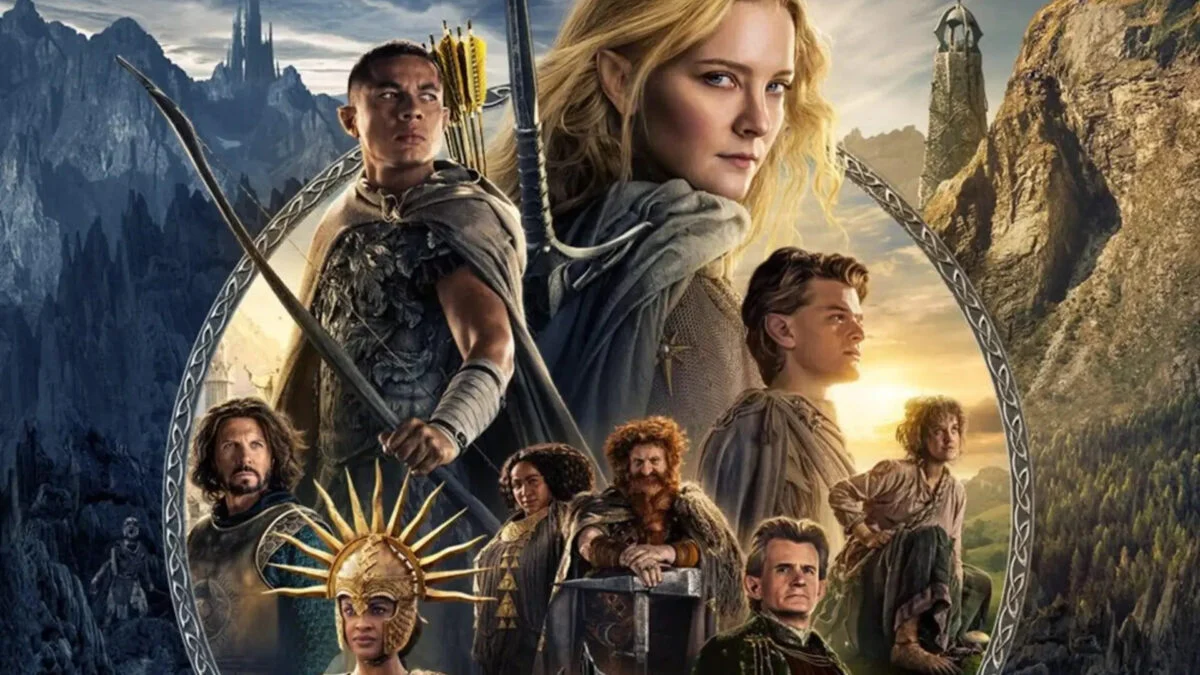
I was on a call when someone dropped the line: “It’s a magical halo.” The room went quiet, and you could feel the calculus change. For better or worse, that quiet meant Rings of Power wasn’t walking away anytime soon.
I’ll keep this short and honest: Amazon’s Prime Video is treating the show like a protected asset, and that has consequences for creators, fans, and competitors alike. You’ll get the who, the why, and what it likely means for the future — told with the kind of bluntness I wish more trade pieces had.
Why Bezos’ label matters for the series
On a recent executive briefing, Jeff Bezos reportedly called The Rings of Power a “magical halo” — a line that changed strategy overnight.
Calling the show a halo is an authority cue. It’s not just praise; it’s corporate insurance. Amazon sunk enormous resources into the Tolkien project, and industry reporting now suggests Prime Video will honour the five-season arc it originally pitched. That consistency is rare: shows with underperforming second acts or shifting leadership often get cut. Here, a CEO’s posture becomes a protective layer.
And make no mistake: this is also a financial headline. Media outlets are already calling it television’s first $1 billion (€930 million) series, a tag that reframes internal math from “profit center” to “brand-defining asset.” To you that means fewer surprises and more certainty that the story will be told all the way through.
Will Rings of Power get all five seasons?
Short answer: everything available reporting points to yes. The Ankler’s Lesley Goldberg cited sources saying Amazon’s leadership has effectively shielded the series for the full five-season plan. That doesn’t erase production delays — season gaps have been long — but it does make cancellation unlikely while Bezos remains involved.
What Amazon surrendered to protect the plan
In writers’ rooms and production memos, plans shifted: a planned spinoff was cut to keep the main series intact.
Here’s the tradeoff. Prime Video has chosen continuity for Rings of Power over expanding Middle-earth into a mini-universe. In practice that meant a spinoff — the kind of side-series that turns a hit into a franchise like The Boys or Invincible — was shelved. For Amazon, protecting the flagship series felt like placing a protective talisman around the core show instead of spreading resources thinner across multiple projects.
For you, the takeaway is simple: Amazon prefers a guaranteed flagship run over speculative spin-offs that could dilute budget and attention. That decision looks strategic if you’re trying to keep narrative coherence and control costs over time.
Why was the spinoff canceled?
Insiders told The Ankler and other outlets that executive bandwidth and budgetary focus drove the move. Amazon would rather finish what it started than launch additional entries that might compete for the same audience and resources.
What Warner Bros. is doing while Amazon protects its show
In studio corridors in Burbank, Warner Bros. has quietly greenlit new Middle-earth films that won’t depend on Amazon’s approach.
Warner Bros. seems intent on keeping Tolkien commerce alive with two projects: a Gollum prequel and an interquel that reunites the Hobbits after Return of the King. That means fans who want more Middle-earth beyond Prime’s five-season arc still have options. The rights are split across players, and studios are building different narratives to capture leftover appetite. Think of it as parallel tracks: the two companies are running separate experiments on the same train line, with different goals and timetables.
If you follow industry moves, this is predictable: when one studio tightens its focus, another expands to fill the gaps. Warner Bros. is effectively betting on theatrical and franchise extensions while Amazon protects its streaming story.
When will season 3 arrive on Prime Video?
Production calendars remain fluid. At the time of reporting, Amazon has only said season 3 will arrive “sometime in 2026.” Given previous gaps and the series’ production scale, that window is realistic, if frustrating for viewers waiting for continuity.
Who’s reporting all this? The Ankler’s Lesley Goldberg broke much of the coverage, and major outlets like IGN have picked up the narrative, noting the show’s frayed schedule and corporate protection. That triangulation — trade reporters, studio statements, and secondary coverage — is how I’d weigh the odds if you asked me where this goes next.
Want more io9 news? Check out when to expect the latest Marvel, Star Wars, and Star Trek releases, what’s next for the DC Universe on film and TV, and everything you need to know about the future of Doctor Who.
I’ve watched these corporate chess moves before: a CEO’s label changes incentives overnight and creative calendars bend to strategy like a slow-burning fuse. So where does that leave you — the fan, the curious viewer, or the industry watcher — when one studio protects its show at the cost of spinoffs while another studio keeps the broader franchise alive?