
You finish the tutorial and the game hands you ten choices. I remember that small knot in my stomach the first time I had to pick—everything ahead shifted with a single tap. You feel the pressure; that’s where good choices pay off.
I’ll walk you through every starter available in Pokémon Champions, explain why some flip the early fights in your favor, and give a short, practical pick if you want to get moving fast.
At every counter where decisions are made you see all the options laid out before you.
The starter draw in Pokémon Champions hands you ten possible partners after the intro battle. None of them breaks the game, and none is useless — but some fit better with the way you play. Below is the visual you’ll see and the full list so you can scan quickly and decide.
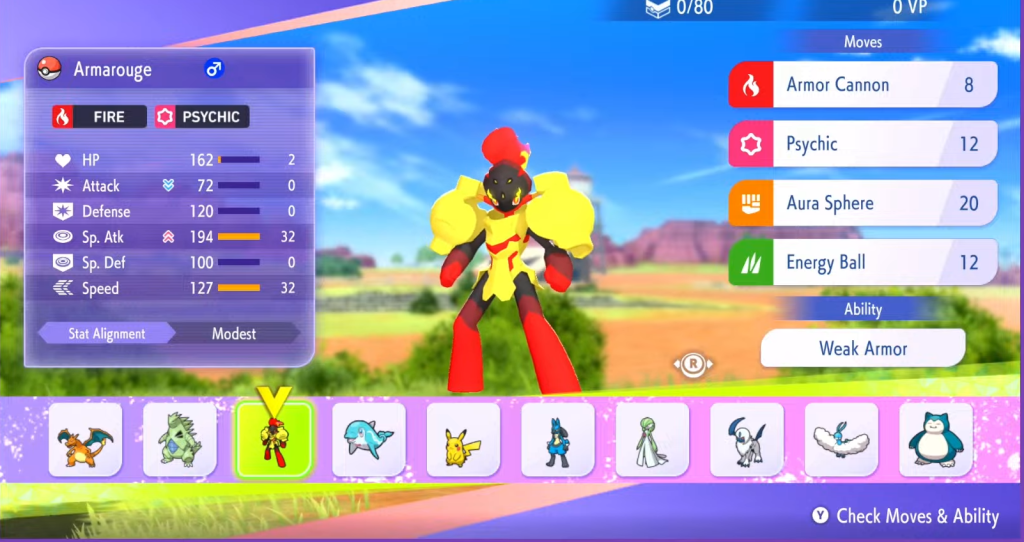
| Pokémon | Type |
|---|---|
| Charizard | Fire, Flying |
| Tyranitar | Rock, Gyranitar |
| Armarouge | Fire, Psychic |
| Palafin | Water |
| Pikachu | Electric |
| Lucario | Fighting, Steel |
| Gardevoir | Psychic, Fairy |
| Absol | Dark |
| Altaria | Dragon, Flying |
| Snorlax | Normal |
Which starter is best in Pokémon Champions?
Short answer: there’s no single best. If you want a playmaker who covers many matchups, Gardevoir often delivers; if you want brute force that ends fights fast, Tyranitar works. Competitive players on sites like Smogon will argue for balance and synergy, but for campaign progress I favor flexibility over strict meta choices.
Can you change your starter later?
Yes and no. You can recruit and trade for allies as you play, and The Pokémon Company’s design here allows mid-game team reshuffles. That means your first pick matters for the early hours but isn’t an eternal sentence — treat the first pick as a head start, not a lifetime commitment.
At tournaments, the first choice often decides how comfortable you feel an hour in.
None of the ten options will wreck your run. Pick what you like and you’ll still have fun. If you want a pragmatic selection that smooths early fights and scales into PvP or raids, these are my three choices.
- Gardevoir: Versatile and fast, Gardevoir is a Swiss Army knife — it covers Psychic and Fairy needs and learns moves from multiple types so you can answer a range of threats. High Speed means you often act first, which changes the rhythm of every encounter.
- Charizard: A classic with solid Speed and strong special attacks, Charizard arrives with Dragon-type options and the Blaze ability, granting immediate offensive punch. It’s a player-friendly pick if you like aggressive play and flashy wins.
- Tyranitar: Heavy-hitting and resilient, Tyranitar moves like a freight train on the battlefield — slow to set up but devastating once rolling. Comes with Sand Stream, which adds ambient pressure in tougher fights and benefits Rock-type coverage.
For context, picking well early has the same practical value as a $0.99 (€0.90) microtransaction that changes the course of a match: small cost, outsized impact. I use insights from playtests, community threads on Reddit, and coverage from outlets like Moyens I/O and IGN to form these recommendations, and Game Freak’s design fingerprints show through in every balance choice.
Pick what fits your style: if you want flexibility, take Gardevoir; if you want spectacle, take Charizard; if you want raw strength, take Tyranitar — which will you choose first?