
I watched the third episode with my hands braced on the couch, because the quiet felt like a countdown. You recognize that split-second where someone says one thing and everything else is swept under the rug. I realized then that the voice in your head is the only place a character can tell the truth in Gilead.
A woman at her kitchen table says nothing, and the room swells with heat.
I want you to hold that. In The Handmaid’s Tale, June’s internal commentary—carried from Margaret Atwood’s pages into Elisabeth Moss’ performance—became the show’s moral compass and coping mechanism. The new series, The Testaments, preserves that lifeline but spreads it across perspectives: Agnes and Daisy get voiceovers framed as their future selves reflecting back, which changes the way you read every gesture.
The effect is surgical: the narration isolates what characters cannot say aloud. It acts like a scalpel—precise, sometimes painful—cutting through ceremony and posture to expose motive and fear.
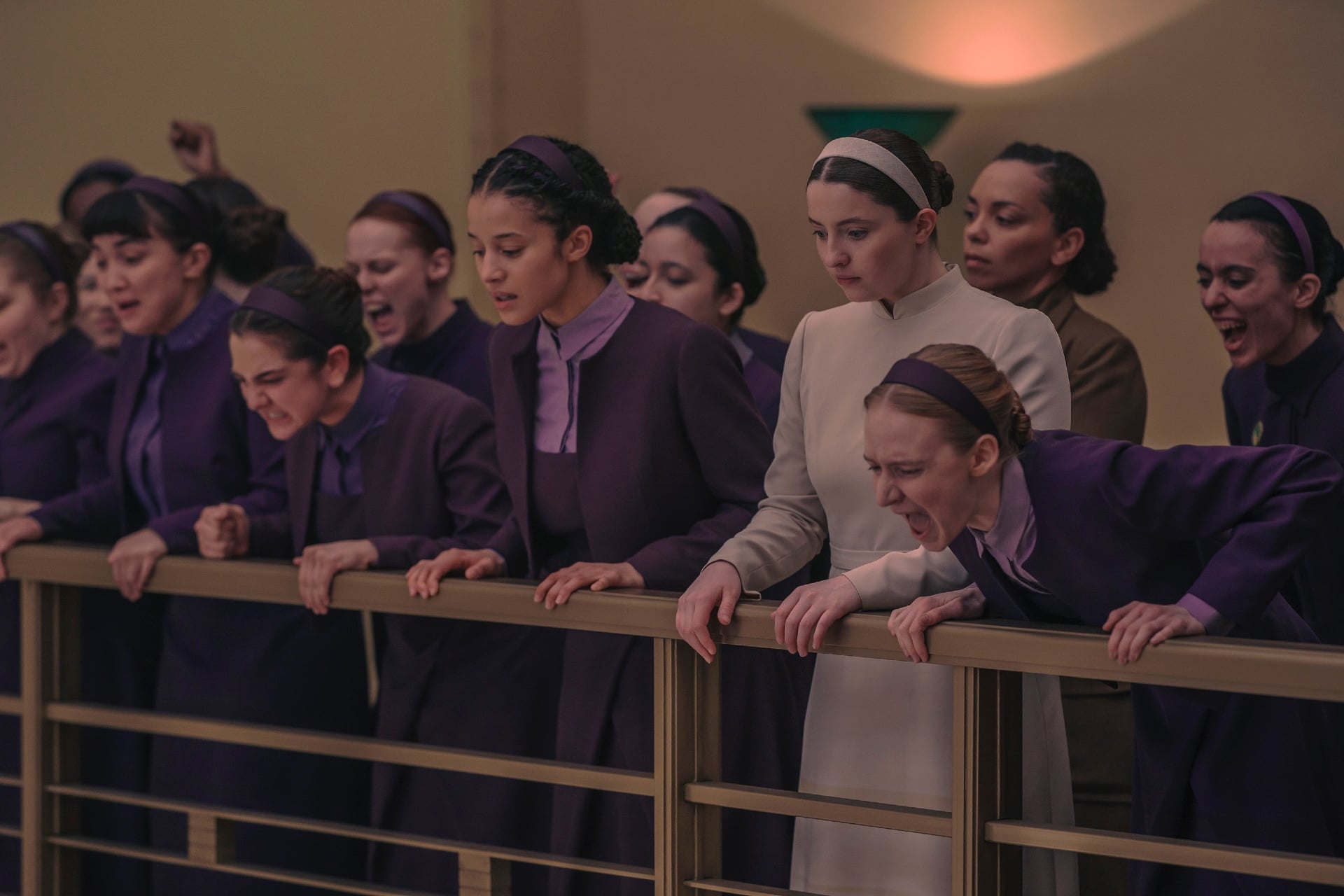
A teenager hides a note under a mattress, and it becomes evidence.
That small act is where voiceover earns its keep. Agnes (Chase Infiniti) narrates with the benefit of hindsight; her voice points out her own naiveté and the moments she missed while living inside social scripts. Daisy (Lucy Halliday), arriving as an outsider, says what she thinks in her head before she learns the penalties for saying it out loud. Their future-self framing does two things at once: it reassures you that they survive, and it lets you feel everything they would otherwise swallow.
Halliday told io9 that the device is necessary because Gilead is a “very repressed environment,” and the characters aren’t allowed honest speech. Infiniti echoed that sentiment, noting Daisy’s inner commentary often mirrors what the audience is thinking—a direct line between viewer and character that bypasses ritualized silence.
Why does The Testaments use voiceover?
Because in a world where words are policed, the unseen narration becomes a legal loophole for interior life. The show uses voiceover to keep control of tone—fear, humor, irony—without breaking the diegetic rules of Gilead. Voiceover also functions as a reliability test: future-tense narration promises survival, but it can still lie by omission, which keeps you suspicious.
A laugh at a funeral is a tiny, dangerous rebellion.
Humor as refuge is a real thing you’ve probably used: a joke to shrink panic into something bearable. The voiceovers in The Testaments do that; they add levity in places where everyone else must be solemn. Halliday describes that levity as a human reflex—people often make jokes during harsh events—and the show lets you hear those reflexes. That wink inside your head is a lifeline and a weapon.
On a craft level, voiceover is a writing tool that allows screenwriters and directors to steer mood without reworking blocking or casting. It’s economical storytelling for a series on Hulu and Hulu on Disney+ that needs to carry Atwood’s ideas and the showrunner’s interpretation across episodes.
How do voiceovers affect character empathy?
They manufacture intimacy. When you hear Agnes call herself naive, you forgive her faster. When Daisy’s inner voice reacts with raw confusion, you’re invited to mentor her emotionally. That tilt toward empathy is a strategic audience hook: voiceover builds trust faster than dialogue because it sounds private, and you feel like the secret keeper.
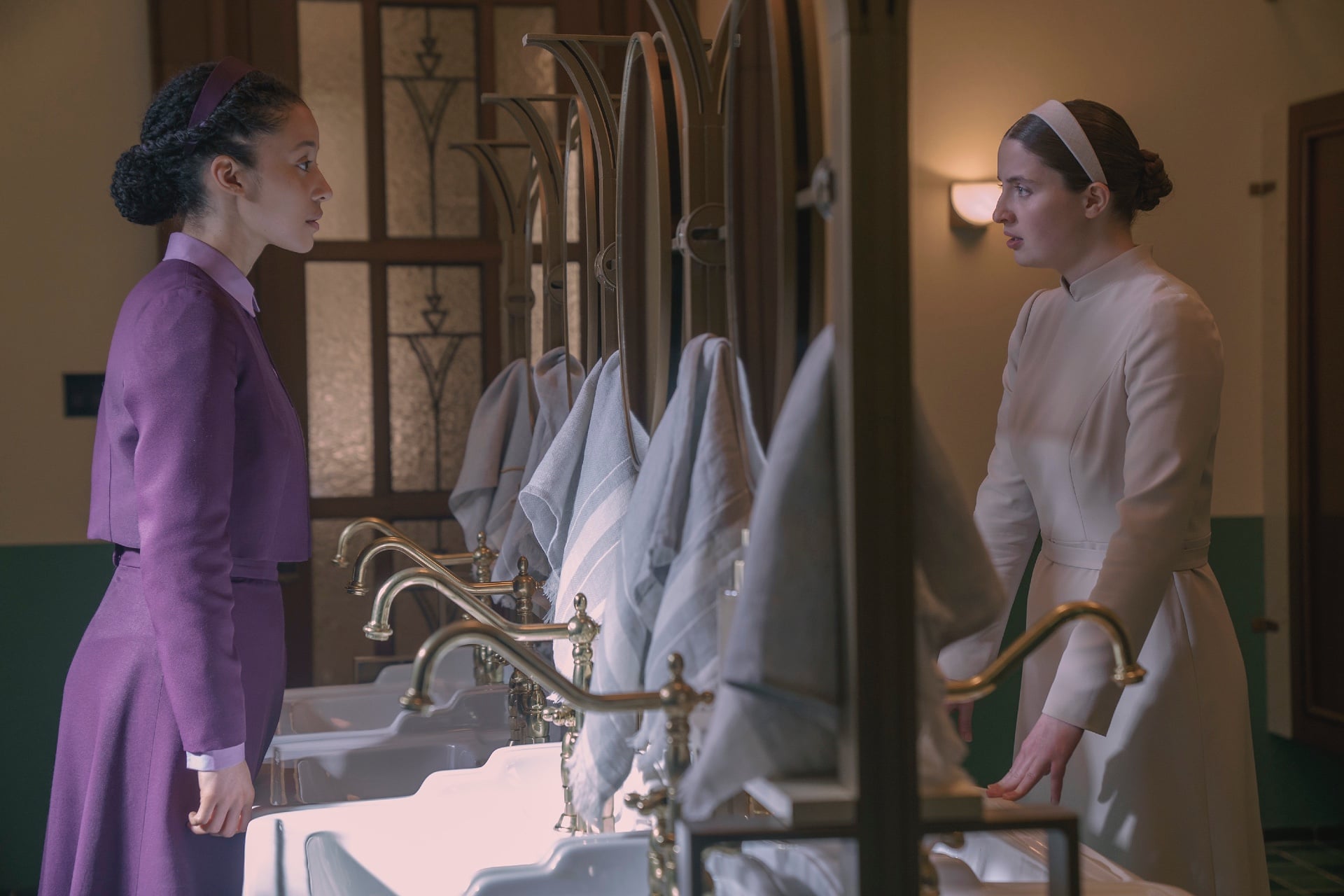
A director signals with a pan and you understand a lie has been told.
That small directorial habit is a language you read without thinking. Paired with voiceover, it changes meaning: the camera says one thing, the narration says another, and you’re forced to choose where your allegiance lies. This double-track storytelling is a potent way to make viewers do the emotional work the characters cannot do aloud.
In practical terms, the show’s use of narration is also a negotiation with source material. Atwood’s novels use internal monologue heavily; showrunners and writers must adapt that for television rhythm. The Testaments preserves authorial voice by giving actors an off-camera conscience, and the result is often more revealing than stagey exposition.
Is the narration faithful to Margaret Atwood’s book?
It honors the book’s insistence on interior life while translating it into visual drama. The choice to have future selves narrate adds layers that aren’t literal in the novel but feel faithful to its spirit—memory, shame, and small acts of resistance. For viewers who follow industry coverage on platforms like io9 or Deadline, this feels like a smart compromise between fidelity and theatrical necessity.
Watching the first three episodes on Hulu and Hulu on Disney+ shows how voiceover can be a compass, a confession, and a joke all at once. The device asks you to read between faces, to prefer nuance over spectacle, and to trust the private voice even when public ritual lies.
Want more io9 news? Check out when to expect the latest Marvel, Star Wars, and Star Trek releases, what’s next for the DC Universe on film and TV, and everything you need to know about the future of Doctor Who.
How much power should a private voice have over a viewer’s judgment of a character—especially in a world where saying the wrong thing can be deadly?