The lights drop. A child in the row ahead giggles, then stops. You feel the room lean forward with you.
I saw early reactions roll in like a tide of nervous messages, and I want to give you a clean read: if you like nasty, mean horror, this one is made with your name on it. I’ll walk you through what critics and the crowd are saying, where the film sits in franchise chaos, and whether it’s worth the ticket money or the nerve.
Lee Cronin’s Mummy: There are some genuinely creepy scenes, but this movie really shines when it gets GROSS. I wish the marketing leaned a bit more on that aspect- the natural inclination we all have to experience something a friend swears is absolutely disgusting
— Chelsea Rebecca (@carebecc) April 11, 2026
#LeeCroninsTheMummy is, without question, the most terrifying and disgusting Mummy movie you’ll ever see. Unrelenting in some ways that I can’t go into because spoilers, and it’s definitely not for everyone, but if you enjoyed Evil Dead Rise, chances are you’ll love this. pic.twitter.com/t6ACbeylZH
— Chris Killian (@chriskillian) April 10, 2026
#LeeCroninsTheMummy is a nasty, gruesome, mean-spirited & disgusting little shit of a movie. In other words, it’s a ripper. Plays like if Cronin saw BRING HER BACK after binging THE OMEN, THE VANISHING, & BRAINDEAD and then said “bet.” Bit long in the tooth, but she bites. Hard. pic.twitter.com/v7Ti2pcm5S
— Bill Bria (@billbria) April 10, 2026
#LeeCroninsTheMummy goes hard. It does not hold back. A freaky-as-fuck creepshow. Scary, scream-worthy & squirm-inducing. Natalie Grace is the MVP in a Linda Blair-inspired performance. A buffet of split diopter shots. @warnerbros pic.twitter.com/BWmxciSYxY
— Courtney Howard (@Lulamaybelle) April 10, 2026
#LeeCroninsTheMummy trades spectacle for intimate domestic horror, turning family trauma & grief into something eerie and deeply unsettling. A visceral body horror with superb squelching sound design subverts what you’d expect from a monster movie. Fingers & toes will curl! pic.twitter.com/c55KIIp2wk
— iammichaeljlee.bsky.social (@IamMichaelJLee) April 10, 2026
#LeeCroninsTheMummy is the real fuckin deal. Nasty, goopy, gory, and schlocky. Basically Lee Cronin’s Evil Dead Mummy, so if you dug his style on Rise you’ll love this take on Mummy. Laia Costa remains one of my favorite actresses and Natalie Grace steals every scene she’s in. pic.twitter.com/6G9EsHq76W
— erik nordgren (@nrdgrn) April 10, 2026
If you’re a fan of Lee Cronin’s Evil Dead Rise, you’ll have fun with what he’s bringing to The Mummy. Bizarre choices here and there, but the spirit of a gross monster movie involving a little girl mummy pays off well. #LeeCroninsTheMummy pic.twitter.com/4AQKLpwUPV
— Aaron Neuwirth (@aaronsps4.bsky.social) (@AaronsPS4) April 10, 2026
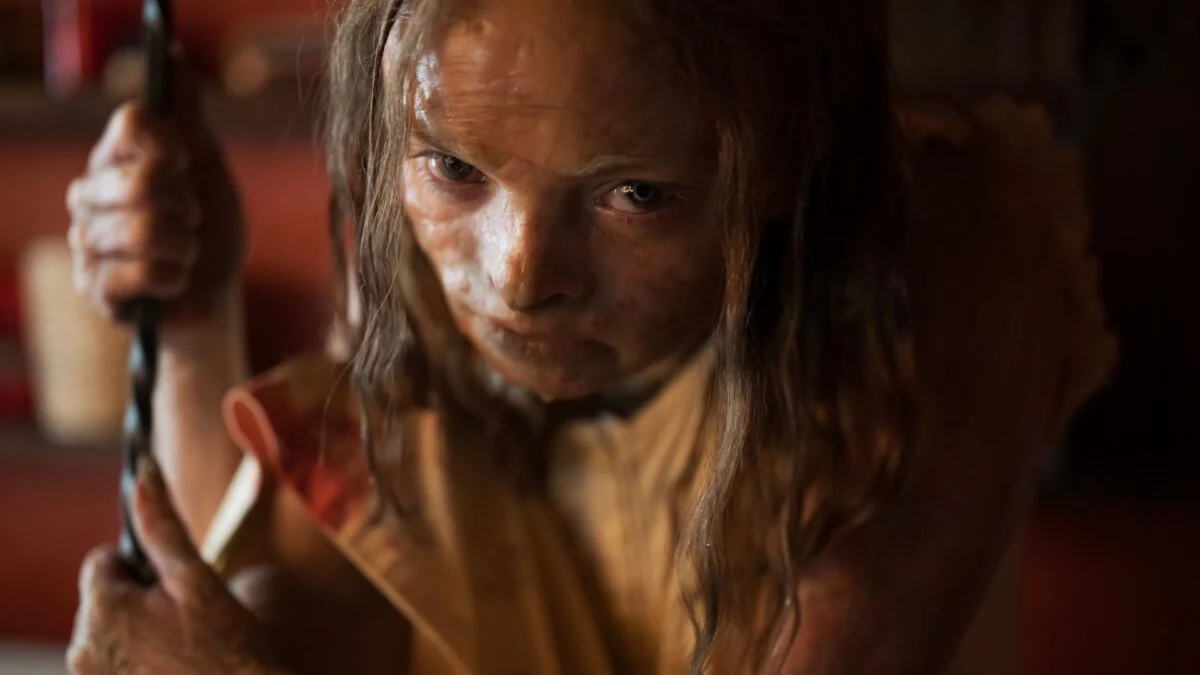
Lee Cronin’s The Mummy centers on a family reunited with Katie, the middle daughter who vanished nearly a decade earlier. The father, played by Jack Reynor, is hunting for answers while the returned girl acts increasingly off. Small details get weird, then worse; the film gives the sense that something either returned with Katie or replaced her entire.
At an online thread the word “gross” lit up within minutes.
The first take: Cronin has made something both pretty and dreadfully nasty.
I’ve watched the social scroll and the critic pings. Reactions cluster: if you liked Evil Dead Rise, you’ll probably be grinning through the quease. The movie makes deliberate choices—intimate framing, body-horror beats, and a sound design that makes wet things louder than they should be. It slashes like a rusty scalpel.
Is Lee Cronin’s The Mummy scary?
Yes, but “scary” here often means physical discomfort as much as jump scares. People report genuine chills and sequences that trade showy effects for close, invasive dread. Critics praise Natalie Grace and Laia Costa for carrying emotions that make the horror land.
How does it compare to Evil Dead Rise?
Think of it as a cousin rather than a copy. Cronin keeps his taste for viscera and cramped-family terror, but swaps some spectacle for quieter, meaner moments. Fans of Evil Dead Rise and the director’s visual grammar—split diopter shots, tight interiors—should feel at home.
By the popcorn machine someone asked if the film is “family horror.”
This is not family viewing. It’s domestic horror that weaponizes grief and memory, pairing familiar family beats with grotesque physicality. The film settles in like a fever, slow and persistent. If you flinch at excessive gore or have a low tolerance for body horror, this won’t be for you; if you seek clever uncomfort, it delivers.
When is Lee Cronin’s The Mummy released?
The film hits theaters Friday, April 17. Expect reviews and full breakdowns ahead of the weekend and social threads to keep buzzing after opening night.
On social platforms the confusion about continuity started almost immediately.
Warner Bros. had to clarify: this is its own thing, not tied to Universal’s early-2000s trilogy. Brendan Fraser is not in this film; he is attached to The Mummy 4, slated for 2028. That casting and franchise mix-up spread across Twitter and Bsky, which complicated early marketing conversations and probably fed rumors from test screenings.
Industry figures and outlets—io9, Gizmodo, and mainstream critics—have been central to the chatter. The film’s reception matters not only for Cronin’s career but for how studios let auteur horror breathe inside larger IPs. Warner Bros.’ social channels have amplified clips and reactions, while critics on Twitter and Bsky have been blunt about tone and taste.
If you want my short take: go if you want to be grossed out in a smart, compact way; skip if you need cathartic release without quease. Will you brave its nastiness in a packed theater or wait for home viewing?