
I was kneeling next to a bank of chargers when a quiet Mercedes rolled in and stole the room’s oxygen. You could feel something shift — the halo cars were no longer the only show. I realized then Mercedes wasn’t copying Tesla; it was carving out a different promise.
I’ve tracked luxury EV rollouts long enough to smell the strategy. You want facts that change choices: range, charging time, and whether the steering will behave like a city car or a yacht at 70 mph. Read on and I’ll point out what matters, what’s new, and where Mercedes might have the last laugh.
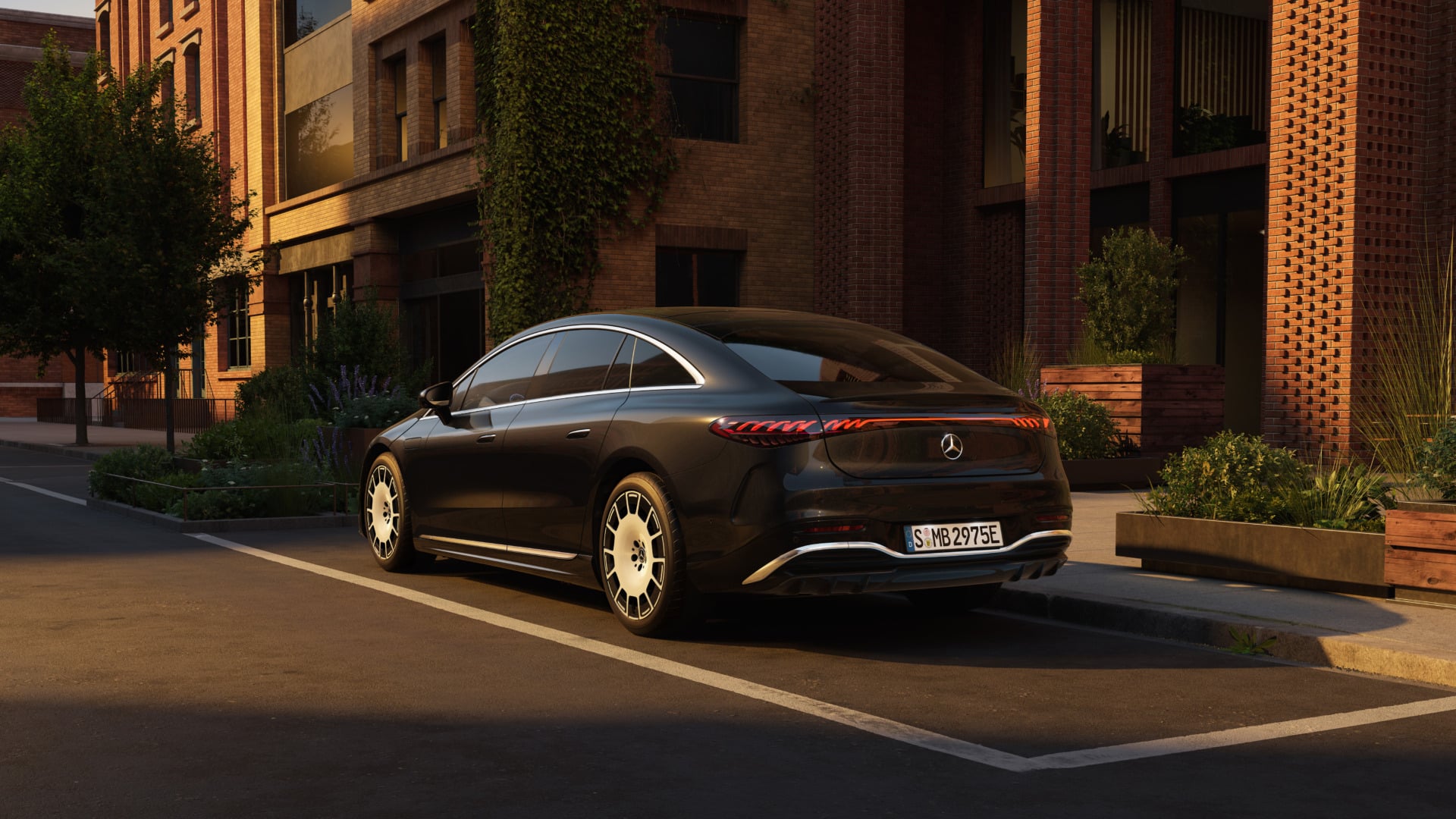
On the highway, the EQS whispers: aerodynamic gains that actually matter
When you aim for silence and range, every hairline of airflow changes the score. Mercedes reports a coefficient of drag as low as 0.20 — within a breath of the Lucid Air and a clear step ahead of most rivals, including performance cars like the McLaren Artura.
That low drag isn’t a design vanity; it’s a strategic lever. Reduced drag stretches range at highway speeds more than any infotainment tweak ever will, which is why Mercedes kept the EQS’s elongated silhouette even after criticism of the original egg-like styling.
At a fast charger, you watch numbers climb faster than you expect
The new EQS makes charging a short coffee stop instead of a timetable problem. Mercedes moved to an 800-volt electrical architecture and splits the 122 kWh battery into halves that can each accept 175 kW, giving a combined peak of 350 kW on capable chargers.
How fast can the 2027 Mercedes EQS charge?
Mercedes claims the fastest charging can add nearly 200 miles in about 10 minutes on the most efficient setup. That’s real-world drama: if you’ve been conditioned to 30–40 minute top-ups, this feels like a different class of stop.
Practical note: that charging math depends on charger availability and temperature, but the architecture aligns the EQS with cars that have been praised for ultra-quick fills, including Lucid models and high-voltage rivals.
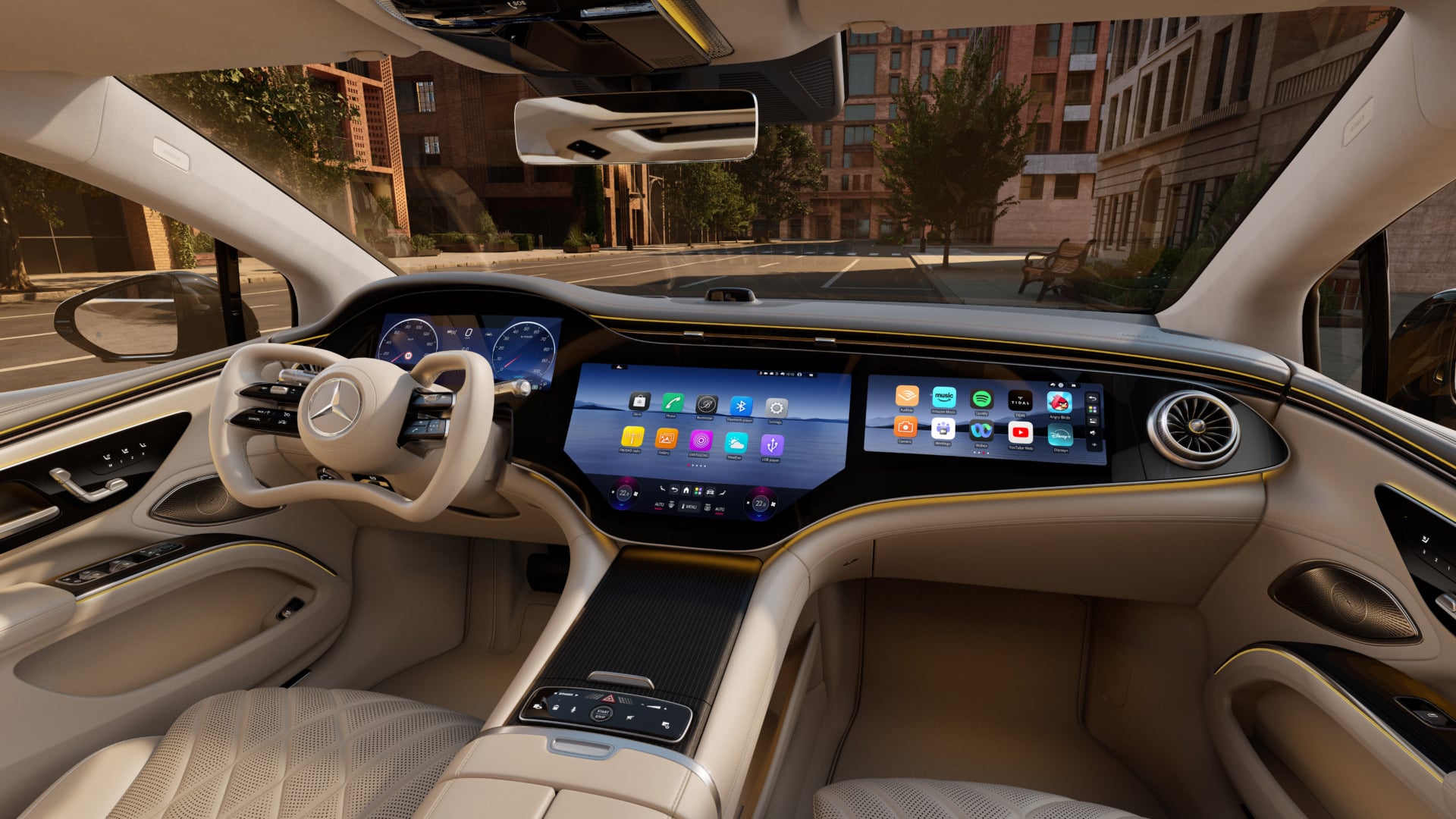
In traffic, the steering catches you off guard: quick, precise, and a bit unconventional
When you turn into a tight spot, steering determines whether you smile or curse. Mercedes is offering an optional steer-by-wire system in the U.S. later in the cycle, paired with a yoke-style control that covers roughly three-quarters of a traditional wheel and rides alongside standard rear-axle steering.
Does the 2027 Mercedes EQS have steer-by-wire?
Yes, but it will arrive in the U.S. at a later date and likely as an option. The system promises quicker responses at low speeds and steadier, more communicative inputs at highway pace — think sports sedan reflexes wrapped in grand-sedan calm.
The drive system also adds a bit of theatre: driver-activated regen via paddles or the column lever can recoup up to 385 kW. That’s a technical figure with an immediate sensation — rapid slowdown with one finger — which will be fun for drivers and a surprise for anyone in the back seat.
In the cabin, familiar details are amplified by smarter tech
You step inside and the layout feels like the EQS you know, but everything behind the surfaces has been sharpened. Mercedes carries over the roomy feel and adds its latest MB.OS infotainment, upgraded driver aids, and optional AI-driven suspension damping from the new S-Class.
There are also smaller moves with outsized psychological effect: heated seat belts, for example, are designed to get people to remove bulky coats so belts sit properly in a crash. It sounds odd until you try it; the result is a warmer, more secure seating experience.
The cabin can feel like a living room on rails, comfortable and arranged for ease of use rather than theatrical flair.
At the dealer, range and price will decide how many buyers bite
Mercedes quotes the most efficient EQS 450+ at 575 on the WLTP cycle, which the company estimates translates to about 425 miles on the U.S. EPA scale. That figure sits well above most i7 variants and closes the gap with long-range rivals.
What is the range of the 2027 Mercedes EQS?
Officially: 575 (WLTP) and roughly 425 miles (EPA estimate). In plain terms, expect one of the class-leading ranges among luxury flagships once EPA figures are posted.
Expect the 2027 EQS to arrive late this year with a starting price around $102,000 (€94,000). With the Tesla Model S effectively gone from the market, Mercedes has a lane to fill — and it’s trying to fill it with real-world range and charging gains rather than just styling statements.
I’ve driven enough prototypes to know when a model is polished and when it’s papered — the 2027 EQS feels like the former. Will buyers prefer Mercedes’s quieter, aerodynamic approach to whatever comes next from Lucid, BMW, or the reborn EV efforts from other luxury brands?