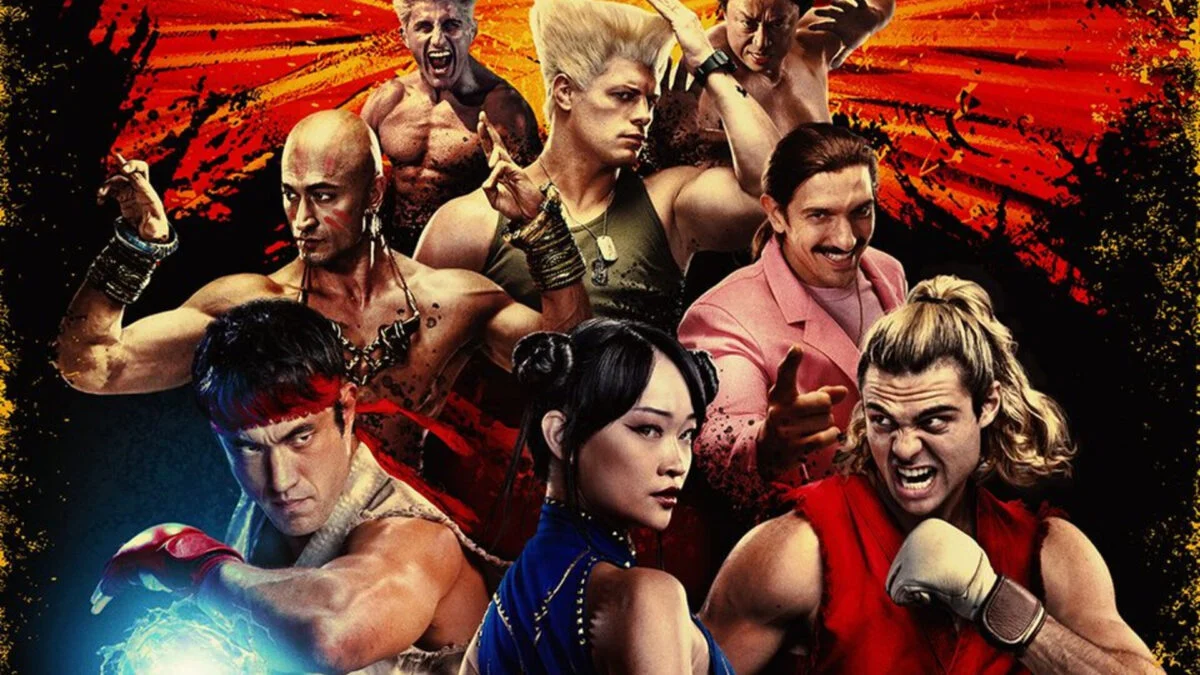
I walked into the CinemaCon screening thinking I’d seen every comic-to-film dodge. Ryu throws a Hadouken and half the room howls — not in disbelief, but because it felt intentionally ridiculous. You can tell when a movie decides to own its weirdness rather than hide from it.
At the first trailer screening people laughed at the costumes — and that laugh told you everything about this film’s tone.
I want you to hold that: the team behind this movie, led by director Kitao Sakurai and released by Paramount and Legendary, didn’t try to hide the silliness. They leaned into the source material’s excesses — the absurd bonus stages, the over-the-top finishing moves, the very idea that someone can punch a truck onto its roof and keep fighting.
This is not a studio trying to mimic realism; it’s a studio choosing personality. When Sophie Turner steps into iconic threads or 50 Cent sports Balrog hair, the aim is not fidelity by photo-real imitation but by spirit. The result plays like a brawler in a neon alley — loud, theatrical, and unapologetically staged.
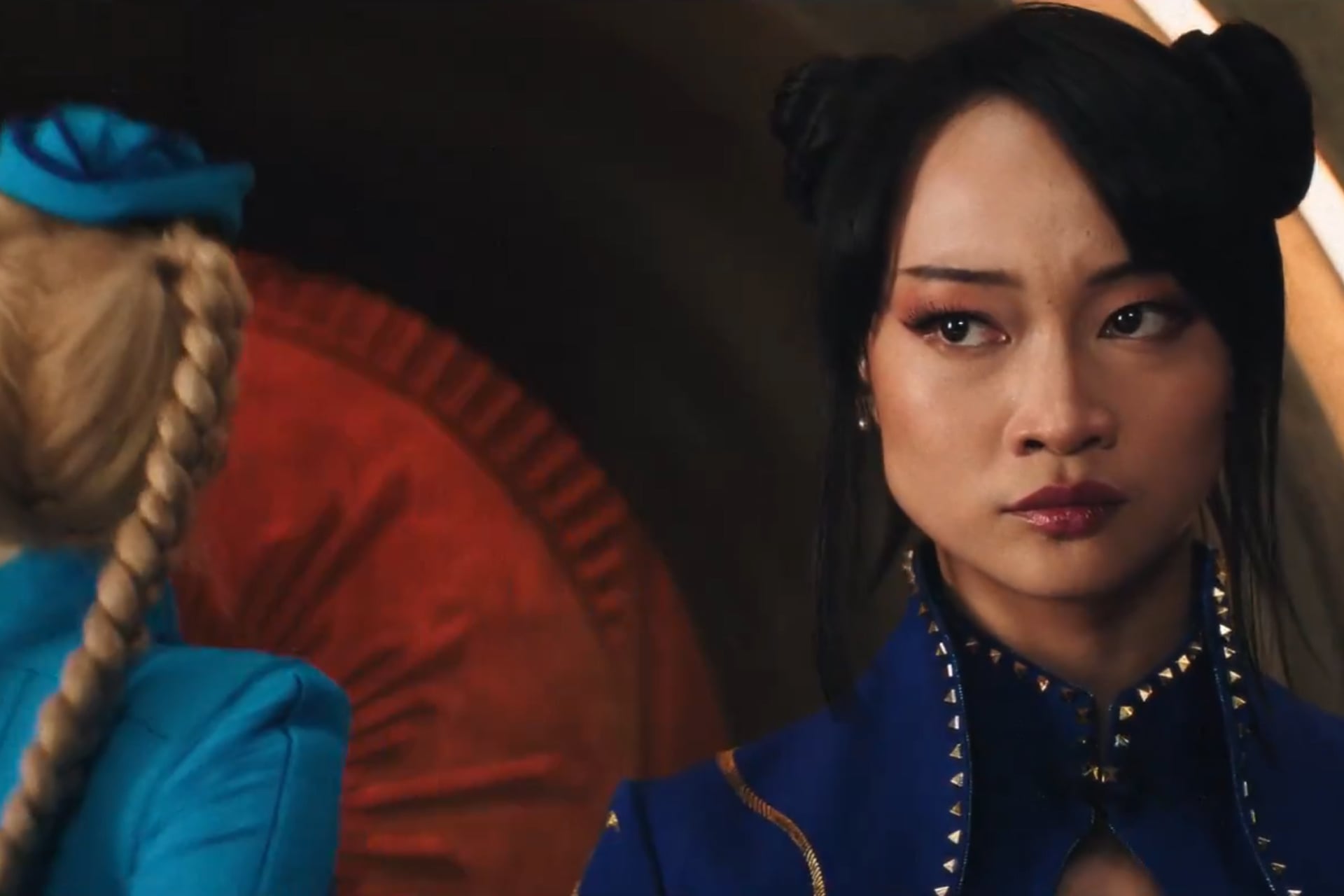
When someone compared the posters to a darker ad shoot, the room split — that split explains why fidelity debates rage online.
You and I both know how video-game adaptations get measured: pixel-for-pixel cosplay or they’re “betrayals.” That pressure usually pushes filmmakers toward safe, sterilized versions of beloved characters. Here, the posters felt uneven, true — but the trailer’s motion recontextualized them. The film seems to prefer kinetic personality over literal photocopying of sprites.
Is the Street Fighter movie faithful to the games?
Faithfulness isn’t binary. If you’re judging by moves — Ryu’s Hadouken, Zangief’s Running Bear Grab — the trailer signals reverence. If you’re judging by lighting, costume detail, or the absence of pixel-perfect hairlines, the movie asks you to meet it halfway. Capcom’s history with adaptations has been patchy, but their recent strategy with Resident Evil and other IP shows a tolerance for reinterpretation that boosts audience reach and merchandise sales.
At the CineCon Q&A someone asked about Capcom oversight — that question hangs over every adaptation they license.
Capcom isn’t Nintendo or Sony in the way they gatekeep adaptations. You can sense Capcom’s confidence doing work for it; they let Western creatives play and, sometimes, misstep. That hands-off vibe can feel risky, but it also frees filmmakers to make bold choices. The studio’s recent business logic — using TV and movies to drive game interest — explains a permissive approach.
Will Capcom approve future film and TV takes?
Probably. Capcom benefits when a franchise stays visible in pop culture. Paramount and Legendary risk a backlash, but the endgame often looks like boosted streams and higher franchise engagement. From a business POV, a polarizing hit that gets people talking usually wins the long game.
At the end of the trailer the crowd cheered — that cheer suggests this movie knows who it wants to be.
You can reject the tone and be perfectly reasonable to do so. You can also accept that this film is asking for a contract: meet it on its own terms or move on. That kind of clarity is rare in adaptations, where everyone tries to please factions at once and winds up pleasing none.
The trailer’s bravado is as if someone glued comic panels to the asphalt and drove them through a cinematic wash — it’s messy, visible, and fully intentional. That mess may alienate some fans, but it gives the film a personality other recent adaptations have desperately lacked.
Street Fighter lands in theaters on October 16. I’ve watched dozens of adaptation trailers; this one doesn’t pretend to be anything else. So tell me — are you ready to cheer for a movie that makes its own rules?