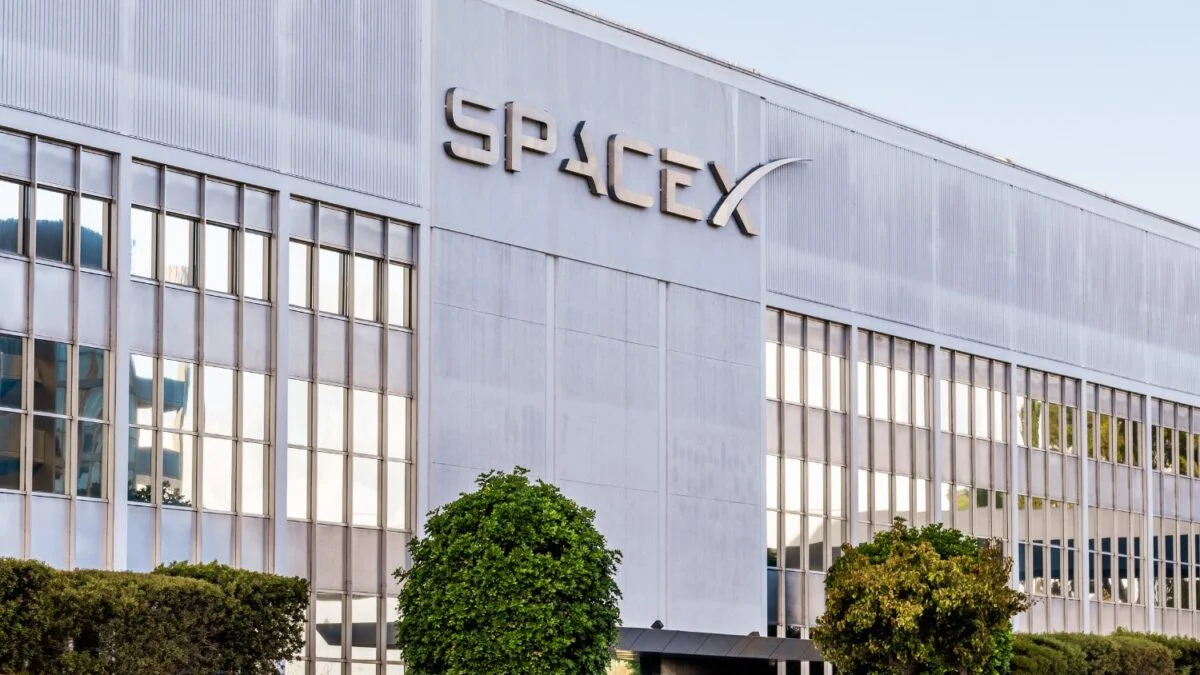
I scrolled past a terse SpaceX post and felt the room tilt—the announcement was a bolt of lightning across a suburban sky. You see a name you half-recognize, SpaceXAI, and then the number: an option to buy Cursor for $60 billion (€55 billion). I want you to hold that number while we pick apart why the deal matters and what it tells you about where AI coding is headed.
A late-night post on X caught attention
You probably saw the short SpaceX message about working with @cursor_ai and felt the same pause I did.
I read it as a declaration, not a partnership note. SpaceX — or whatever label the company uses (SpaceX, xAI, X) — publicly tied its massive compute resource, described as a “million H100 equivalent Colossus training supercomputer,” to Cursor, the 2023 vibe-coding app that has been quietly stealing hours from engineers inside VS Code and GitHub workflows.
SpaceXAI and @cursor_ai are now working closely together to create the world’s best coding and knowledge work AI.
The combination of Cursor’s leading product and distribution to expert software engineers with SpaceX’s million H100 equivalent Colossus training supercomputer will…
— SpaceX (@SpaceX) April 21, 2026
A quick valuation check on the deal math
Open your calculator — the numbers are theatrical.
Cursor’s parent, Anysphere, closed a funding round in 2025 that valued the company at $2.5 billion (€2.3 billion). Now SpaceX has an option to buy Cursor for $60 billion (€55 billion). That’s roughly 24 times the earlier valuation. The public announcement also offers an interim: Cursor could earn $10 billion (€9 billion) under the joint project before any acquisition, or be bought outright “later this year.”
How much did SpaceX offer for Cursor?
Official language speaks of an option at $60 billion (€55 billion). Options give SpaceX the right, not the obligation, to buy—so they can test the waters with joint work first.
The corporate theater around compute and distribution
You should notice the two assets SpaceX is advertising: raw compute and engineer reach.
I’ve followed H100-driven projects and Colossus-sized training rigs for a while. This is a capital play: pairing Cursor’s product that lives inside IDEs and terminals with a supercomputer that can churn through models at scale is not an experiment, it’s a scalable bet. Think of Cursor as a tinderbox for coder attention; pile high the compute and you have a fast-burning market machine.
Why would SpaceX buy Cursor?
Because owning both the model training pipeline and distribution to working engineers gives a company leverage over productivity tools, enterprise contracts, and integration with platforms like GitHub, VS Code, and cloud tooling from AWS and Azure. It’s about product-market fit plus channel control.
Risk, optics, and the IPO shadow
You’ve seen IPO plans and read the headlines about SpaceX valuation targets.
SpaceX reportedly targets a $1.75 trillion (€1.6 trillion) listing and hopes to raise $75 billion (€69 billion) from investors. If it exercised the full $60 billion (€55 billion) option, that would consume roughly 80 percent of the planned raise. That’s not small; it’s a strategic decision that signals priorities. Are you buying into compute-first AI, or into a consumer-facing social layer that Musk controls with X and xAI?
How this shifts the competitive map
You can watch other players react: OpenAI’s enterprise push, Anthropic’s Claude Code, and developer-focused tools like GitHub Copilot have been setting the tempo.
SpaceX’s move pressures OpenAI and Anthropic to accelerate integrations with enterprise tooling and IDEs. If Cursor scales inside teams the way Copilot did for single developers, enterprise customers may face switching costs measured in millions of dollars and months of lost productivity.
I’m naming people and tools because they matter here: Elon Musk’s public messaging, SpaceX’s Colossus compute claim, Cursor/Anysphere’s product and valuation history, OpenAI, Anthropic, GitHub, VS Code, AWS, and the H100 GPU ecosystem all show up at this table. You can feel the competition coalescing around who owns developer attention and the enterprise purse.
Read this as a strategic signal: SpaceX is trying to convert compute bragging rights into product distribution and recurring revenue. It’s a bet on the economic value of coding assistance and knowledge work automation, not only on headline model sizes.
So where does that leave you, the engineer, investor, or product leader? If Cursor integrates tightly with the tools you use, switching costs rise. If SpaceX leans into enterprise contracts, enterprise AI deals reconfigure budgets. If the option remains just that—an option—expect aggressive pilot programs and co-marketing before any final purchase.
I’ll watch the pilots and the contract language. You should, too — because whoever controls the coding layer controls a lot of where value flows next. What will you bet on?