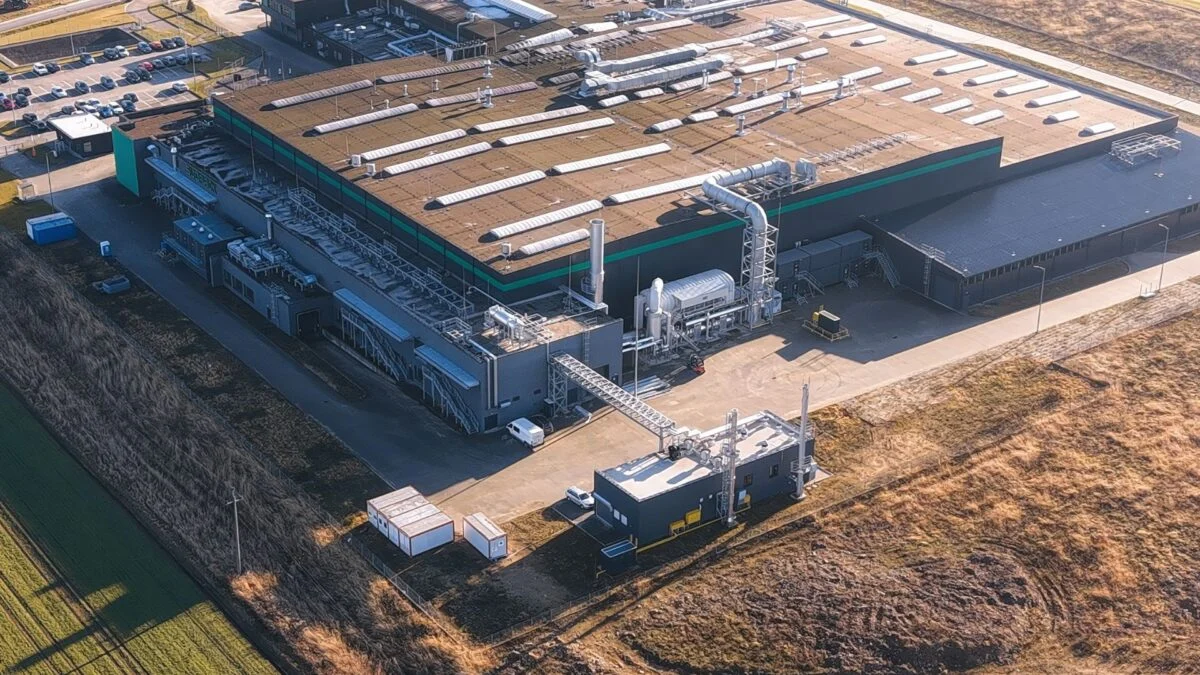
I was at a county meeting when the developer finished his slide deck and grinned at the permitted emissions number like it was a minor footnote. You felt that grin too — the one that says growth is inevitable and someone else will pay. By the time the mayor cleared his throat, a new gas plant had already been written into the town’s future.
At a Wired reporter’s desk, a map lit up with 3,000 proposed data centers across the United States.
I read that map and felt the arithmetic in my bones: Wired and other investigators found that a handful of projects, powered by dedicated gas plants and behind-the-meter generators, could emit more than entire nations do. Eleven new centers alone could belch out 129 million tons of greenhouse gases a year — more than Morocco. If you multiply that pattern across thousands of sites, the scale is not incremental; it’s structural.
Behind-the-meter power — plants that bypass the public grid and feed only the data center — is spreading because it sidesteps local complaints and strains on municipal utilities. Presidents can sign executive orders pushing companies to build their own infrastructure; companies can sign glossy net-zero pledges; and yet firms are quietly permitting enormous gas stacks to be built next door. You begin to see how corporate speed beats public oversight in the development playbook.
How much carbon do data centers emit?
Permits tell part of the story: they show what a project is allowed to emit, not the final tally. But data centers are rare among projects for how predictably they push toward the ceiling as demand climbs. Wired flagged specific cases: a Microsoft project in Texas permitted for about 11.5 million tons per year, and Stargate across Texas and New Mexico permitted for more than 24 million tons. These are not anomalies — they reveal a direction of travel.
At a rural planning board, residents read a permit and saw a new turbine schematics glued to the envelope.
The technology argument is simple: gas plants are faster to build, cheaper up front, and flexible when demand spikes. That speed matters to hyperscalers hungry for compute: Microsoft, Amazon, Google, and boutique players like xAI want capacity yesterday. I’ve watched proposals wave aside renewable integration with the same old justification — build now, decarbonize later — and you should be skeptical when “later” is indefinite.
There’s also a legal game in play. Some projects never secure the permits they later operate under, as happened with the methane turbines at Elon Musk’s xAI Colossus site in Tennessee. Regulators chase after operators; communities inherit the pollution. The energy landscape is changing: the Energy Information Administration said 2025 set a new record for U.S. natural gas consumption, and Global Energy Monitor reports the U.S. now leads the world for new gas power development. The irony is sharp: the same firms with corporate net-zero banners are pumping more fossil fuel into the air than before.
Why are data centers using natural gas?
Because gas is the pragmatic answer to a logistical problem: scalable, dispatchable power that answers unpredictable AI demand. Regulators and utilities balk at adding enough grid capacity, and local power rates spike when Big Tech hooks in. Private plants fix those problems — for the companies. For everyone else, they look like a new industrial plant that will raise local bills and stack emissions.
At a town square protest, neighbors held signs asking who would breathe the next plume.
I stood among them and listened. The complaint wasn’t just about air quality; it was about fairness. Communities push back because they know the consequences: higher medical bills, hotter streets, and a clearer sense that the benefits of cheaper cloud services are concentrated in shareholder reports while costs are dispersed across citizens. This is distributive conflict rendered in steel and concrete.
There’s a political angle too: incentives and pledges without enforceable standards create moral hazards. Executives declare ambition while permitting committees rubber-stamp emissions. The result looks like a casino that bets with the atmosphere — the house always cashes the chips, the neighborhood pays the tab.
Can data centers be powered by renewable energy?
Yes, technically and increasingly economically. But the problem is timing and design. Renewables require land, transmission, storage, and planning. Companies have occasionally contracted solar and storage projects — Microsoft among them has invested in renewables — yet many projects lean on gas as a sure short-term supply. That forces a choice: build fast and fossil-heavy, or plan slower with cleaner infrastructure. I argue you should favor the latter because the climate ledger keeps a long memory.
At an industry conference, an engineer displayed a chart showing surging compute demand from AI models.
You see the math: generative AI models need constant, sprawling compute — and that compute wants predictable power. Hyperscalers then design campuses with their own fuel sources. The consequence is a nationwide sprint for gas permits, fostering a feedback loop where more compute breeds more local power plants and more emissions. Wired’s reporting is not alarmism; it’s a map of incentives aligning toward fossil fuel growth.
I’ve followed tech for years, and I tell you plainly: corporate promises mean little without regulatory teeth and transparency. If companies won’t commit to binding, auditable decarbonization plans, the result will be a patchwork of private power stations stretching across the country. Imagine a chain of data centers like a gas-guzzling cruise ship moving across the continent — elegant on the brochure, destructive underfoot.
So what do we do? Push for enforceable limits, require accurate, auditable reporting, and demand that permits account for cumulative regional impacts. Watch the contracts: if a company claims renewables, look for the storage and transmission details. Pressure local electeds to value long-term air quality over short-term tax promises. Hold firms named in reporting — Microsoft, Amazon, Google, xAI — and the regulators that approve them accountable.
I’ll keep reporting. You should keep asking hard questions at planning meetings, in public comment periods, and on investment calls. Because when compute gets cheaper at the cost of the atmosphere, who pays for the profit?