
I was mid-save on a $70 (€65) game when my PS5 flashed a message: Connect to the internet to verify license. I waited, then realized the console wouldn’t let me play until it had a pulse on the web. The quiet thrill of owning a disc or downloaded copy suddenly felt precarious.
I write about games and tech, and I’ll be blunt: this is a shift you should pay attention to. You deserve clarity about when a purchased title truly stays yours. Below I walk you through what’s been reported, what that means for you, and how this fits into the wider digital storefronts run by Sony, Microsoft, and Valve.
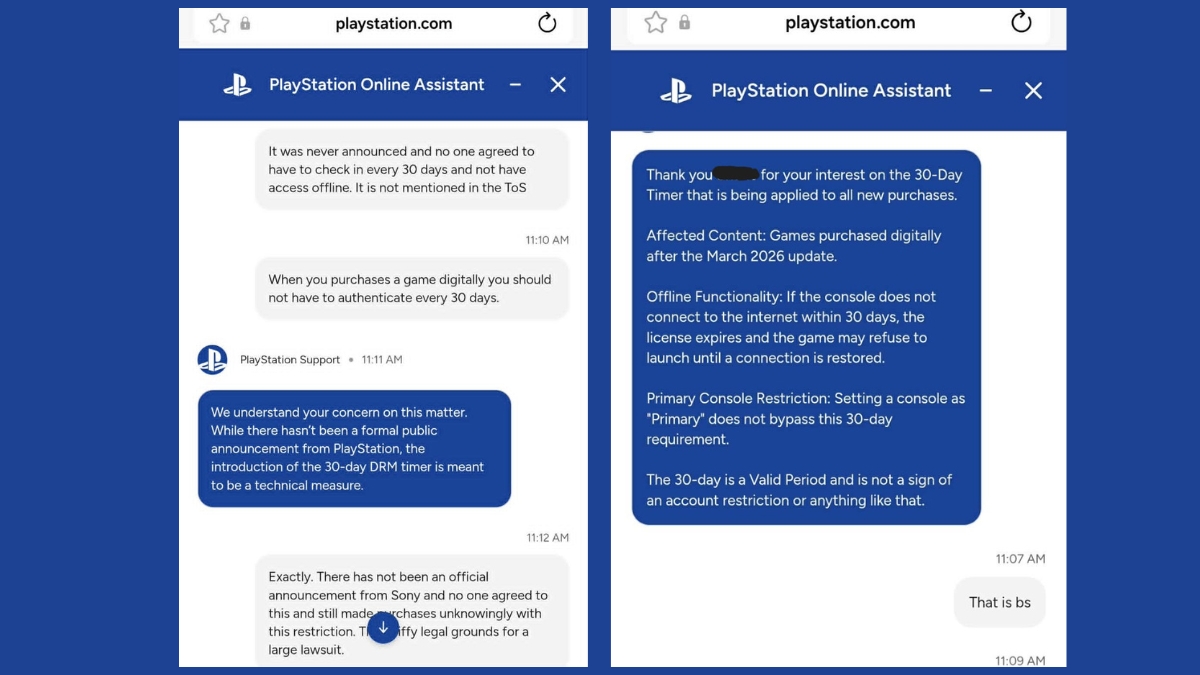
Someone posted screenshots of a support chat — PlayStation DRM Feature Raises Concerns Over Losing Access to Purchased Titles
The rumor started as a post on X (formerly Twitter) and landed in my feed as a screenshot: a PlayStation support chatbot describing a “30-day DRM timer.” That single exchange moved the conversation from theory to immediate worry for anyone who buys digitally.
According to the chat logs circulating, this is what Sony’s new policy appears to require for PS5 games bought after the March 2026 update:
- Affected Content: Games purchased digitally after the March 2026 PlayStation update.
- Offline Functionality: If your console has not connected to the internet within 30 days, the license expires locally and the game may refuse to launch until you go online again.
- Primary Console Restriction: Marking a PS5 as your “Primary” does not bypass the 30-day check.
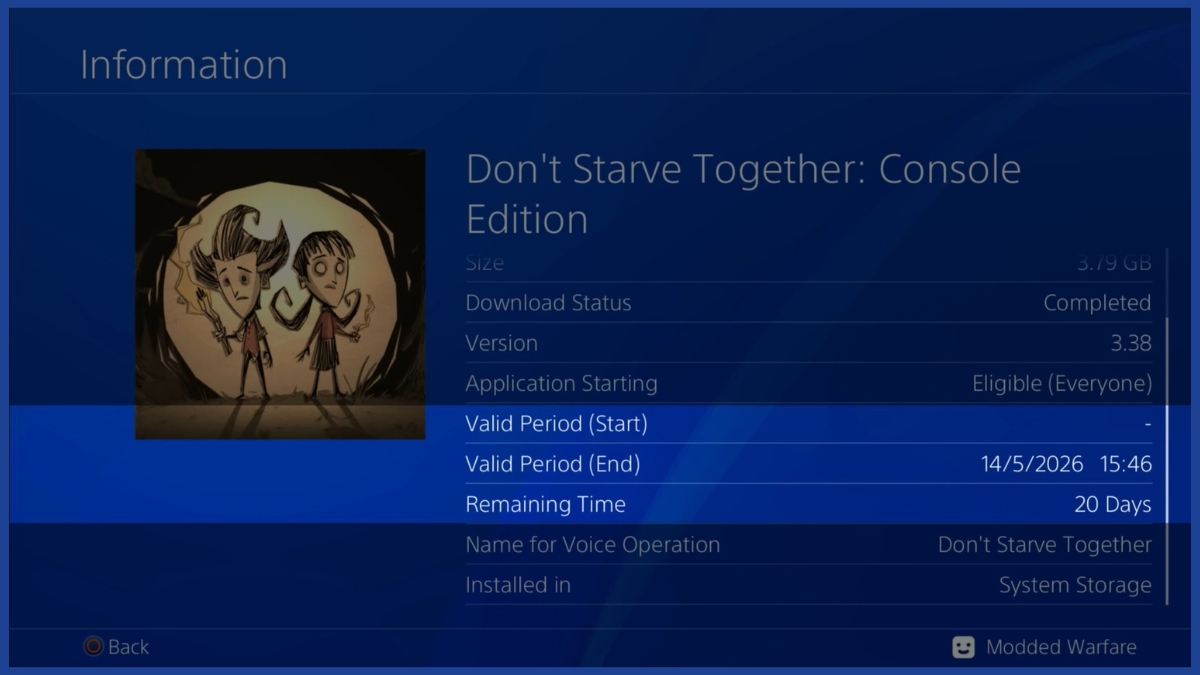
- Valid Period: Each game will show a “Valid Period” in its information page on the PS5 — that’s the deadline to reconnect and renew the offline license.
I spoke with a few players who discovered this when a title they’d paid full price for—say, a $70 (€65) release—wouldn’t run after two weeks offline. For many, the reaction was immediate: if your router goes down or you travel without Wi‑Fi, you could lose access to a game that sits on your console like a locked box.
I saw the PlayStation Support Assistant respond directly — What the 30-day check actually does
The screenshots show a user asking the PlayStation Support Online Assistant about the timer and receiving a direct confirmation: the 30-day check is a “technical measure” rather than an account punishment. The bot even lists “Affected Content,” “Offline Functionality,” “Primary Console Restriction,” and “Valid Period.”
That phrasing matters. A bot saying “technical measure” suggests Sony has baked this into licensing servers and the PlayStation Network (PSN). For you, that means the only surefire way to keep the game playable offline is to reconnect at least once every 30 days and let PSN stamp the license.
Will PlayStation’s 30-day DRM lock me out of games I bought?
Short answer: it can. If a title shows a Valid Period and your PS5 goes beyond that without reconnecting, the local license may expire and the game may refuse to launch until PSN revalidates it.
You can check each game’s Valid Period on your PS5 in its game information screen. If you want to keep a title playable while offline for long stretches—think travel or extended network outages—you’ll need to remember that deadline.
How does the 30-day verification work?
Based on the bot’s language and how digital storefronts operate, here’s what likely happens: when you buy a game from the PlayStation Store and install it, a local license attaches to the game. Every 30 days the console must query Sony’s license servers via PSN to refresh that token. Miss the window and the local token can be marked expired.
This is not unlike how some streaming devices require occasional re-checks of subscriptions, but for paid, single-player games it changes the meaning of “offline play.”
I compared this to how other stores behave — How Sony’s change stacks up against Steam and Xbox
On Steam, you can often play installed games offline without periodic server checks except for specific DRM systems (Denuvo, third-party launchers). Xbox has had online checks for certain titles and subscription services via Xbox Live, but Microsoft generally allows primary console privileges to grant broader offline access.
Sony’s move puts the PlayStation Store closer to the model used by some console subscription services and certain PC launchers: a purchase that still requires occasional verification. For many players this will feel like a betrayal of the old social contract: pay once, play forever. For platform holders, it’s about controlling piracy and license integrity across PS5—and potentially future PS6—installations.
Can setting a console as primary bypass this 30-day requirement?
No. The chatbot’s wording specifies that marking a console as “Primary” does not exempt it from the 30-day verification. That removes a common workaround players have relied on for offline reliability.
Two quick metaphors will help you picture it: this system behaves like a library book with an invisible due date, and it can feel like a phone that checks your ID at the door. Both leave you with the same question: is a purchased game still truly yours if it needs periodic permission from the seller?
If you make a living building systems for PlayStation Store, PSN, or are an indie dev distributing through Sony’s platform, this changes how you advise users and how you design offline-critical features. If you’re a player who values offline reliability—say someone with an unreliable ISP or a commuter who likes to play on long flights—you’ll want to audit your library now.
Sony has not published a formal, public announcement beyond the chatbot screenshots that have circulated on X; a clear official policy page from Sony Interactive Entertainment would settle the practical questions players are asking: what happens during long outages, how refunds or consumer protections apply, and whether older digital purchases are grandfathered.
What will you do with your digital library now that ownership can be time-gated: accept the check-ins, hoard physical copies, or vote with your wallet—buy elsewhere or wait for Sony to clarify?