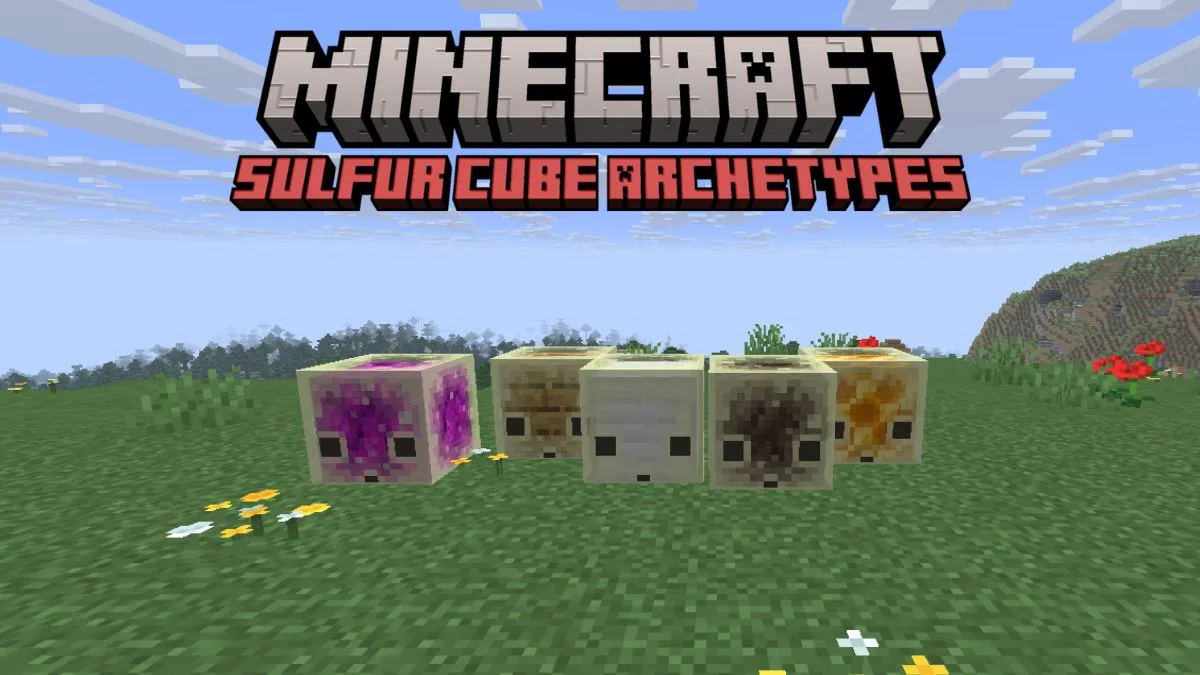
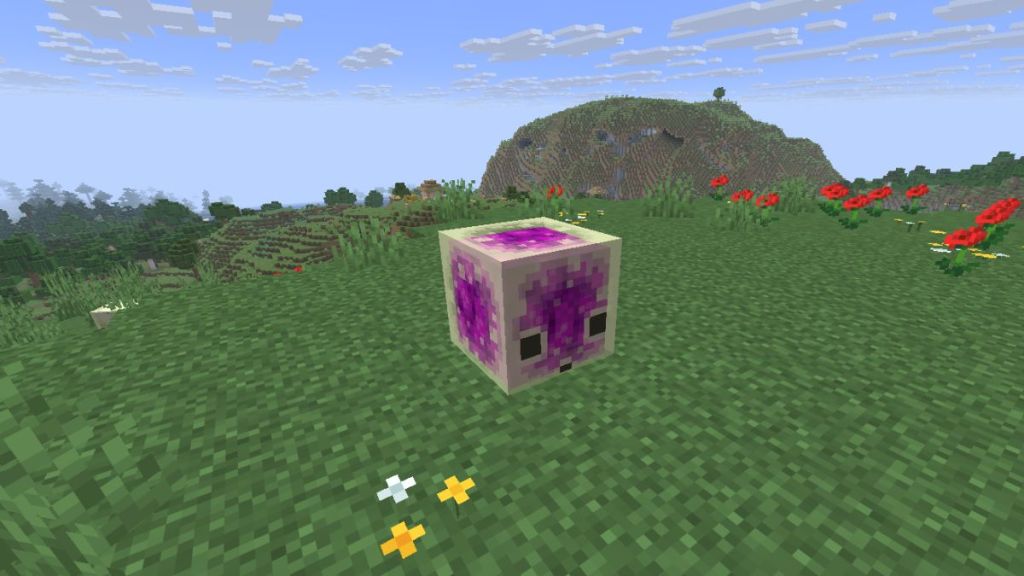
You kick a Sulfur Cube across a flooded corridor and it becomes a rubber ball, ricocheting off stone until it vanishes through a grate. I fed it logs, wool, honeycomb and TNT until the behavior chart filled my notebook. What I learned is simple: the block inside the cube writes the rules.
Editor’s Note: These mechanics come from Minecraft 26.2 snapshots and Mojang’s public notes. Archetypes and numbers may change before release—check patch notes and Mojang’s dev updates on X for the latest.
What are Sulfur Cube Archetypes in Minecraft?
On servers, you’ll spot players testing cubes like gadgeteers test batteries. An archetype is a physics preset assigned to a Sulfur Cube when it consumes a block: speed, bounce, friction and air drag are rewritten by that block. I’ll show you what each preset does and how to use them in builds, farms, and traps.
Minecraft Sulfur Cube Archetypes List
At surface level, archetypes are a finite menu—feed the cube a block and the mob adopts that menu entry. Below is the current set (from the 26.2 snapshots) with the attributes Mojang exposed.
| Sulfur Cube Archetype | Attribute Values | Floats in water |
|---|---|---|
| Regular (Football) |
Knockback resistance: -1.0 Bounciness: 0.5 Friction modifier: 0.3 Air drag modifier: 0.1 |
Yes |
| Bouncy (Rubber Ball) |
Knockback resistance: -2.0 Bounciness: 0.9 Friction modifier: 0.3 Air drag modifier: 0.01 |
Yes |
| Slow Flat (Medicine Ball) |
Knockback resistance: 0.7 Bounciness: 0.2 Friction modifier: 0.3 Air drag modifier: 0.1 |
No |
| Fast Flat (Golf Ball) |
Knockback resistance: -2.0 Bounciness: 0.2 Friction modifier: 0.1 Air drag modifier: 0.01 |
No |
| Light (Beach Ball) |
Knockback resistance: -1.0 Bounciness: 1.0 Friction modifier: 0.3 Air drag modifier: 1.8 |
Yes |
| Fast Sliding (Hockey Puck) |
Knockback resistance: 0.5 Bounciness: 0.1 Friction modifier: 0.05 Air drag modifier: 0.01 |
No |
| Slow Sliding (Curling Stone) |
Knockback resistance: 0.8 Bounciness: 0.1 Friction modifier: 0.05 Air drag modifier: 0.01 |
No |
| High Resistance (Special) |
Knockback resistance: 0.7 Bounciness: 0.2 Friction modifier: 1 Air drag modifier: 0.01 |
No |
| Sticky (Special) |
Knockback resistance: -2.0 Bounciness: 0.0 Friction modifier: 2.0 Air drag modifier: 0.01 |
No |
| Explosive (Special) |
Knockback resistance: -1.0 Bounciness: 0.5 Friction modifier: 0.3 Air drag modifier: 0.3 |
Yes |
Minecraft Sulfur Cube Archetypes Breakdown
At community builds and speedrun tests you’ll notice people favoring certain archetypes for specific jobs. Below I break each archetype down, list the blocks that trigger it, and explain the mechanical uses you’ll actually want in a map or redstone device.
Regular Archetype
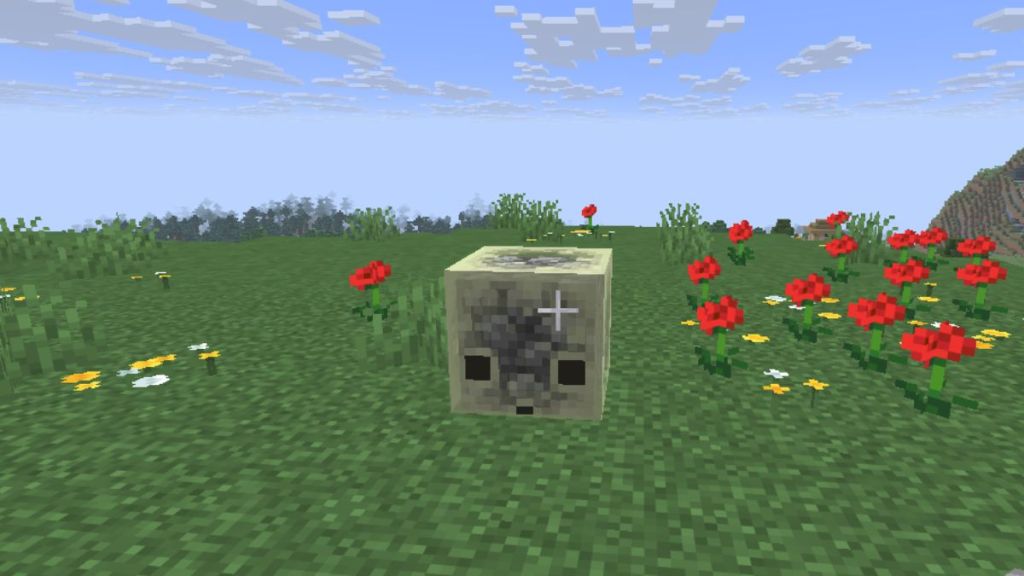
In caves you’ll mostly meet this version. Regular is the default for stone and mineral blocks: balanced speed, medium bounce, moderate friction and low air drag. It floats, making it useful in water channels and predictable enough for general-purpose contraptions.
Bouncy Archetype
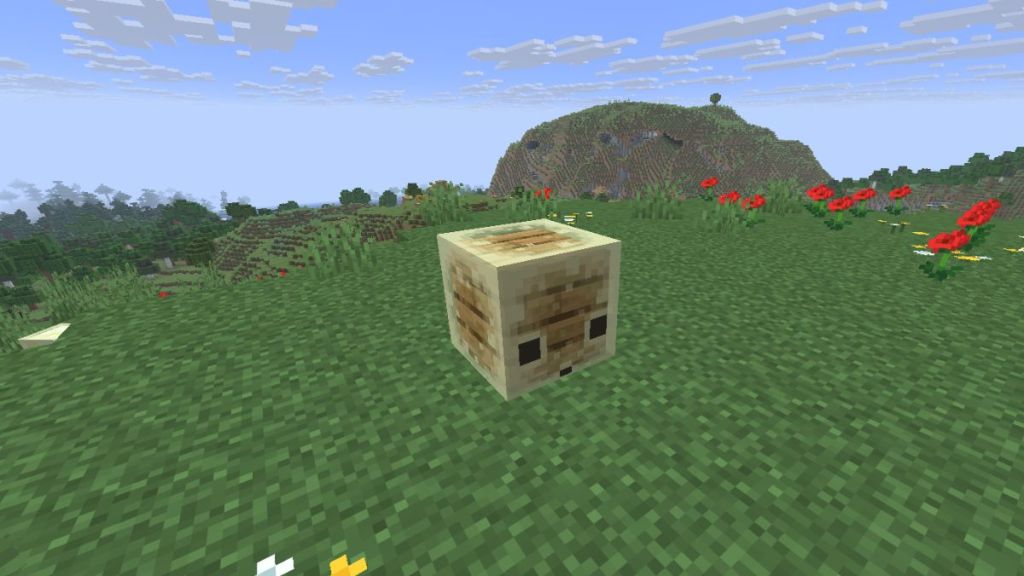
On wooden floors you’ll see the cube spring and dart. Feed planks, logs, bamboo variants or resin blocks and the cube becomes extremely elastic with very low air drag—perfect for pinball-style maps and chaotic playgrounds. Use this in PvP arenas when unpredictable movement is an advantage.
Slow Flat Archetype
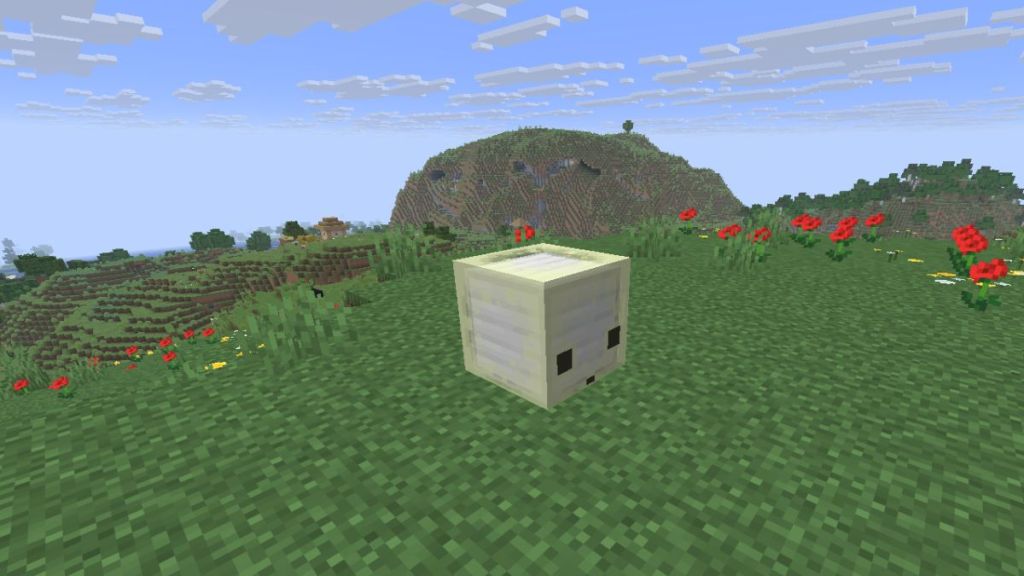
Around anvils and metal chests you’ll notice sluggish cubes. Metal blocks and ores produce a Slow Flat cube that hardly bounces and moves at a crawl—think of it as a bowling ball: dense, predictable, and useful as a living barricade. It sinks in water, which makes it ideal for underwater traps and heavy-duty contraptions.
Fast Flat Archetype
 Posted in codes